Key Takeaway
“Luiz Inácio Lula da Silva’s narrow re-election on 25 October 2026 is likely to keep Latin America’s largest economy working with both the United States and China, its two biggest trading partners. That makes Brazil a key test of whether major commodity exporters can avoid choosing sides as US–China rivalry spreads across the Western Hemisphere. Ties with Washington are strained by tariffs, the US terrorist designation of two Brazilian gangs and US entry granted to the defeated candidate, Flávio Bolsonaro, and are likely to come under further pressure, while trade with China is at a record high. For shipowners and charterers, the main effects will come through cargo flows, contested port tenders, and compliance and cargo-security risks at Brazilian ports.”
Executive Summary
Brazil’s Political Outlook and Implications for Global Shipping
- Lula won about 51.8% of the vote to 48.2% for Senator Flávio Bolsonaro, who dropped a plan to seek annulment. On 27 October, Bolsonaro left for the US in defiance of a Supreme Court order to surrender his passports. His own party and the leaders of Congress have accepted Lula’s win.
- A stronger right in Congress will slow Lula’s domestic agenda. Its farm lobby depends on Chinese demand, however, so Congress is unlikely to push for a sharp turn away from Beijing.
- US tariffs of up to 37.5% and the terrorist designation of two Brazilian gangs strain ties with Washington. President Trump’s claim that the vote looked “rigged” and the US decision to admit Flávio Bolsonaro add to the strain and point to further US pressure on Lula’s government. Trade talks agreed on 30 September leave room for limited deals.
- China remains Brazil’s largest export market, but a new 55% Chinese duty on above-quota beef shows that Beijing will still protect its own producers.
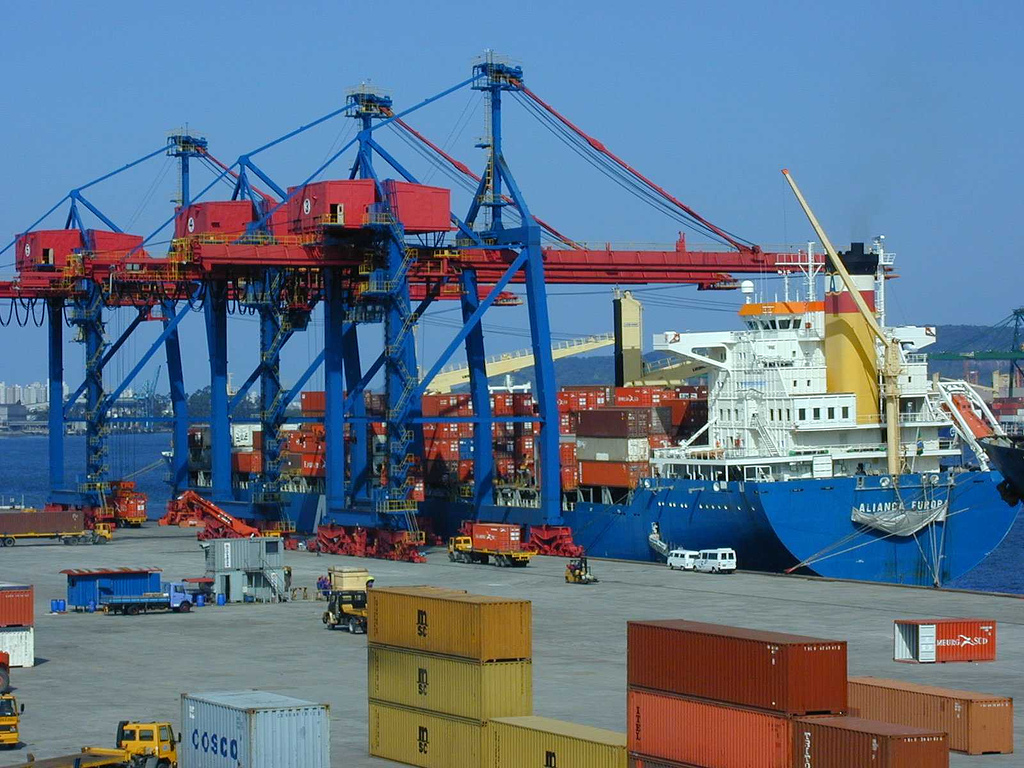
- The vote reinforces an existing shift in cargo towards Asia, while port tenders such as Tecon Santos 10, a planned new container terminal at Santos, are where US–China rivalry is most likely to affect shipping. The US terrorist designations and persistent drug smuggling also raise compliance and cargo-security risks at Brazilian ports.
Event
Lula’s 2026 Re-election Victory and Brazil’s Changing Political Landscape
On 25 October 2026, President Lula da Silva defeated Senator Flávio Bolsonaro in Brazil’s presidential run-off, winning about 51.8% of valid votes to 48.2%. He secured a fourth term, beginning on 5 January 2027.
Bolsonaro refused to concede and said he would seek annulment over a late two-hour extension of voting. On 26 October, he dropped the plan and said he would instead pursue legal challenges to have Lula’s ticket disqualified over alleged abuse of power. His challenge to the result looks isolated: the Superior Electoral Court (TSE) said the extension did not affect the outcome, and the leaders of Congress and Bolsonaro’s own Liberal Party (PL) have recognised Lula’s win. On 27 October, he missed a Supreme Court deadline to surrender his passports in a money-laundering investigation, which he denies, and left for the US. From there, he repeated his fraud claim and said he would lead the opposition from abroad.
Congress moved the other way, with the PL becoming the largest party in both houses and right and centre-right parties together holding a clear majority in both. Lula will still set foreign policy, but he will need opposition votes for budgets and legislation.
CONTEXT
Brazil–US–China Trade Relations and Their Impact on Maritime Security
Brazil’s relations with the United States have deteriorated while its trade with China has reached record levels. The trouble with Washington began in mid-2025, when the US first imposed tariffs of up to 50% on many Brazilian goods and sanctioned Justice Alexandre de Moraes, who oversaw the coup trial of former president Jair Bolsonaro, Flávio’s father. After talks between the two presidents, several tariffs were rolled back in November 2025 and the sanctions lifted in December, and in February 2026 the US Supreme Court struck down the remaining emergency tariffs.
In July 2026, however, Washington imposed a 25% duty on most Brazilian goods after an investigation into Brazil’s Pix instant-payment system, ethanol, deforestation and court orders against US platforms. It added a further 12.5% on some products over forced-labour concerns. Beef, aircraft, energy and pig iron were exempted. On 30 September, the two sides agreed to form a working group on a trade deal, and Brazil has offered to discuss US access to its critical minerals on the same local-processing terms it offers others.
Security cooperation has become politically charged. In late May 2026, the State Department designated the Primeiro Comando da Capital (PCC) and Comando Vermelho (CV) as Foreign Terrorist Organizations (FTOs), effective 5 June, a step Brasília had declined to take on sovereignty grounds.
Ties with Beijing are closer. With the Strait of Hormuz disruption cutting Gulf supply, as examined in an earlier Ambrey Insight, China took 54% of Brazil’s crude exports in the first half of 2026. It also took 71% of Brazil’s soybean exports in January–July, a dependence built during the US–China trade dispute. Brazil was the top destination for Chinese investment in 2025, at US$6.1 billion. China Merchants Port controls the Paranaguá Container Terminal and has agreed to buy 70% of the crude terminal at Açu run by Vast Infraestrutura (VAST), which handles about 30% of Brazil’s crude exports. Both countries are founding members of BRICS, and in July President Xi told Lula that China supported Brazil against external interference. Defence links are modest by comparison.
ANALYSIS
Lula’s Foreign Policy Balancing Act Amid US–China Rivalry in Brazil
Ambrey assesses that Lula will keep working with both powers, judging Chinese projects case by case even as US pressure on his government is likely to grow. That balance rests on Brazil’s need for both markets, and it is most likely to be tested over ports, rail and minerals, where Washington is pressing to limit Chinese influence.
Washington
The result ends the prospect of a Bolsonaro government aligned with Washington, and relations look set to remain tense. The Trump administration made no formal endorsement, but it signalled its preference by hosting Flávio Bolsonaro at the White House in May. Its response since has pointed the same way. Trump has called the vote “rigged” and has not recognised the result, and the US has admitted Bolsonaro and his family on humanitarian grounds despite a Brazilian court order to surrender his passports. Some reports suggest US officials helped arrange his flight, which Washington denies.
Ambrey assesses that the decision to admit Bolsonaro makes it more likely that Washington will step up pressure on Lula’s government in the coming months. In 2025, with Eduardo Bolsonaro, Flávio’s brother, lobbying in Washington, the US tied 50% tariffs and sanctions on Justice Moraes directly to Jair Bolsonaro’s prosecution. This year it has also pressed governments across the region, from Venezuela and Cuba to Panama, cases covered in earlier Ambrey Insights. In Brazil’s case, pressure will probably take the form of tariffs, sanctions on officials or political conditions on trade relief, rather than the coercive measures used against Caracas or Havana. The next signal would be permanent residency, which US officials have reportedly said is likely; it would imply that Washington views the case against him as political.
Brasília is trying to contain the fallout. Lula said in his victory speech that Brazil would not be “anyone’s backyard”, but his government has told ministers to treat the departure as a matter for the courts, its foreign minister has agreed to meet Rubio, and Lula plans to attend the G20 summit in Miami in December. That suggests Lula will push back in public but stop short of steps that could derail the trade talks.
Washington’s leverage has limits, however. Its decision to exempt beef and pig iron from the July tariffs suggests US buyers still need Brazilian supply, and it has sought access to Brazil’s rare earth deposits. The planned trade talks could still yield relief on selected goods or a minerals arrangement, although the US has yet to send its proposal and a broad settlement is unlikely in the near term.
Beijing
For Beijing, the result offers continuity. Unlike Washington, it moved quickly to recognise Lula’s win, with President Xi sending his congratulations and the Foreign Ministry saying China “respects the choice of the Brazilian people”. Lula is likely to favour Chinese projects that build plants or process ore in Brazil. China’s three-year safeguard on beef imports has hit Brazilian exporters despite close political ties. Brazil used up its 2026 quota in September, and further shipments now face an extra 55% duty. In Congress, a stronger right may lean towards Washington, but its farm caucus needs Chinese demand.
Ambrey assesses that Lula’s new term opens the way for a larger Chinese role in Brazil’s export logistics. In June, Brazil presented eight rail projects worth more than US$117 billion to Chinese firms and lenders, including lines that would carry grain to ports in Bahia and the Amazon. If built, these lines would move some grain exports from Santos and Paranaguá to those ports, though not before the end of the decade.
Ports and minerals
Strategic assets are where the two powers’ interests meet most directly. Washington could link tariff relief or financing to limits on Chinese roles in ports, rail or mining. Brazil is unlikely to accept a blanket ban on any investor, but it could agree safeguards for specific assets. Its own institutions disagree on how open port tenders should be. For the auction of Tecon Santos 10, the federal audit court (TCU) backed barring shipping lines, including China’s state-owned COSCO Shipping, from the first bidding round to limit market concentration. The presidential office has pushed for an open auction.
In March, a senior US consular official raised concerns about a Chinese role in the project. Asked about this, the consulate denied applying direct pressure. The “Trump Corollary” to the Monroe Doctrine in the December 2025 US National Security Strategy points to continued scrutiny of Chinese interests in the region, as Ambrey’s earlier Insights on Venezuela and Panama have set out. Higher US tariffs or tougher US terms on Chinese investment would push Brazil closer to Beijing.
MARITIME IMPLICATIONS
Brazil Shipping and Cargo Flows Amid Rising Port Security and Compliance Risks
Cargo flows. The shift towards Asia predates the vote. Industry data show Brazil’s container exports to China rose 14.4% in January–August 2026 while those to the US fell 15.6%, although tariffs alone are unlikely to explain the change. Commodity markets read the result the same way, expecting Brazil to strengthen its position as China’s main soybean supplier. Demand for tankers and bulk carriers on South Atlantic–Asia routes should stay firm, driven by crude and soybeans; reefer beef is the exception now that China’s extra duty applies.
Port investment. Port tenders are more directly exposed to politics. The government plans 34 port auctions for 2027–2030, the largest being the R$6.45 billion Tecon Santos 10 project, which is not expected before early 2027 and could slip further over bidder rules or US–China rivalry.
Compliance and cargo security. The FTO designations make material support to the PCC or CV a US federal crime, exposing companies with a US nexus if port agents, hauliers, or fuel and bunker suppliers have links to these groups. Drug contamination also remains a risk: the PCC uses Santos to load cocaine bound for Europe, and reported incidents have not eased since the US designations took effect in June 2026. Ambrey has recorded about 250 narcotics incidents linked to Brazilian seaports since January 2023, averaging about six a month both before and after June 2026. Around 70% were at Santos and Paranaguá, with Salvador and Santa Catarina ports also affected, and more than half of those rated since 2024 were assessed as high-liability for the vessel or crew. Some loads move via West Africa, and in late 2025, three bulk carriers that had sailed from Santos were detained in Nigeria after cocaine was found aboard.
Port access. No blockades or port disruption had been reported as of 28 October, and the risk of road protests appears to have eased since Bolsonaro dropped his annulment plan and called for opposition by peaceful means. If protests recur, as they did for weeks after the 2022 election, truck deliveries of grain and containers to Santos and Paranaguá would be affected first.
RECOMMENDATIONS
Brazilian Port Security and Compliance Recommendations for Shipowners and Operators
Operators with Brazilian exposure should consider the following:
- Port access. Plan voyages as normal, but ask agents to confirm road access, terminal staffing and haulage, or commission a port risk assessment. Act on confirmed blockades or port orders. Track court action involving Bolsonaro over the coming weeks.
- Counterparty screening. Extend sanctions and FTO checks to port agents, terminal service providers, hauliers, and fuel and bunker suppliers, taking legal advice where a US nexus exists.
- Cargo integrity. At Santos, Paranaguá, Salvador and the Santa Catarina ports of Itapoá and Navegantes, maintain underwater hull inspections before departure, including sea chests and keels, alongside checks of reefer units, seal verification and ISPS Code access control.
- Trade terms. Confirm tariffs, quotas and origin rules before fixing cargoes, and check charter parties for tariff, deviation and delay clauses.
- Investment watch. Base long-term plans on awarded concessions rather than announced tenders, which have slipped repeatedly.
Ambrey assesses that the period up to the start of Lula’s new term on 5 January 2027 will show whether Brazil’s balance between the two powers holds. The key markers are how Washington handles Bolsonaro’s stay in the US, including any grant of permanent residency and whether it sends its trade proposal, expected in early November. Lula’s plan to attend the G20 summit in Miami on 14–15 December also offers the first chance for a meeting with Trump. In ports, China Merchants Port faces a 28 November deadline to complete the VAST purchase, and a government working group is due to report on the Tecon Santos 10 auction rules by the end of the year.
Frequently Asked Questions
Ambrey assesses that Lula will keep working with both powers. Ties with Washington look set to remain tense after US tariffs, the terrorist designation of two Brazilian gangs and US entry for Flávio Bolsonaro. China remains Brazil’s largest export market and is seeking a larger role in the country’s ports and logistics.
The shift in Brazilian cargo towards Asia predates the vote and is expected to continue. Demand for tankers and bulk carriers on South Atlantic–Asia routes should stay firm, driven by crude and soybean exports. Reefer beef is the exception, as shipments above Brazil’s quota now face an extra 55% Chinese duty.
Since 5 June 2026, material support to either group has been a US federal crime. Companies with a US nexus could be exposed if port agents, hauliers, or fuel and bunker suppliers have links to these groups, so sanctions and terrorist-list screening should extend to local counterparties.
Ambrey has recorded about 250 narcotics incidents linked to Brazilian seaports since January 2023, around 70% of them at Santos and Paranaguá, with Salvador and Santa Catarina ports also affected. More than half of the incidents rated since 2024 were assessed as high-liability for the vessel or crew, so underwater hull and cargo checks before departure are advised.
The key markers are how Washington handles Flávio Bolsonaro’s stay in the US, including any grant of permanent residency, and whether the US sends its trade proposal. Lula’s plan to attend the G20 summit in Miami on 14–15 December also offers the first chance for a meeting with Trump since the election. In ports, watch China Merchants Port’s 28 November deadline for the VAST purchase and the Tecon Santos 10 auction rules.