THE STRAIT OF HORUMZ UNDER US-IRAN STAND-OFF
Date issued: 2nd September 2026
This document has been approved for distribution by Ambrey Analytics Ltd.
“The Strait of Hormuz remains navigable but highly contested and high risk, with daily commercial transits continuing despite Iranian interference and vessel damage. International shipping retains routing options, including a US-facilitated route along the Omani coastline with military support, while coordination with Iranian authorities carries potential US sanctions-compliance implications. Given the continued US-Iran military confrontation and the risk of miscalculation or further escalation, shipping should maintain heightened vigilance and carefully assess security and sanctions exposure before transiting the Strait.”
EXECUTIVE SUMMARY
- Strait of Hormuz transits remain contested and high risk, though transits proceed daily.
- The US and Iran are in a stand-off position, launching calibrated attacks in response to specific developments, not seeking full escalation.
- OFAC has issued guidance that vessels or companies engaging Iranian authorities for Strait of Hormuz transits face the risk of non-compliance under US sanctions programs.
- Diplomatic efforts have not yielded further results since the end of the US-Iran Memorandum of Understanding.
- A risk of miscalculation persists, with potential for flashpoint escalation.
- Shipping is advised to coordinate Strait of Hormuz transits with relevant military authorities.
SITUATION
The Memorandum of Understanding between the US and Iran was understood to have ended on 8 July 2026. On that day, the US recommenced airstrikes against Iranian military targets. The Iranian retaliation focused on targeting US military infrastructure across the Arabian Peninsula. Critical infrastructure in Kuwait was also targeted in an assessed effort to showcase what future impact the continued Arabian support for US operations could have. This round of escalation came to an end on 30 July, the last time US airstrikes were recorded in this period.
On 30 August, and on 1 September 2026, the US once again launched airstrikes against Iran. Iranian retaliation occurred within hours, targeting US military installations in Bahrain, Jordan, Kuwait, and Qatar. The US strikes on 30 August targeted missile launch sites, stating that US “forces took limited, precise action against IRGC minelaying forces posing an imminent threat in the Strait of Hormuz.” The US also initiated the exchange of fire on 1 September stating continued Iranian attacks against commercial shipping in the Strait of Hormuz as their reasoning. The US stated to have targeted “air defense sites, radar systems, maritime assets and facilities, mine laying capabilities, and communications sites” in these strikes. Iranian officials claimed that the latest airstrikes also impacted a wedding, causing civilian casualties. This was not independently verified at the time of writing. The Iranian response reportedly targeted military bases housing US forces.
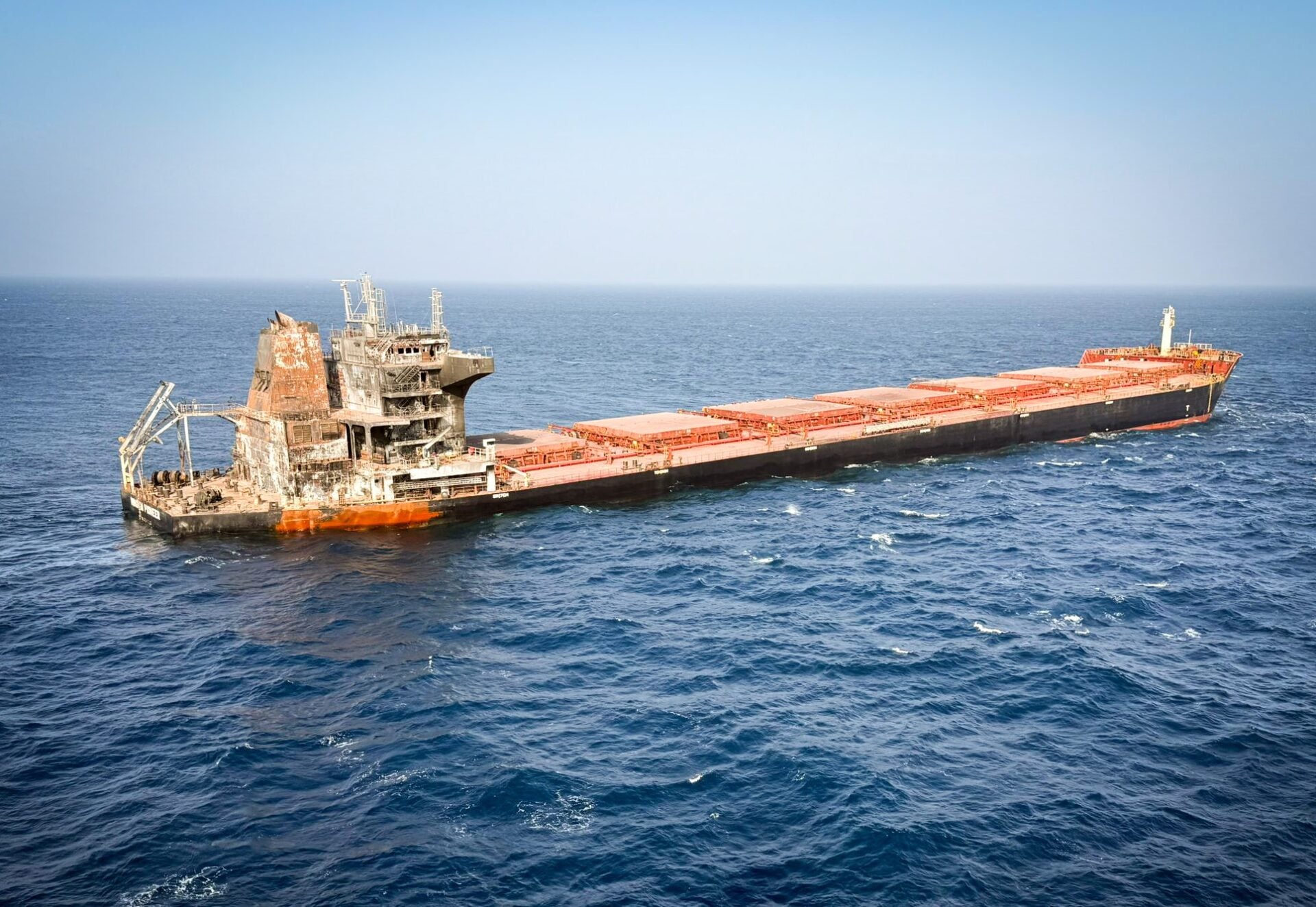
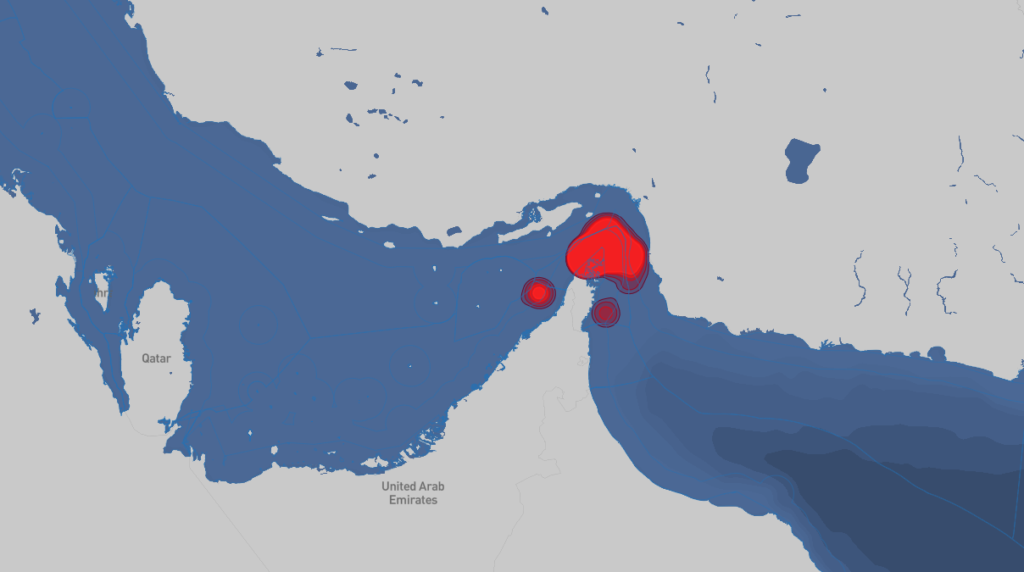
Throughout July and August, Iranian forces have continued to exert control over the Strait of Hormuz and attempted to limit ‘unauthorised’ transits with verbal threats over VHF and direct attacks against ‘violating’ vessels. In July, prior to the 8 July US airstrikes, two tankers sustained physical damage on 7 July – a third was struck on 6 July. Since then, a further 22 vessels have been damaged in relation to Strait of Hormuz transits. Most recently, two tankers were damaged on 31 August. Following this duplicate impact, the US launched new airstrikes against fixed installations.
THreat update
Strait of Hormuz transits remain contested and high risk, however, daily in- and outbound transits continue. Iran continues to seek control over Strait of Hormuz transits, while the US facilitates transits along the Omani coastline. Transits through the Transit Separation Scheme are not advised, despite the recent statement of the TSS having been cleared of mines. The alternatives continue to be a northern route in coordination with Iranian authorities and a southern route facilitated by US forces. On 24 August, the US Office of Foreign Assets Control updated their guidance in relation to US sanctions against Iran, expressly highlighting the risk of non-compliance if coordinating with Iranian authorities “including by accepting insurance or other services or responding to information demands for guarantees of safe passage, even if there is no associated payment or other exchange of value for these services.”
The US facilitated route remains available to international shipping, with a layer of military support against attempted attacks against transiting vessels. However, Iran has continued to interfere with shipping on this route via VHF threats as well as Unmanned Aerial Vehicle and missile launches.
The US naval blockade remains in force. Iranian officials repeatedly linked their ‘closure’ of the strait to the blockade. Most recently, Iranian Parliament Speaker, Mohammad Bagher Ghalibaf, stated on 1 September: “The Strait will not be reopened until the US fulfils its commitments under the memorandum.” Ghalibaf was part of the negotiating team that agreed on the Memorandum of Understanding. His persistence on upholding the agreement is assessed to stand in contrast to other influence leading figures within the Iranian regime, who seek to maintain a stronger military stance.” Ghalibaf added that if the US “intensify the blockade, we [Iran] will definitely give a military response — and everyone will suffer. If the enemy’s will is that we cannot export oil from the Persian Gulf, no one will be able to export oil.” With this added statement, Ghalibaf reiterated the stances maintained by leading military figures.
Diplomacy has been interrupted in favour of calibrated temporary military action. US President Donald Trump stated: “If the failed Nation of Iran retaliates for this very justified attack, they will be hit again at a much harder and higher level.” No such escalation has occurred, though further US airstrikes remain a realistic possibility over the coming days. In contrast to the President’s statement, a US official reportedly suggested the US would not retaliate to avoid continued exchanges and the risk of further escalation. However, a risk of miscalculation and further escalation persists as Major General Yahya Rahim Safavi, Senior Military Advisor to the Supreme Leader Mojtaba Khamenei, called for Iran’s military to prepare for pre-emptive operations to deter adversaries.
RECOMMENDATIONS
- American and Israeli flagged, owned and operated shipping is advised to avoid transiting into the Arabian/Persian Gulf until a peace agreement has been announced.
- Other shipping is advised to coordinate Strait of Hormuz transits with military authorities in advance of a planned transit. Operational disruptions or delays remain a realistic possibility even if not directly targeted.
- Crews should be briefed that, even if transit has been coordinated, if they are instructed not to proceed, they should acknowledge the instructions and follow them immediately.
- Shipping proceeding to other regional ports should continue to adopt ship protection measures consistent with the risk of conflict, and should engage an intelligence provider for route planning.
- Companies are recommended to engage an intelligence provider while operating in the region to maintain awareness of threat developments.
FREQUENTLY ASKED QUESTIONS
- Is it currently safe to transit the Strait of Hormuz?
No. Transits through the Strait of Hormuz remain contested and high risk. Iran continues to seek control over transits and has used VHF threats, UAVs, missiles attacks against vessels it considers to be violating its restrictions. Despite this, daily inbound and outbound transits continue.
- What routing options remain available to commercial shipping?
Two routing options can be considered. The US-facilitated route along the Omani coastline remains available to international shipping and benefits from military support against attacks, although Iran continues to interfere with vessels on this route. A northern route, coordinated with Iranian authorities, is also available, but companies face potential US sanctions-compliance risks when coordinating with Iran. The Transit Separation Scheme (TSS) is not advised, despite the recent statement that it has been cleared of mines; a southern route facilitated by US forces is the preferred alternative to the TSS.
- What is the current threat to vessels transiting the Strait?
The threat remains high and may intensify in flash-point escalation. Attacks against transiting vessels have continued throughout the conflict; most recently, two tankers were damaged on 31 August. The continued US-Iran confrontation, including US airstrikes, Iranian attacks on US military installations, and threats from both sides, creates a persistent risk of further incidents and escalation.
CONTACT INFORMATION
Ambrey: +44 203 503 0320, intelligence@ambrey.com
AMBREY – We Prepare, Support, Respond – For Every Seafarer, Every Vessel, Everywhere.