Global Maritime Kidnap forransom Hotspots
Date issued: 16 July 2026
This document has been approved for distribution by Ambrey Analytics Ltd.
“Offshore kidnap-for-ransom is often treated as an isolated threat. This analysis demonstrates that, in many locations, attacks against vessels occur within wider onshore kidnapping economies. By combining onshore and offshore incident data, this report identifies global kidnapping hotspots, examines changing patterns of risk and highlights locations where evolving criminal activity may present emerging threats to commercial shipping.”
EXECUTIVE SUMMARY
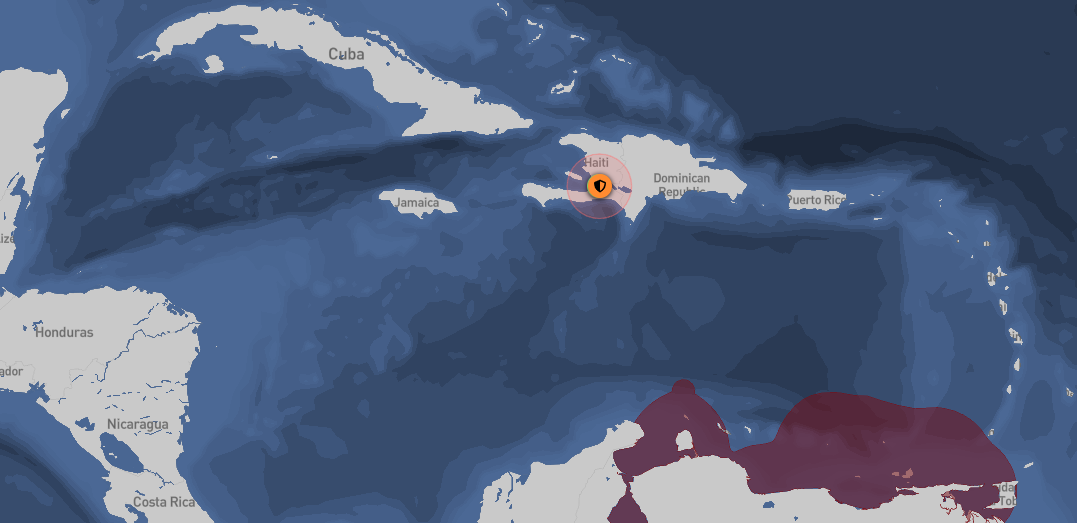
- The May 2026 kidnapping of two crew members off Haiti was not an isolated maritime event but reflected the country’s wider onshore kidnap-for-ransom environment. This demonstrates how onshore criminality can translate into maritime security threats.
- Analysis of a combined global databas of onshore and offshore ransom incidents identified Haiti as having the highest population-adjusted incidence of kidnap for ransom worldwide, with additional high-risk hotspots identified in Trinidad and Tobago, Ecuador, Nigeria, Cameroon and Somalia.
- Change-point analysis identified Ecuador as exhibiting a statistically significant structural increase in kidnap-for-ransom activity, while emerging operational signals were detected in Cameroon, Haiti, Honduras, Mozambique, Somalia and Trinidad and Tobago. These locations warrant enhanced monitoring despite not all meeting conventional statistical thresholds.
- The findings suggest that maritime kidnap-for-ransom risk is often an extension of established onshore kidnapping economies. Integrating onshore and offshore intelligence can provide earlier identification of emerging threats than reliance on historical maritime incidents alone.
- Differences between current maritime security measures and existing industry risk designations reflect differing risk assessment objectives. Incorporating coastal kidnapping intelligence into voyage security assessments would strengthen the early identification of evolving kidnap-for-ransom hotspots.
SITUATION
In May 2026, two crew members were kidnapped from a bulk carrier off Port-au-Prince, Haiti, and subsequently released following the reported payment of a US$500,000 ransom.
Several maritime administrations have recognised Haiti as presenting an elevated security risk. For example, the Marshall Islands Registry requires vessels flying its flag and calling at Haitian ports to operate at ISPS Security Level 2, while the United States Coast Guard has imposed Conditions of Entry on vessels arriving from Haiti after determining that the country was not effectively implementing the International Ship and Port Facility Security (ISPS) Code. International Group P&I clubs have also issued loss-prevention advisories warning that deteriorating security conditions and armed gang activity around Port-au-Prince are disrupting port operations and increasing risks to vessels and crews.