
China’s Summer Fishing Moratorium: A Staggered Reopening Raises Collision and Friction Risk
Date issued: 19 August 2026
This document has been approved for distribution by Ambrey Analytics Ltd.
“China’s annual summer fishing moratorium typically covers nearly 120,000 marine capture and fishing auxiliary vessels, although the exact number varies by year and some fishing activities are exempt or subject to special permits. The 2026 phased reopening is now returning large numbers of fishing vessels to southern Chinese coastal waters, with activity set to shift north in September. Around 70,000 vessels were reported cleared to sail or resuming fishing around the 16 August opening. For commercial shipping, the main implications are higher collision exposure and traffic-management pressure, while in disputed waters the return of large fishing fleets also increases the potential for law-enforcement encounters and political friction.”
EXECUTIVE SUMMARY
- The South China Sea and southern East China Sea reopened at noon on 16 August 2026 after a three-and-a-half-month closure. Ambrey’s aggregation of provincial reporting indicates that around 70,000 vessels were cleared to sail or resumed fishing around the opening. Chinese maritime authorities activated traffic-control and escort measures as fleets returned to sea, reflecting elevated merchant–fishing collision risk.
- Risk now shifts north. Waters north of 35°N reopen on 1 September, followed by the Yellow Sea and East China Sea between 35°N and 26°30′N on 16 September. Fishing density and associated navigational pressure are therefore expected to migrate progressively towards northern Chinese ports and the Yangtze River Delta.
- The reopening also has a security dimension. The Senkaku/Diaoyu Islands fall within the band that reopened on 16 August, where previous reopening periods have coincided with increased Chinese fishing and coast guard activity. At Scarborough Shoal, the seasonal reopening now overlaps with separate year-round restrictions within the China-designated Huangyan Dao National Nature Reserve.
- The moratorium redistributes rather than simply removes fishing effort. Activity falls sharply during the closure but rebounds around reopening dates, producing concentrated traffic and, in disputed waters, changing the mix of fishing and law-enforcement vessels operating in the same area.
- For commercial shipping, the principal near-term concern is navigational safety. Operators should expect concentrated fishing traffic, short-notice VTS measures and greater need for early course or speed alterations, with the areas of highest exposure shifting north as each fishing zone reopens.
EVENT
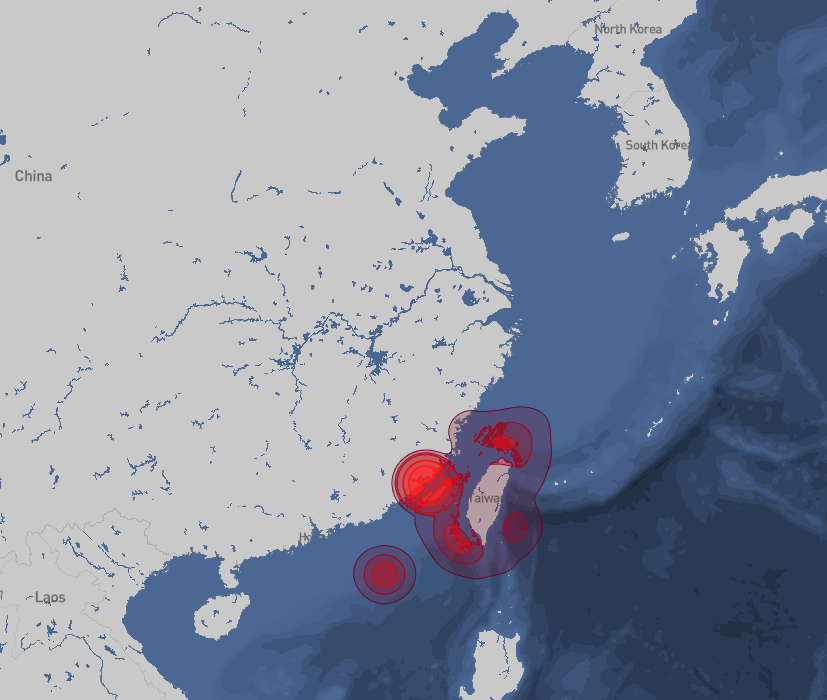
The 2026 closure began at noon on 1 May across the Bohai Sea, Yellow Sea, East China Sea and the South China Sea north of 12°N. Guangdong alone reported 22,000 vessels back alongside by 11:00 that morning, overlapping with Labour Day passenger peaks in the Qiongzhou Strait and Pearl River Estuary.
The return to fishing is not governed by three reopening dates alone. Under the national rules revised in 2023, four gear types — beam shrimp trawl, pots and traps, gillnet and light purse/seine — in the Yellow and East China seas between 35°N and 26°30′N remain subject to the formal moratorium until 16 September but may undertake specially approved fishing during the closure. Their operating dates therefore depend on approved provincial schemes rather than a single national…