AMBREY THREAT CIRCULAR> JOINT US-ISRAEL MILITARY STRIKES ON IRAN & RETALIATION
Date update released: 28 February 2026
Source: This document has been approved for distribution by Ambrey Analytics Ltd.
“Iran commences retaliation against early morning joint US-Iran strikes. Targets presently limited to military assets. Strongly affiliated shipping assessed to be at heightened risk is advised to shelter in territorial seas and avoid transits through the Persian/Arabian Gulf, Strait of Hormuz, southern Red Sea, and Gulf of Aden.”
EXECUTIVE SUMMARY
- US and Israel launched military strikes on Iran, targeting military sites.
- President Donald Trump confirmed US participation.
- Iran has also likely launched retaliatory strikes in the region.
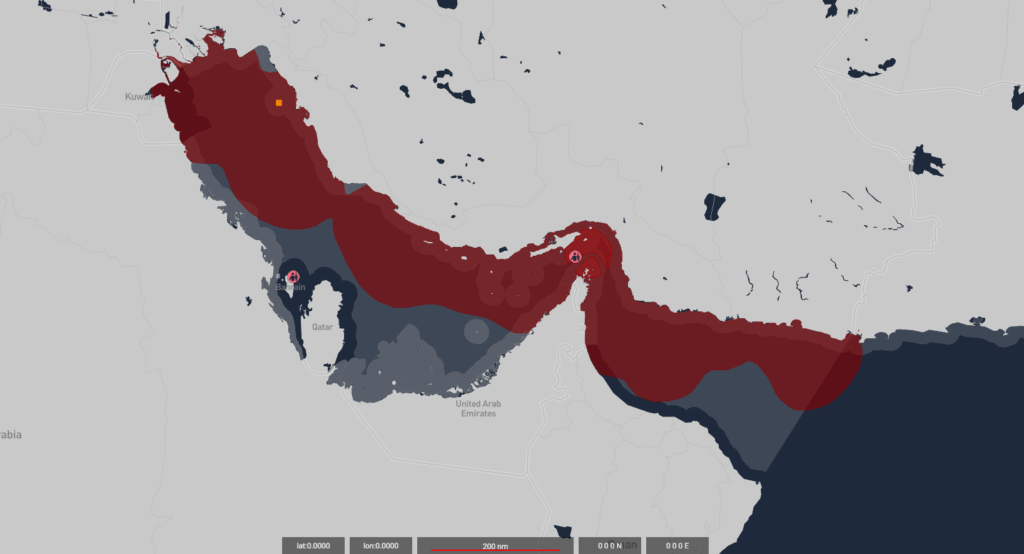
- The US military has issued a “Maritime Warning Zone” in the Arabian Gulf, Gulf of Oman, North Arabian Sea, and the Strait of Hormuz until military operations against Iranian forces have ceased.
SITUATION
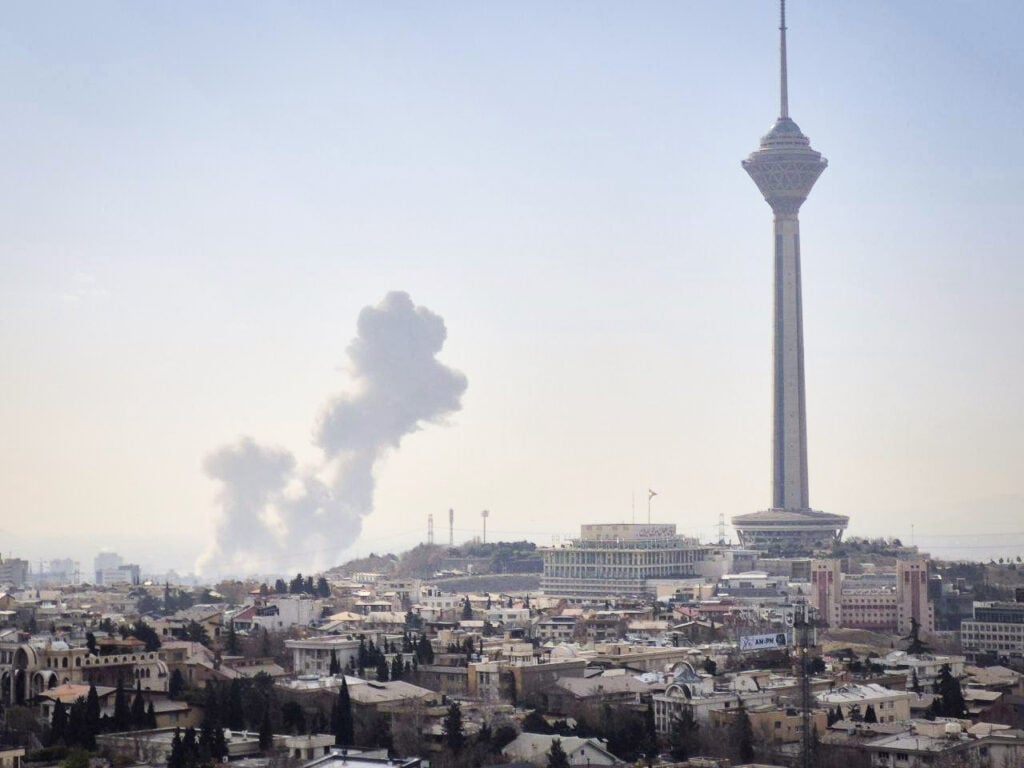
Israel and the US have launched airstrikes on Iran. On the morning of 28 February 2026, Israel’s Minister for Defence, Israel Katz, stated that “Israel has launched a pre-emptive strike against Iran to remove threats to the State of Israel” and declared an “immediate state of emergency throughout the entire country.” US President Trump later confirmed in a video message, that the US had engaged in the strikes as well, with American new outlets indicating the participation of US forces based across the region as well as at least on of the carrier strikes groups. Iran has commenced retaliatory action, with attacks reported on military targets in Israel, Bahrain, UAE, and, Kuwait.

THREAT UPDATE
An extended period of hostilities is assessed as likely, significantly elevating risks to US and Israeli affiliated merchant shipping across the wider region. US and Israel affiliated vessels are assessed to be at a high risk of direct engagement, while maritime infrastructure connected to US energy interests is also exposed to potential targeting. Israeli port facilities are assessed to be at high risk of direct attack, creating additional danger for nearby commercial vessels through blast effects, debris, or secondary incidents.
The US Navy has declared a “Maritime Warning Zone” due to Military Operations covering the Arabian Gulf, Gulf of Oman, North Arabian Sea, and the Strait of Hormuz. Although the US Navy stated the area would not be intended to impede neutral or merchant shipping, the statement also emphasised that they cannot guarantee the safety of vessels operating in these waters. Consequently, affiliated shipping is assessed to be at high risk with US naval support not guaranteed. The US statement also included that “ships traversing the identified area are advised to navigate with caution and avoid navigation within this zone, if possible.”
Militant groups aligned with Iran have threatened their participation in military conflict should Iran be attacked. Ambrey assesses that Ansar Allah (“the Houthis”) in Yemen will highly likely resume attacks on Israeli- and US-affiliated shipping through ownership and flag. There is a realistic possibility the Houthis may resume targeting of companies trading with Israel too. Militia in Iraq may also attempt to target US and Israeli-affiliated shipping if there is the opportunity. It is assessed to be a realistic possibility that Hezbollah resumes its own attacks on Israel in response. There is a heightened risk to shipping calling Israeli ports, and ports co-located with American bases in the region.
RECOMMENDATIONS
INDIAN OCEAN REGION:
- Affiliation checks against the Iran and the Houthi target profile:
- Ambrey recommends a thorough affiliation check as part of a transit risk assessment is performed for Arabian Sea, Gulf of Oman, Persian/Arabian Gulf, Gulf of Aden and Red Sea voyages. Ambrey continues to adjust these as per the developing intent and threat.
- Vessels strongly affiliated with the target profile are advised to avoid these locations where possible and are advised to take shelter in territorial seas, and to avoid transiting the Strait of Hormuz. If feasible, vessels are advised to take a holding position outside the Gulf of Oman, but at distance from the US carrier strike group operating in Arabian Sea off the coast of Oman.
- Ship Security Assessments: Merchant shipping assessed to be at heightened risk is advised to carry out Ship Security Assessments tailored to the threat, and to implement recommended and proportionate ship protection measures before sailing.
- Bridge support: Unarmed advisors to prepare and reassure crew and assist with military liaison. Digital operations can also support with route planning, voyage preparation, and keep the bridge and shore staff informed of any changes in risk while enroute.
ISRAELI WATERS:
- Vessels in Israeli ports are advised to designate a Safe Muster Point (SMP) which is above the waterline and central within the superstructure. In the event of air raid sirens, crew are advised to muster in the SMP. Vessels in port are advised to adhere to port authority instructions.
- Vessels in the anchorage or approaching Israeli territorial waters are advised to remain at least 5NM offshore and 5NM away from offshore installations.
CONTACT INFORMATION
Ambrey: +44 (0)203 503 0320, intelligence@ambrey.com
AMBREY – For Every Seafarer, Every Vessel, Everywhere.
END OF DOCUMENT