AMBREY THREAT CIRCULAR> INTERNATIONAL SHIPPING UNDER US-IRAN ESCALATION
Date released: 27 January 2026
Source: This document has been approved for distribution by Ambrey Analytics Ltd.
“Ambrey assesses that the US has positioned sufficient military capability to conduct kinetic operations against Iran while maintaining the ability to defend itself and regional allies from reciprocal action. While US President Trump retains the authority to order military action at short notice, Ambrey assesses him to be unwilling to engage in prolonged conflict, instead favouring clearly defined, outcome-driven objectives.”
EXECUTIVE SUMMARY
- Protests in Iran and escalatory statements have raised confrontation risks. The USS Abraham Lincoln Carrier Strike Group is deployed, and air defence and shipping security in the Strait of Hormuz have been strengthened.
- New US sanctions target Iran’s petrochemical sector and associated tankers, reinforcing trade restrictions.
- Iran and allies have threatened retaliation against US interests.
- US-affiliated shipping assessed to be at heightened risk – further escalation likely to impact shipping at large.
- Shipping companies are advised to reduce aggregate risk when operating in the Arabian/Persian Gulf.
SITUATION
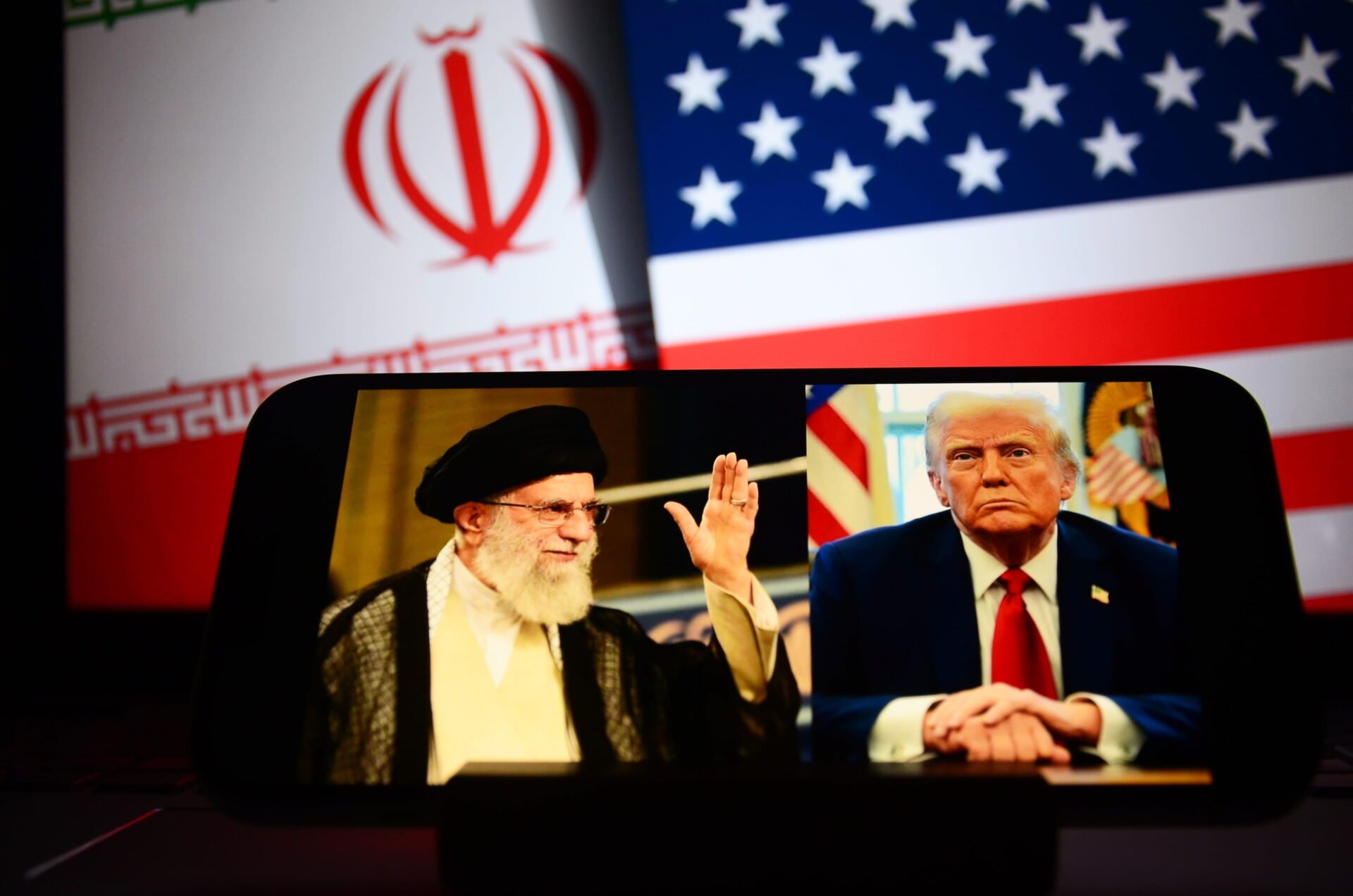
In early January 2026, intensifying external rhetoric and actions aimed at facilitating regime change occurred among nationwide protests across Iran. Statements from Iranian, Israeli, and US officials contributed to an impression of escalating confrontation. President Trump stated that his previously declared red line regarding the killing of protesters had been crossed and indicated that a response was under consideration. While military action remains one possible outcome, alternative measures, including cyber operations and economic pressure, continue to be pursued.
Economic action has been taken by the US, including threats of 25% tariffs on entities trading with Iran. The US Department of the Treasury’s Office of Foreign Assets Control (OFAC) also issued additional designations targeting Iran’s revenue-generating petrochemical sector, including nine tankers.
The US has continued to keep the possibility of an imminent military strike open through public statements by the US President and senior aides. President Trump declared to the Iranian people that help was coming, while the US State Department issued a travel advisory for the region. The USS Abraham Lincoln Carrier Strike Group was deployed from the Far East to US Central Command’s Area of Responsibility, expanding available military capabilities.
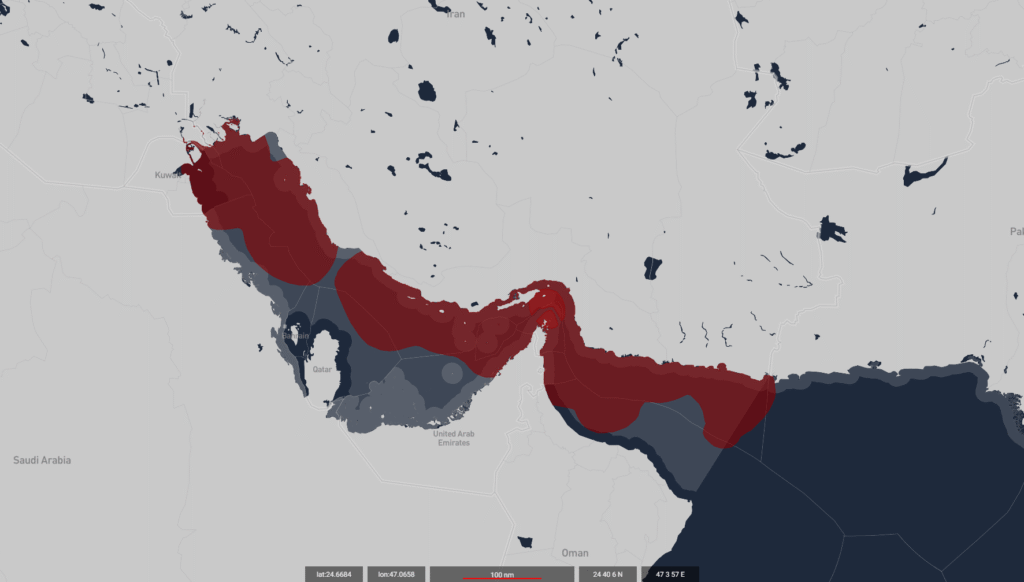
Operationally, the US increased its focus on enhancing air defence capabilities across the region and on the security of American-linked shipping in the Persian/Arabian Gulf. Military escorts have reportedly been offered to vessels transiting the Strait of Hormuz, suggesting that US Central Command is preparing for worst-case contingencies. Despite this heightened posture, there has been no direct impact on commercial shipping during the period. Should the US opt for military escalation, Iran has threatened to target US interests across the region. IRGC Commander, Major General Mohammed Pakpour, stated: “Our finger is on the trigger, and we warn America and [Israel] against making any miscalculations.” Further, Iranian President Masoud Pezeshkian stated on X: “Any aggression against the Supreme Leader of our country is tantamount to all-out war against the Iranian nation.” In parallel, the Speaker of the Iranian parliament threatened action against “shipping centres.” Iran’s regional partners have increasingly signalled their willingness to provide military support in the event of an attack. The Yemen-based Houthis released a video creating the appearance of the threat to resume attacks against shipping, while Iraq’s Kata’ib Hezbollah issued a statement calling its fighters to arms in support of Iran.
THREAT UPDATE
Ambrey assesses that the US has positioned sufficient military capability to conduct kinetic operations against Iran while maintaining the ability to defend itself and regional allies from reciprocal action. While US President Trump retains the authority to order military action at short notice, Ambrey assesses him to be unwilling to engage in prolonged conflict, instead favouring clearly defined, outcome-driven objectives. With Iranian protests assessed to have subsided, Ambrey assesses it highly unlikely that regime change could be achieved through external aerial or naval military force. Supporting or avenging Iranian protesters in punitive strikes is assessed as insufficient justification for sustained military conflict; however, alternative objectives, such as the degradation of Iranian military capabilities, may increase the likelihood of limited US intervention. US demands toward Iran for a negotiated agreement include the full removal of enriched uranium, limiting of long-range missiles, no domestic enrichment of nuclear material, and an end to the support for militant factions across the region. These demands could inform potential alternate reasonings for kinetic strikes.
IMPLICATIONS FOR SHIPPING
Ambrey assesses it highly likely that US vessel and cargo interests would be at risk of targeting by Iran across the Persian/Arabian Gulf and Gulf of Oman in response to US airstrikes. Longer-term escalation could see a number of vessels targeted, raising the possibility of companies refraining from transiting the Strait of Hormuz resulting in a de facto blockade. Ambrey assesses it to be unlikely Iran would establish a formal blockade of the Strait against all shipping.
Below, Ambrey has outlined five plausible scenarios and their likely impact to shipping.
Scenario 1: Symbolic US airstrikes with calibrated retaliation
Assessed likelihood: Probable
Limited, symbolic US airstrikes intended to reinforce President Trump’s stated red lines – such as strikes against launch sites or non-strategic military infrastructure – would prompt a proportional Iranian response. As observed in prior incidents, Iran would be expected to retaliate in kind, potentially through indirect or geographically displaced strikes, while avoiding escalation thresholds that could trigger sustained conflict. Under this scenario, US vessel and cargo interests would remain at elevated risk of targeting across the Persian/Arabian Gulf and Gulf of Oman, though targeting shipping would be assessed to be unlikely, provided US airstrikes do not emphasise economic targets. Impacts to shipping would highly likely be temporary, with Iran refraining from sustained interference with international shipping.
Scenario 2: Punitive and limited but direct US airstrikes against Iranian security entities
Assessed likelihood: Realistic possibility
One-off US strikes against Iranian security organisations – particularly those associated with internal repression or protest clampdowns – would be interpreted by Iran as a more direct challenge to regime authority. In response, Iran would be expected to expand its retaliation beyond symbolic measures, increasing the probability of maritime incidents involving US-affiliated vessels. Retaliation could also target US allies in the region, risking further escalation between Iran and other parties, such as Israel. Longer-term escalation could see several vessels targeted, raising commercial concerns and potentially prompting some shipping companies to reassess transits through the Strait of Hormuz. Ambrey continues to assess it highly unlikely Iran would declare a formal blockade.
Scenario 3: No military conflict, diplomacy prevails
Assessed likelihood: Realistic possibility
Heightened rhetoric and force posturing without kinetic military action, while all parties prioritise diplomatic engagement to de-escalate tensions. While Iran would continue to signal its capability to disrupt maritime traffic across the Persian/Arabian Gulf and Gulf of Oman, Ambrey assesses it unlikely that merchant vessels would be deliberately targeted under this scenario. Maritime risk would remain elevated to US-interests due to miscalculation; however, commercial shipping through the Strait of Hormuz would likely continue largely uninterrupted, with no indication of either a formal or de facto blockade.
Scenario 4: Law enforcement–led pressure campaign through sanctions enforcement
Assessed likelihood: Unlikely
The US could prioritise an enforcement-focused approach aimed at increasing the economic impact of existing sanctions on Iran, rather than expanding direct military action. Under this scenario, emphasis would be placed on maritime law enforcement activity, including interdictions, inspections, and seizures of sanction-breaching cargoes, particularly oil shipments and dual-use goods. This approach would contrast with a predominantly military force build-up in the Middle East, shifting from deterrence by strike capability to persistent pressure through compliance enforcement.
Ambrey assesses this model would more closely resemble US Coast Guard operations in the Caribbean, where sustained presence, intelligence-led boarding operations, and partner-nation cooperation are used to disrupt illicit trafficking without triggering open conflict. Applied to the Persian/Arabian Gulf and Gulf of Oman, such an approach would likely involve multinational naval and coast guard assets operating under legal authorities rather than combat rules of engagement. While this would reduce the likelihood of immediate kinetic escalation, Ambrey assesses it almost certain that US-linked commercial vessels would remain at risk of harassment, seizure, or proxy interference by Iran in response. Maritime risk would increase unevenly, particularly for vessels suspected of sanction violations, though the probability of a formal or de facto blockade of the Strait of Hormuz would remain low under this scenario.
Scenario 5: Pre-emptive large-scale, sustained conflict with regional escalation
Assessed likelihood: Unlikely
A prolonged US air campaign combined with regional escalation would significantly degrade maritime security across the Persian/Arabian Gulf, Gulf of Oman, and approaches to the Strait of Hormuz. Under this scenario, Iran would be expected to engage in warfare against US and its allies including targeting military and critical infrastructure across the region. Iran would also likely engage maritime domain warfare, including the targeting of US and allied vessels, mining activity, and the use of proxies to disrupt shipping. The cumulative effect could result in a de facto blockade of the Strait of Hormuz, driven not by formal declaration but by sustained risk levels leading companies to refrain from transiting the chokepoint. While Ambrey assesses a formal, universally applied blockade as unlikely, the practical impact on global shipping and energy markets would be severe and long-lasting.
RECOMMENDATIONS
- Affiliation checks against the Iran target profile:
- Ambrey recommends a thorough affiliation check as part of a transit risk assessment is performed for Arabian Sea, Gulf of Oman, and Persian/Arabian Gulf voyages. Ambrey continues to adjust these as per the developing intent and threat.
- Vessels strongly affiliated with the target profile are advised to avoid the Arabian Sea, Gulf of Oman, and Persian/Arabian Gulf where possible.
- If the company is in these regions, it would be advised to limit aggregate risk, by people, hull, and value to an acceptable level.
- Ship Security Assessments: Merchant shipping assessed to be at heightened risk is advised to carry out Ship Security Assessments tailored to the threat, and to implement recommended and proportionate ship protection measures before sailing.
- Bridge support: Unarmed advisors to prepare and reassure crew and assist with military liaison. Digital operations can also support with route planning, voyage preparation, and keep the bridge and shore staff informed of any changes in risk while enroute.
CONTACT INFORMATION
Ambrey: +44 203 503 0320, intelligence@ambrey.com
AMBREY – For Every Seafarer, Every Vessel, Everywhere.
END OF DOCUMENT