AMBREY INSIGHT> A NEW SCENARIO AGAINST TAIWAN: COULD A “CAPTURE” OPERATION BECOME THINKABLE?
Date issued: 26 January 2026
“In a Taiwan leadership-disruption scenario, the greatest threat to commercial shipping is sudden uncertainty. Operators navigating the Taiwan Strait need early warning, legal-operational clarity, and decision support to manage administrative interference, protect personnel, and control costs during fast-moving “shock window” conditions.”
Source: This document has been approved for distribution by Ambrey Analytics Ltd.
EVENT
In early January 2026, US forces conducted a high-profile operation in Venezuela that resulted in the capture and transfer of President Nicolás Maduro. The episode drew international attention because it appeared designed to achieve decisive political effect through a rapid, leadership-focused move before others could react.
The operation triggered “precedent” debate well beyond Latin America. On Chinese online platforms, some commentators framed it as a demonstration of how a major power can impose a political outcome by removing a leader quickly. In Taiwan, officials and analysts debated whether the episode should be read as a warning template for Beijing—or instead as a reminder of US capability and willingness to act when core interests are engaged.
Beijing’s public response followed a familiar script. The Taiwan Affairs Office condemned Washington’s use of force against a sovereign state and rejected comparisons between Taiwan and Venezuela, while reiterating that Taiwan is an “internal affair” and warning against “external interference”.
If the Venezuela operation harms China economically (as discussed in recent Ambrey Insight), the strategic irony is that it may also shape thinking in another direction: it has injected fresh momentum into debate over whether a fast, leadership-focused action could be imagined as part of a Taiwan coercion playbook.
CONTEXT
China’s Taiwan strategy in recent years has been defined by a broad, sustained pressure campaign that combines diplomacy, lawfare, military signalling, economic leverage, and psychological operations. Beijing continues to squeeze Taiwan’s international space by discouraging formal recognition, limiting Taiwan’s participation in international organisations, and applying pressure to third countries, firms, and individuals seen as supporting Taiwan’s autonomy.
Meanwhile, the PRC has expanded political and legal intimidation. In early January, Beijing announced punitive measures and blacklist-related actions targeting Taiwanese officials, describing them as “die-hard secessionists” and encouraging public tip-offs. This pattern supports long-arm jurisdiction narratives and raises personal risk for named individuals.
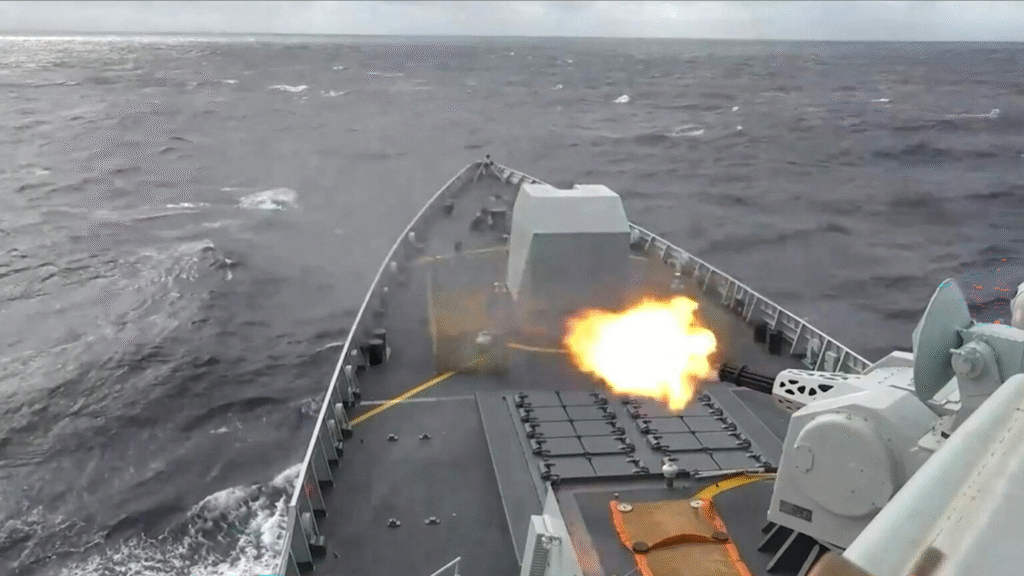
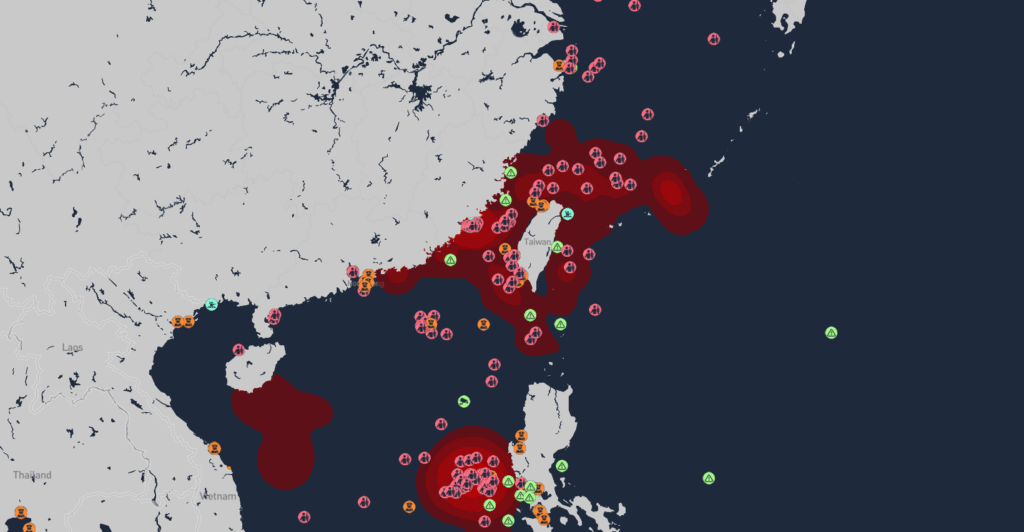
The military dimension has simultaneously evolved from occasional signalling into a near-constant operating pattern. Since August 2022, Beijing has periodically conducted large-scale exercises around Taiwan, while maintaining routine air and maritime activity near the island. Regular crossings around the median line and heightened “law enforcement” presence at sea contribute to a sense of constant friction, with Taiwan forced into a daily readiness posture.
This strategic backdrop has widened the debate over future scenarios. At one end are coercive options designed to pressure Taipei without immediate amphibious invasion—such as quarantine-style operations or blockade concepts aimed at controlling flows, shaping morale, and extracting political concessions. At the other lies the possibility of large-scale kinetic conflict later in the decade.
At the same time, Taiwan’s defence planning has increasingly been described through the lens of an asymmetric “porcupine strategy”. It focuses on dense, survivable, and dispersed “quills”, such as mobile missiles, drones, and air-defence systems. The goal is to raise the cost of invasion and force a protracted fight. This matters because it gives Beijing an additional incentive to explore options that aim for rapid disruption of decision-making rather than attritional conquest.
Against this background, the Venezuela episode adds a fresh prompt: whether a leadership-focused shock could be framed as a way to accelerate coercion before a prolonged fight and external intervention dynamics fully take shape.
ANALYSIS
IS THERE A NEW TAIWAN SCENARIO INSPIRED BY THE VENEZUELA OPERATION?
The short answer is that the “capture scenario” is easier to circulate than to execute. Yet it remains strategically meaningful because it alters the psychological terrain of deterrence: it introduces a vivid, easily understood idea that audiences can grasp in seconds—remove a leader, trigger paralysis, force a settlement.
The key question is therefore not only whether Beijing could execute such an option, but whether it benefits from keeping the idea alive as a coercive concept.
What follows is an assessment of why this idea is circulating and is being signalled, before turning to the constraints that keep it unlikely as a first choice, and then outlining a Taiwan-adapted pathway that incorporates both.
Why the idea is gaining traction: enabling factors
1) Trump’s remarks and the ambiguity problem
Trump publicly argued that Venezuela does not create a Taiwan precedent. However, his public remarks that the Taiwan decision is “up to” Xi Jinping can still generate interpretive space. Even if intended as de-escalatory, such phrasing may be read by different audiences as signalling tolerance, transactionalism, or a lack of fixed commitment.
For Beijing, ambiguity is a resource. It can be used to pressure Taipei psychologically (“even the US thinks this is China’s decision”), while also complicating alliance signalling by encouraging partners to debate what Washington would actually do in a fast-moving crisis. Taiwan’s deterrence posture depends heavily on perceptions of external response speed. Anything that injects doubt into that timeline can become strategically valuable for Beijing.
2) Beijing’s official line: reject the comparison, keep the option space open
The Taiwan Affairs Office response rejected Venezuela–Taiwan comparisons while reiterating red lines and framing the Taiwan issue as an internal matter. Notably, Beijing did not state that leadership-targeting tactics are unthinkable; instead, it used the moment to condemn US “lawlessness” while reinforcing that any Taiwan-related action is justified under Beijing’s sovereignty narrative.
This approach preserves strategic flexibility. It also seeks to deter outside condemnation by implying Western critics lack credibility to judge China’s Taiwan actions after Venezuela. In effect, Beijing is advancing a “double standards” argument: if the West normalises leadership-targeting operations when convenient, it will face greater difficulty condemning or mobilising collective opposition to similar coercive moves framed under China’s legal and sovereignty claims.
3) Capability signalling: “decapitation” as a rehearsed theme
A leadership-capture operation is not the same as a precision strike campaign. It requires intelligence dominance, special-operations access, and the ability to act quickly under heavy defensive pressure. However, recent rehearsal cues help explain why “decapitation” concepts have gained traction: they suggest the PLA is practising the operational building blocks required for leadership disruption.
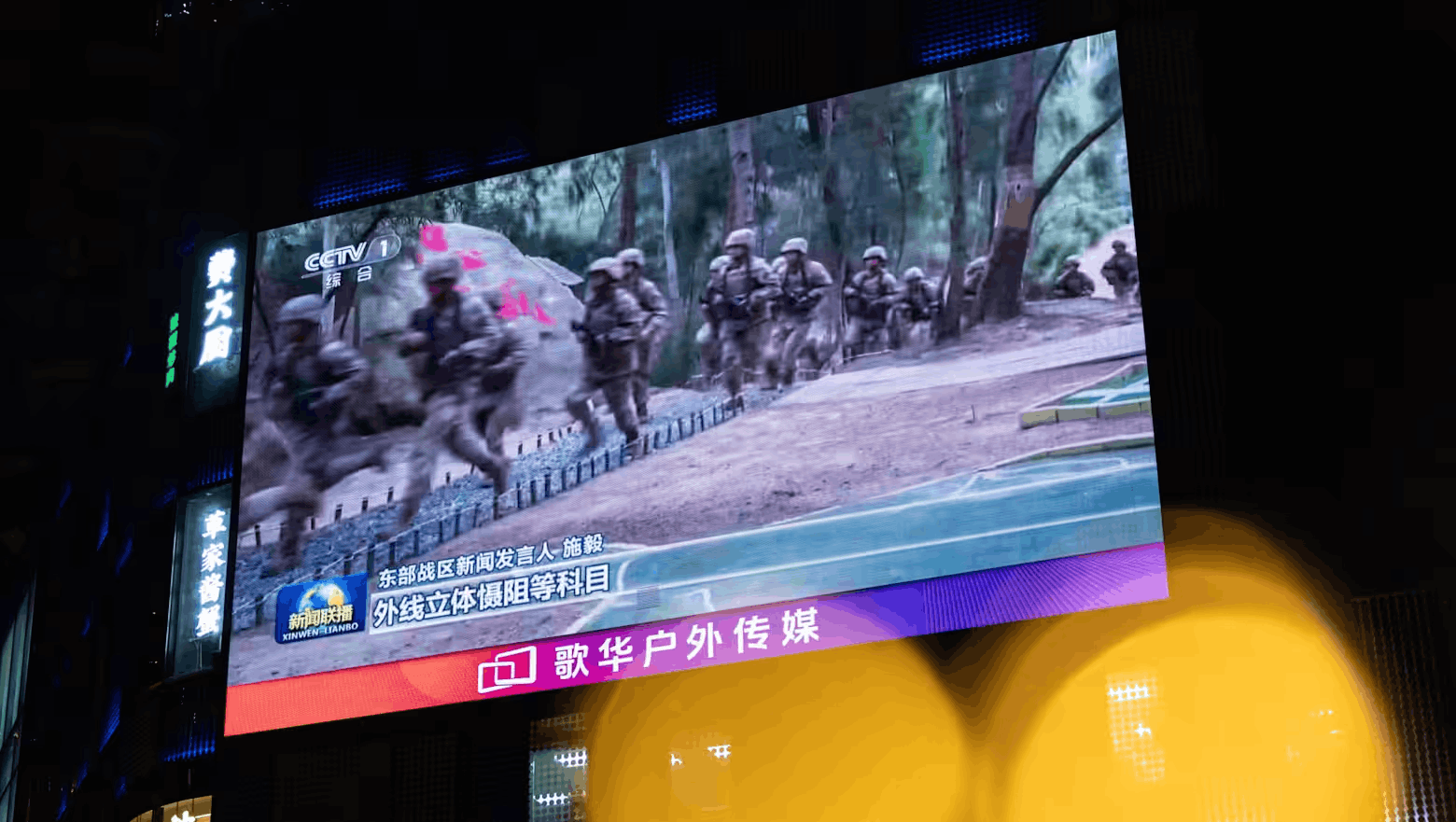
First, in the Justice Mission 2025 exercises, “decapitation” was not merely a messaging label but a simulated mission component. Official coverage described the drill in four keywords—coverage, blockade/control, precision strikes, and decapitation—and stated that participating forces conducted simulated strikes against leadership “image targets” linked to pro-independence elements. This indicates an opening-phase package designed to suppress key nodes, compress response time, and generate a short paralysis window.
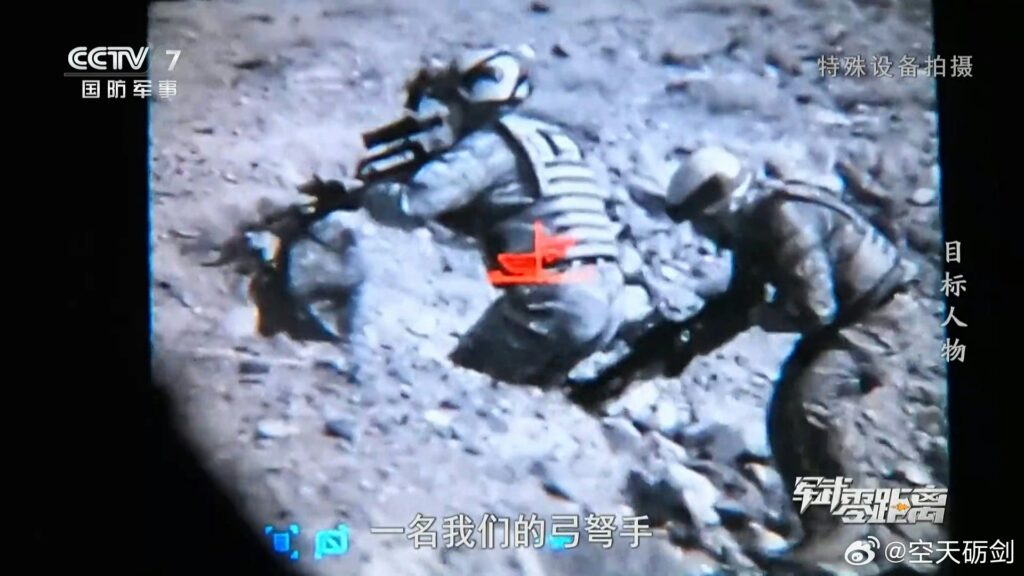
Second, during the circulation of the “Venezuela precedent” debate, CCTV aired a rapid night-time assault vignette framed as counter-terror training but widely interpreted as reinforcing “decapitation” themes. The clip highlighted drone-enabled targeting and a time-compressed special-operations strike sequence, keeping time-critical raid skills visible in the information space.
Taken together, these cases do not confirm an imminent “capture” plan. They do, however, show leadership-disruption effects being operationalised through training: precision strikes to weaken the system, paired with fast raids intended to exploit gaps during confusion. This combination increases the plausibility of leadership-disruption concepts within a broader coercion playbook, even if Beijing retains lower-risk options.
4) A more doctrine-grounded rationale: “decapitation” as a counter to Taiwan’s porcupine strategy
A more doctrine-grounded lens is that “decapitation” is sometimes framed as a way to offset Taiwan’s asymmetric (“porcupine”) defence by bypassing frontline resistance and targeting political and military leadership directly, rather than grinding through layered defences.
This framing matters because it treats leadership disruption as part of a multi-pronged counter-porcupine package: combining rapid leadership-targeting concepts with precision reconnaissance and targeting, high-tempo raids, and political–psychological pressure designed to accelerate surrender or defections. It also implies a heavier role for unmanned and AI-enabled systems, intended to sustain momentum and reduce risk in dense terrain.
At the same time, this does not automatically translate into a literal “capture the president” plan. In military practice, “decapitation” often means leadership and command disruption. The aim is to break coordination, not necessarily to seize individuals.
5) Information and psychological pressure: making the threat more tangible
A key lesson from the Venezuela debate is that leadership capture is psychologically intuitive. It provides a cinematic narrative of power: a leader taken, a system shaken. This makes it unusually effective as a deterrence and intimidation signal, even if the operational feasibility is uncertain.
Footage and commentary can therefore serve a broader purpose: making “leadership vulnerability” feel more tangible to audiences. The speed with which such content is clipped, reframed, and circulated matters because the informational afterlife can amplify pressure beyond the drill itself.
This is also where a “Venezuela-inspired” narrative can do work even without a copy-and-paste plan. The more vivid and credible the leadership-paralysis imagery appears, the more it can be used to pressure Taiwan psychologically, complicate political cohesion, and raise doubts about crisis response capacity.
6) Legal framing and “lawfare”: building a domestic justification architecture
One underappreciated element of Venezuela is not just the operation, but how the action was wrapped in political and legal framing. For China, the transferable concept is how to justify a fast coercive move as something other than war—a bounded enforcement action, punishment of criminals, or a necessary internal-security measure.
Beijing possesses domestic legal tools that support this narrative architecture, including the Anti-Secession Law and a growing willingness to name individuals, impose bans, and encourage tip-offs against “secessionists”. In a crisis, China could frame leadership-focused actions as internal law enforcement against separatists, regardless of whether the international community accepts the legitimacy of that claim.
Taken together, these enabling factors explain why leadership-focused concepts have gained traction in signalling and commentary. They do not, however, mean Beijing would treat a literal “capture” as the most efficient pathway to unification. In practice, the same logic that makes leadership disruption attractive in theory—speed, shock, and compressed decision-time—also makes it risky. It is hard to calibrate, hard to control, and more likely to widen into a broader war than grey-zone pressure tools.
Why it is still unlikely to be Beijing’s first choice: constraints and disincentives
Even with enabling factors, several obstacles make a Taiwan leader-capture option unattractive as a primary pathway.
1) Removing a leader does not equal political control
Taiwan has clear succession rules and resilient institutions. Even if a senior leader were removed, authority could transfer rapidly. Control of ports, airfields, power grids, and military command would not automatically follow. Beijing might gain shock value, but not governance.
2) It risks unifying Taiwan against Beijing
A leadership-targeting operation would likely be perceived as an attack on Taiwan’s political community rather than on a single party. In many societies, such shocks produce cohesion rather than collapse. Taiwan’s internal political competition does not necessarily translate into a willingness to accept coercion from outside.
3) Escalation risk is hard to calibrate
Compared with Venezuela, Taiwan is a high-deterrence theatre with direct consequences for US credibility and regional security architecture. A sudden leader-focused strike could trigger rapid military escalation and external involvement. The risk is not only war, but a broader crisis that damages Beijing’s economic priorities and strategic environment.
4) Intelligence and execution requirements are prohibitive
A successful capture mission would demand near-perfect intelligence on leadership location and movement, secure insertion and extraction under contested conditions, and the ability to neutralise protective forces. Attempting such a mission and failing could strengthen Taiwan’s resolve, invite rapid external support, and create a rallying narrative for Taipei.
Taiwan’s long-standing contingency planning and hardened readiness posture would make any leadership-focused raid far more uncertain and far more likely to backfire if it fails.
Physical capture is most plausible only under unusually permissive conditions—such as leadership exposure, security fragmentation, or insider access—rather than as a reliable opening-phase option.
5) China has more controllable options that already work
Beijing already has a menu of coercive tools that are cheaper, steadier, and easier to scale: diplomatic isolation, economic pressure, grey-zone harassment, cyber operations, legal intimidation, and periodic exercises. These instruments allow Beijing to sustain pressure without making an all-or-nothing gamble.
A Taiwan-adapted scenario: “capture” as a psychological shock instrument, not a standalone solution
If Beijing were to adapt the Venezuela “logic” to Taiwan, it would likely not look like a simple raid. A more plausible scenario is a multi-domain coercion package designed to create a short period of disruption and decision pressure, with “leadership targeting” used mainly as a coercive signal and secondary lever, rather than the core objective.
Phase 1: Legal and narrative conditioning
Beijing escalates rhetoric on “separatists”, expands named lists and penalties, and asserts that Taiwan’s leadership has crossed an irreversible red line. This phase is designed to prepare domestic opinion, justify escalation under a law-enforcement framing, and signal to third parties that China is acting against “criminal secession” rather than launching a conventional war.
Phase 2: A short, intense opening shock
Beijing initiates a concentrated wave of precision strikes and electronic warfare aimed at command-and-control and surveillance networks—the functional “key nodes” that allow Taiwan’s leadership and military to see the battlespace, communicate decisions, and coordinate responses. The objective is not immediate occupation, but disorientation and delay in the critical early hours: slowing Taiwan’s ability to organise, fragmenting information flows, and compressing decision time.
In operational terms, this phase aims to degrade the system rather than remove individuals. Even limited disruption to early warning, air-defence coordination, or communications hubs can create a brief period of confusion that complicates mobilisation, dispersal, and coherent crisis management.
Phase 3: Psychological exploitation and leadership vulnerability as coercive leverage
After the opening shock has disrupted surveillance and command networks, Beijing would try to convert operational disruption into political leverage quickly. The first move is informational and psychological: pushing a narrative that Taiwan’s leadership is struggling to coordinate, that outside support may be delayed or uncertain, and that continued resistance will impose disproportionate costs. In parallel, Beijing would issue demands framed as “restoring order” or preventing separatism, aiming to extract concessions before Taiwan regains a stable operational picture and before a prolonged conflict dynamic sets in.
At the same time, Beijing could intensify pressure by targeting not only perceptions but leadership cohesion itself. This does not necessarily require physically capturing individual leaders. Instead, the purpose is to constrain decision-making and slow crisis management—making the leadership feel exposed, isolated, and time-starved. The means can include disrupting secure communications between the Presidential Office, military command, and key ministries; generating information overload through multiple simultaneous incidents and cyber disruptions; and degrading command links and decision hubs so orders take longer to confirm and execute. Alongside this, sustained intimidation messaging could imply that leaders can be tracked or struck, reinforcing a sense of vulnerability even without a literal “capture” attempt.
The intended effect is a “jammed leadership” condition: decision cycles slow, different agencies work from inconsistent assumptions, and the government struggles to project clarity and control in the critical early period. Even if Taiwan’s institutions remain intact, the loss of tempo matters. It buys Beijing time, amplifies uncertainty inside Taiwan, and increases the chance that political demands can be pushed while Taipei is still trying to stabilise the situation. In this framing, “decapitation” is best understood less as a commando-style seizure mission and more as a coercive campaign tool—using disruption and intimidation to weaken leadership coordination and force negotiation under extreme time pressure.
Further escalation beyond Phase 3 could shift into more overt air and maritime control measures, such as formal exclusion zones, sustained interdiction, a blockade, or limited strike exchanges, significantly increasing risk for both military and commercial actors. However, these higher-end pathways are beyond the scope of this paper.
What would trigger the scenario: determinants and thresholds
A leadership-focused pathway becomes more plausible if Beijing believes three conditions align.
First, a perceived move towards de jure independence.
Beijing has repeatedly warned against steps it interprets as a formal status change—constitutional revision efforts, referendums, or symbolic acts that can be framed domestically as secession. The more Taipei appears to institutionalise separation, the more Beijing may feel compelled to seek a decisive response.
Second, uncertainty about external reaction speed and cohesion.
If Washington and its partners appear slow, divided, or politically constrained, Beijing may calculate that a short, sharp coercive operation could succeed before external intervention stabilises the situation.
Third, confidence in creating a brief disruption window.
Even then, Beijing would need strong confidence in intelligence, readiness, and multi-domain coordination. Without that, sustained pressure tools remain safer than an all-or-nothing leadership gamble.
SUMMARY
The Venezuela operation injected a vivid new idea into the Taiwan contingency debate: that leadership capture might serve as a shortcut to political control. Beijing’s official line rejected the Venezuela–Taiwan comparison while sharpening red lines and framing the issue as an internal affair.
Select state-media messaging about rapid raids does not fundamentally change the assessment that a Taiwan leader-capture option is difficult, escalation-prone, and unlikely to be Beijing’s first choice. At most, it reinforces that leadership-targeting narratives are being kept visible as part of a broader coercive signalling environment.
More importantly, the discussion is increasingly framed around whether leadership and command disruption could be used to blunt Taiwan’s asymmetric defence posture and deny it the time needed to impose costs over a prolonged fight.
Operationally, removing a leader would not automatically deliver unification. Taiwan’s institutions are resilient, and the international consequences of such an act would likely be severe. Yet strategically, the concept remains relevant because it amplifies psychological pressure and fits a broader PLA emphasis on shock, paralysis, and precision effects. The more credible risk is therefore not a direct copy of Venezuela, but a Taiwan-tailored coercion sequence designed to impose political shock, compress response time, and force negotiation under extreme pressure—especially if Beijing concludes that Taipei is attempting to change the status quo in irreversible ways.
SHIPPING IMPLICATIONS OF A TAIWAN CAPTURE/ DECAPITATION SHOCK
A Taiwan leadership-disruption “shock” would likely affect shipping through sudden uncertainty rather than immediate physical damage, increasing operational confusion in and around the Taiwan Strait. Even without a declared blockade, Beijing could impose disruption through a maritime control narrative, using law enforcement activity to shape behaviour at sea. This would raise lawfare-related exposure for crews and masters as boarding activity expands and inspections become more coercive. Commercially, the most immediate effect would be war-risk and insurance pricing shocks.
1)Rapid “shock window” increases uncertainty more than kinetic damage
Ship operators face fast-moving advisories, inconsistent instructions, and heightened misinterpretation risk, particularly for vessels close to Taiwan’s northern and western approaches.
2)A maritime “control narrative” even without a declared blockade
The most credible early disruption is administrative control at sea: stopping, boarding, diverting, or delaying shipping under a legal enforcement narrative (rather than sustained kinetic strikes on vessels).
3)Legal exposure for crews and masters increases under “lawfare”
A greater risk of detention/interview, seizure of documents/devices, or coercive “investigations” for crews, particularly if boarding/inspection operations expand.
4)War risk insurance impacts occur immediately, even under grey-zone framing
Shipping costs rise sharply for voyages in/near Taiwan Strait, with possible cover delays and spread in the premiums while insurers assess the level of risk.
RECOMMENDATIONS (TAIWAN CAPTURE / DECAPITATION SHOCK SCENARIO)
1)Manage the “shock window”: prepare for rapid instruction change and misinterpretation risk
Pre-define a 24–72 hour crisis playbook for Taiwan approaches (northern/western Taiwan Strait), including diversion triggers and internal escalation thresholds.
Establish a single source of truth onboard (master + CSO/operations, supported by intelligence advisors) to avoid conflicting directions from agents, social media, or unofficial channels.
Enhance bridge decision discipline: maintain full logs of course changes, VHF calls, and any interaction with state vessels/aircraft to reduce liability after the fact.
2)Reduce exposure to “control narrative” operations (stopping/boarding/diverting)
Route planning: where commercially viable, avoid Taiwan western approaches and high-friction zones during heightened tension; consider east-of-Taiwan routing as the default contingency.
Early compliance posture: if hailed by state vessels, adopt a calm, consistent compliance approach (confirm identity, voyage intent, cargo type, next port) while avoiding political commentary.
Boarding readiness package: prepare a standard boarding document folder (paper + digital) including registry, cargo docs, crew list, voyage plan, charter instructions, safety certificates.
Bridge team rehearsal: run a “CCG/PLA boarding scenario drill” (roles, communications, safe muster, document handover, photography/recording policy).
Company policy on device access: master should have pre-approved guidance on what can / cannot be handed over (particularly crew phones, laptops, ECDIS exports).
3)Protect crews and masters against lawfare / detention / device seizure
Legal preparedness: ensure the operator’s legal counsel is on call and that the vessel has rapid-access legal contact details posted on the bridge and in the master’s office.
Crew device hygiene: prior to transiting risk zones, implement temporary “clean device / minimal data” practices for bridge/ops where feasible (restrict sensitive emails/chats).
Documentation minimisation: remove unnecessary politically sensitive material from ship systems (e.g., internal commentary about Taiwan/China, sensitive client comms stored locally).
Interrogation guidance: issue a master/crew interview script: stick to factual navigational details, cargo, next port; do not speculate or discuss politics.
Consular coordination: pre-identify relevant consular support depending on flag/crew nationality and ensure those numbers are available onboard.
4)Control the insurance and commercial exposure: war risk cover and premium shock
Trigger-based insurance check: use a clear threshold list for when to notify underwriters (e.g., inspections declared, missiles fired, EW reported, exclusion zones announced).
Pre-clear cover conditions: before entering high-risk waters, confirm:
- war risk AP terms (these waters do not currently form a listed area)
- voyage approval requirements
- breach consequences (routing deviation, AIS policy, reporting)
Contractual resilience: charter parties should consider Taiwan Strait disruption clauses, including:
- liberty to deviate / delay
- off-hire and force majeure language clarity
- rights if ports suspend operations or pilots unavailable
Budget for spread and delay: assume premium spread volatility and potential delays in cover confirmation; plan cashflow and decision timing accordingly.
Prefer protected routing during volatility: when pricing uncertainty spikes, choose routing that is more defensible to insurers (clear “risk avoidance” logic).
CONTACT INFORMATION
Ambrey: +44 203 503 0320, intelligence@ambrey.com
AMBREY – For Every Seafarer, Every Vessel, Everywhere.
END OF DOCUMENT