AMBREY THREAT CIRCULAR UPDATE> INTERNATIONAL SHIPPING UNDER US-IRAN ESCALATION
Date update released: 19 February 2026
Source: This document has been approved for distribution by Ambrey Analytics Ltd.
“US-Iran negotiations are set to continue, though the stated ‘red lines’ and military build-up have increased the likelihood of military escalation. Ambrey continues to assess a limited military exchange to be the more likely scenario in case of conflict. At risk shipping is advised to prepare contingencies for the eventuality of military conflict.”
UPDATE
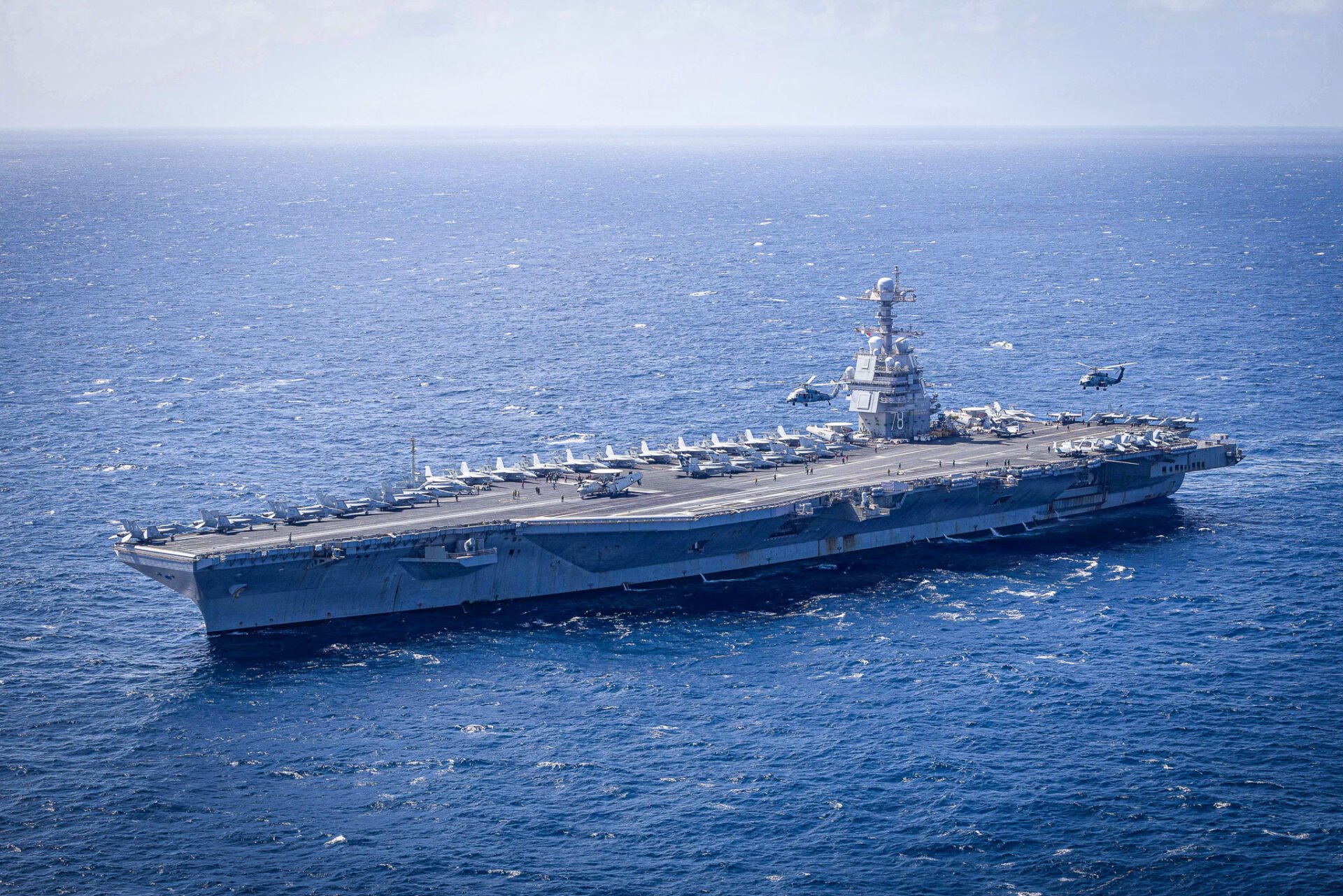
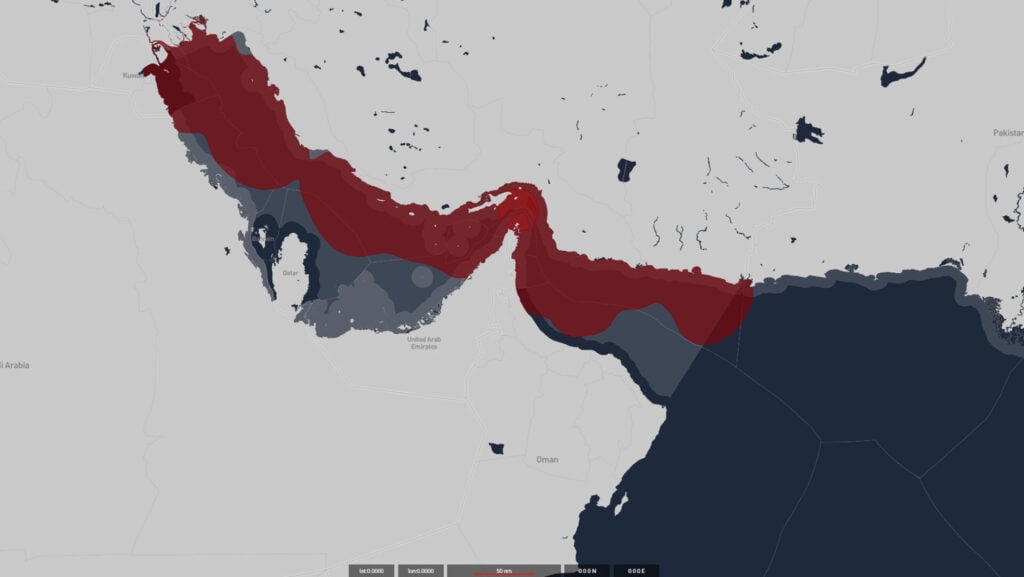
Tensions between Iran and the US have persisted. The US has continued its military build-up across the region, with additional airframes being deployed from the continental US and a second Carrier Strike Group having been deployed, presently offshore Gibraltar. Iran on the other hand has increased military activity in and around the Strait of Hormuz. A US merchant vessel was harassed, and military exercise areas have overlapped with the inbound lane of the Transit Separation Scheme. The military exercises in vicinity of the TSS and Iran’s claimed closure of the Strait increased navigational safety risks to commercial shipping.
Simultaneously, two rounds of indirect negotiations have taken place with little rapprochement. Both sides have publicly maintained their maximalist stances and demands, lowering the likelihood for compromise and a successful conclusion of negotiations. Whilst negotiations are set to continue, the stated ‘red lines’ and military build-up have increased the likelihood of military escalation.
SCENARIOS
Below, Ambrey has updated the plausible scenarios and their assessed likely impact to shipping. The likelihoods are based on the UK Defence Intelligence’s probability yardstick.
Scenario 1: Limited but direct US airstrikes against Iranian nuclear sites, and some security entities
Assessed likelihood: Realistic possibility ➜ Likely
Limited US strikes against Iran’s nuclear facilities and some security entities. As observed in prior incidents, Iran would be expected to retaliate in kind, highly likely targeting the US military across the region, while avoiding escalation thresholds that could trigger sustained conflict. Under this scenario, US vessel and cargo interests would remain at elevated risk of targeting across the Persian/Arabian Gulf and Gulf of Oman, though targeting shipping would be assessed to be unlikely, provided US airstrikes do not emphasise economic targets. Impacts to shipping would highly likely be temporary, with Iran refraining from sustained interference with international shipping. Following the US airstrikes during the 12-Day War, Iran retaliated with calibrated missile strikes against a US based in Qatar. No US shipping was targeted then, though US vessels have been harassed since.
Scenario 2: Pre-emptive large-scale, sustained conflict with regional escalation
Assessed likelihood: Unlikely ➜ Realistic possibility
A prolonged US air campaign combined with regional escalation would significantly degrade maritime security across the Persian/Arabian Gulf, Gulf of Oman, and approaches to the Strait of Hormuz. Under this scenario, Iran would be expected to engage in warfare against US and its allies including targeting military and critical infrastructure across the region. Iran would also likely engage maritime domain warfare, including the targeting of US and allied vessels, mining activity, and the use of proxies to disrupt shipping. In the event that host military bases are used by the US to strike Iran, it is assessed to be a realistic possibility that the conflict could extend to targeting shipping affiliated with those host nations. The risk of collateral damage would be heightened in any campaign of maritime domain warfare. The cumulative effect could result in a de facto blockade of the Strait of Hormuz, driven not by formal declaration but by sustained risk levels leading companies to refrain from transiting the chokepoint. While Ambrey assesses a formal, universally applied blockade as unlikely, the practical impact on global shipping and energy markets would be severe and long-lasting.
Scenario 3: Law enforcement–led pressure campaign through sanctions enforcement
Assessed likelihood: Unlikely (no change)
The US could pursue an enforcement-focused strategy implemented by existing military forces, aimed at increasing the economic impact of current sanctions on Iran rather than expanding direct military action. Under this scenario, emphasis would be placed on maritime law enforcement activity, including interdictions, inspections, and seizures of sanction-breaching cargoes, particularly oil shipments and dual-use goods. This approach would shift operational emphasis away from large-scale force build-ups and strike-based deterrence, toward sustained pressure through continuous monitoring and enforcement of compliance. While this would reduce the likelihood of immediate kinetic escalation, Ambrey assesses it almost certain that US-linked commercial vessels would remain at risk of harassment, seizure, or proxy interference by Iran in response. Maritime risk would increase unevenly, particularly for vessels suspected of sanction violations, though the probability of a formal or de facto blockade of the Strait of Hormuz would remain low under this scenario.
Scenario 4: No military conflict, diplomacy prevails
Assessed likelihood: Realistic possibility ➜ Unlikely
Heightened rhetoric and force posturing without kinetic military action, while all parties prioritise diplomatic engagement to de-escalate tensions. While Iran would continue to signal its capability to disrupt maritime traffic across the Persian/Arabian Gulf and Gulf of Oman, Ambrey assesses it unlikely that merchant vessels would be deliberately targeted under this scenario. Maritime risk would remain elevated to US-interests due to miscalculation; however, commercial shipping through the Strait of Hormuz would likely continue largely uninterrupted, with no indication of either a formal or de facto blockade.
RECOMMENDATIONS
- Affiliation checks against the Iran target profile:
- Ambrey recommends a thorough affiliation check as part of a transit risk assessment is performed for Arabian Sea, Gulf of Oman, and Persian/Arabian Gulf voyages. Ambrey continues to adjust these as per the developing intent and threat.
- Vessels strongly affiliated with the target profile are advised to avoid the Arabian Sea, Gulf of Oman, and Persian/Arabian Gulf where possible.
- If the company is in these regions, it would be advised to limit aggregate risk, by people, hull, and value to an acceptable level.
- Companies and vessels are advised to prepare rerouting of high-risk transits following military strikes. In the event of escalation, merchant vessels are advised to reconsider transiting through the Strait of Hormuz and close to Iranian waters, as well as to seek drifting locations close to friendly and protected territorial waters.
- Ship Security Assessments: Merchant shipping assessed to be at heightened risk is advised to carry out Ship Security Assessments tailored to the threat, and to implement recommended and proportionate ship protection measures before sailing.
- Bridge support: Unarmed advisors to prepare and reassure crew and assist with military liaison. Digital operations can also support with route planning, voyage preparation, and keep the bridge and shore staff informed of any changes in risk while enroute.
CONTACT INFORMATION
Ambrey: +44 (0)203 503 0320, intelligence@ambrey.com
AMBREY – For Every Seafarer, Every Vessel, Everywhere.
END OF DOCUMENT