Israel’s Pre-Emptive Strike on Iran and Maritime Security Implications
Israel pre-emptive strike against Iran has significantly heightened geopolitical tensions across the Middle East, raising concerns over regional stability, maritime security, and the potential impact on global shipping operations. The large-scale airstrikes targeting Iranian military and nuclear infrastructure, followed by Iran’s UAV response, have increased the risk environment for commercial vessels operating in the Arabian Sea, Gulf of Oman, and Strait of Hormuz. As the situation continues to evolve, shipping companies and maritime stakeholders are closely monitoring the threat of further escalation and its implications for regional trade routes.
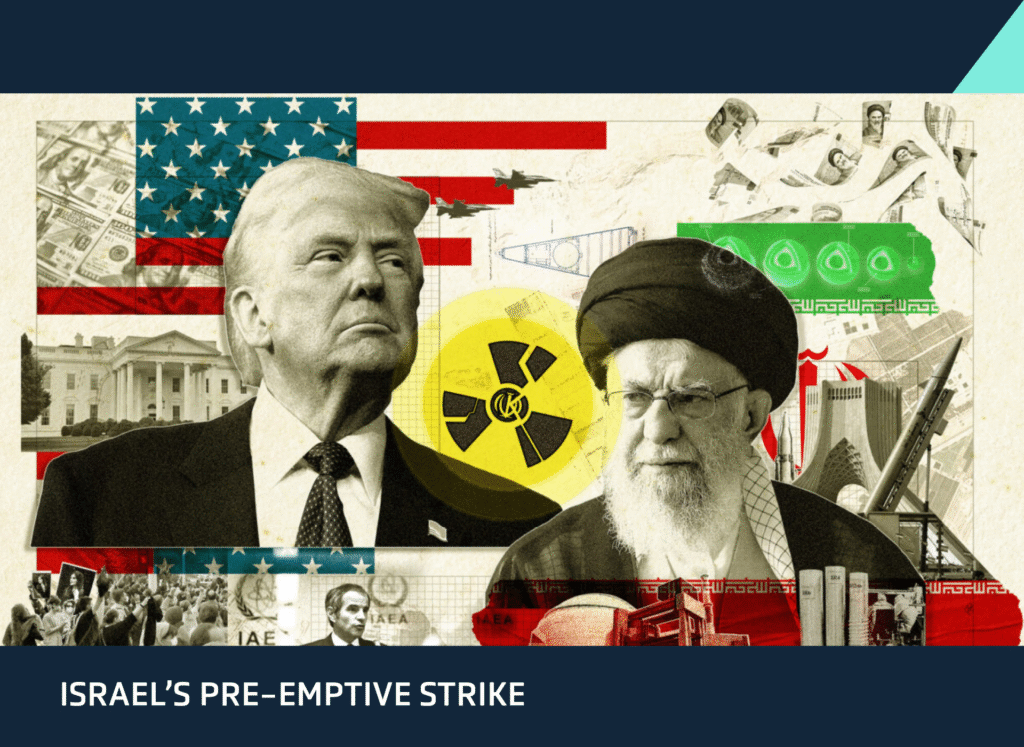
Executive Summary of the Israel-Iran Escalation
- Israel has launched a pre-emptive airstrike against Iran.
- Preliminary reporting suggested that Military leadership, scientific experts, military sites, and nuclear facilities were targeted as part of the Israel pre-emptive strike.
- US officials have emphasised that the US did not participate in the attack.
- Iran launched unmanned aerial vehicles toward Israel, reportedly all intercepted.
- No impact to shipping at the time of this report.
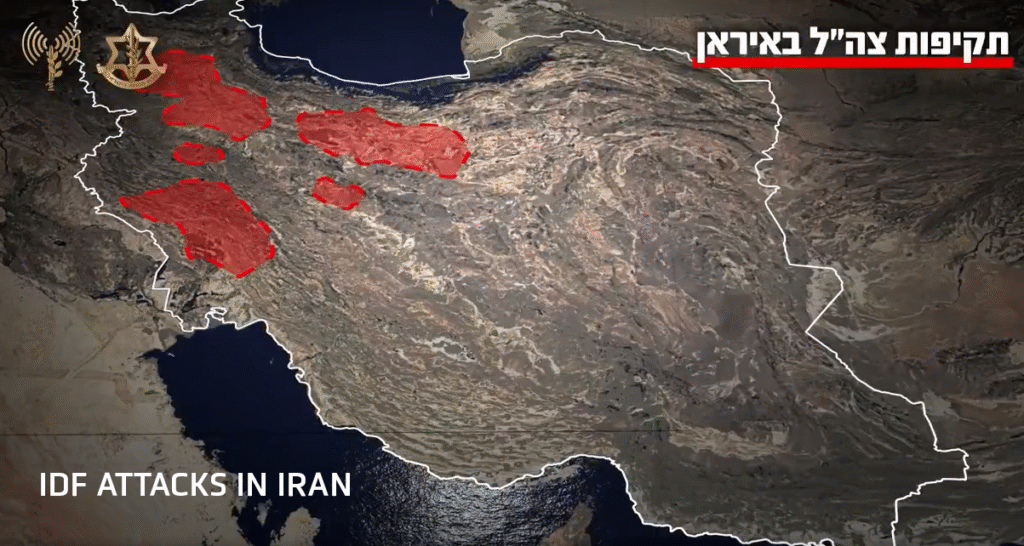
Situation Update
On the morning of the 13th of June 2025, Israel commenced striking targets in Tehran, Iran. The Israel pre-emptive strike targeted Iranian military leadership, scientists, military sites, and nuclear facilities in multiple waves. At the time of writing, it had been reported that the Chief of the General Staff of the Iranian Armed Forces, Mohammad Bagheri, and the Commander-in-Chief of the Islamic Revolutionary Guard Corps, Salami, had been killed. Additionally, two high-ranking nuclear scientists had been reportedly killed during the attacks. Images and video footage of impacts to nuclear and military facilities have been circulated, though the extent of damage remained unconfirmed. The State of Israel was on high alert in anticipation of the Iranian response. Iran launched unmanned aerial vehicles (UAVs) toward Israel via Iraq and Syria hours after the first Israeli strike. Reportedly, all UAVs were intercepted prior to reaching Israel.
Maritime Security and Shipping Threat Assessment
Risk to Israel-Affiliated Shipping in the Gulf Region
At the time of writing, no impact to shipping has been reported. Israel did not target maritime infrastructure and there are a very low number of Israel-affiliated vessels in the wider region. The Israeli airstrikes focused on targets inland. Iran’s UAV strike was assessed to have targeted military and nuclear sites. Israel’s attack was on an unpresented scale and scope. Whilst there have been notable successes, the damage to Iran’s nuclear capabilities is unclear, meaning that further Israeli military strikes are possible.
Israel-affiliated shipping is assessed to be at heightened risk in the Arabian Sea, Gulf of Oman, and Arabian/Persian Gulf.
Strait of Hormuz and Regional Shipping Stability
The US did not participate in military strikes and Iran has not accused the US of direct military strikes. Therefore, at this time, US shipping is not assessed to be at increased risk as a result of this Israeli action, though the risk of escalation persists. Uncorroborated reports stated that Iran cancelled the 6th round of talks with the US scheduled for the 15th of June. US President Donald Trump publicly favoured a negotiated agreement with Iran, though under the new circumstances, US military action to enable Israeli success is assessed to be a realistic possibility. It should be noted that the Israeli war aims are unclear, as to how far back they want to set the Iranian nuclear program.
There has been no direct involvement of the US or other Navy, meaning there has been no designation of a combat area, which might disrupt shipping at large. Nor have there been any threats to the host countries of American forces in the region. Therefore, the risk to shipping through the Strait of Hormuz is discrete.
Mitigation Measures for Shipping Companies
- Affiliation checks against the Iran target profile: Ambrey recommends a thorough affiliation check as part of a transit risk assessment is performed for Arabian Sea, Gulf of Oman, and Persian/Arabian Gulf voyages. Ambrey continues to adjust these as per the developing intent and threat.
- Ambrey recommends that shipping companies do this in advance, as we received requests for support that were already underway in the region at the time of the military strikes.
- Shipping companies are welcome to have a conversation with Ambrey to talk through scenarios.
- Vessels strongly affiliated with the target profile are advised to avoid the Arabian Sea, Gulf of Oman, and Persian/Arabian Gulf where possible.
- If the company is in these regions, it would be advised to limit aggregate risk, by people, hull, and value to an acceptable level.
- Companies and vessels are advised to prepare rerouting of high-risk transits following military strikes. In the event of escalation, merchant vessels are advised to reconsider transiting through the Strait of Hormuz and close to Iranian waters, as well as to seek drifting locations close to friendly and protected territorial waters.
- Ship Security Assessments: Merchant shipping assessed to be at heightened risk is advised to carry out Ship Security Assessments tailored to the threat, and to implement recommended and proportionate ship protection measures before sailing.
- Bridge support: Unarmed advisors to prepare and reassure crew and assist with military liaison. Digital operations can also support with route planning, voyage preparation, and keep the bridge and shore staff informed of any changes in risk while enroute.
CONTACT INFORMATION
Ambrey: +44 203 503 0320 – intelligence@ambrey.com
AMBREY – For Every Seafarer, Every Vessel, Everywhere.