Cameroon 2025 Presidential Election Maritime Risks and Shipping Disruption
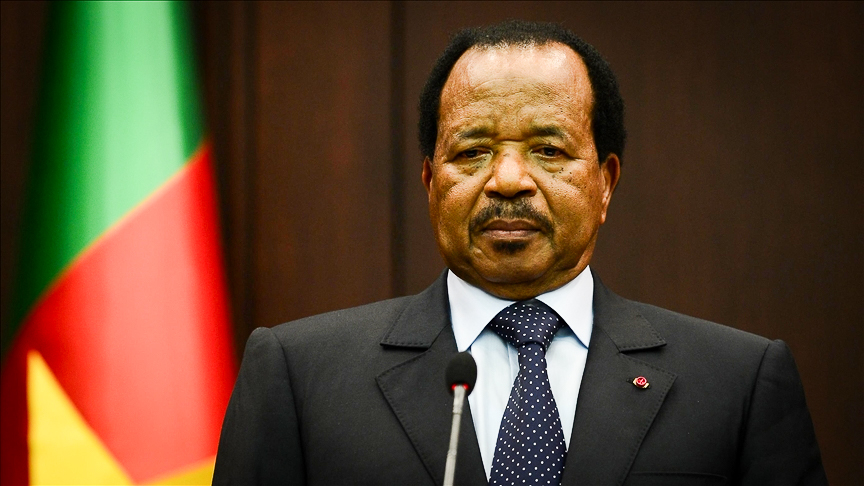
Cameroon 2025 presidential election maritime risks are increasing concerns for shipping companies and offshore operators across the Gulf of Guinea ahead of the 12 October election. Political uncertainty surrounding President Paul Biya’s re-election bid, combined with the possibility of civil unrest, curfews, and security restrictions, could disrupt Douala port operations, offshore crew rotations, and regional supply chains. As the election period approaches, maritime stakeholders are closely monitoring the risk of operational delays, congestion, and broader instability affecting commercial shipping and offshore infrastructure in Cameroon.
Executive Summary of Cameroon 2025 Presidential Election
- President Paul Biya is seeking re-election on 12 October 2025. He has held this office since 1982.
- He has since reshuffled key military posts, and government institutions have barred opponents from running.
- The most likely scenario is continuity of the present administration, and some attempts to pre-empt civil disturbance in Yaoundé and the port city of Douala.
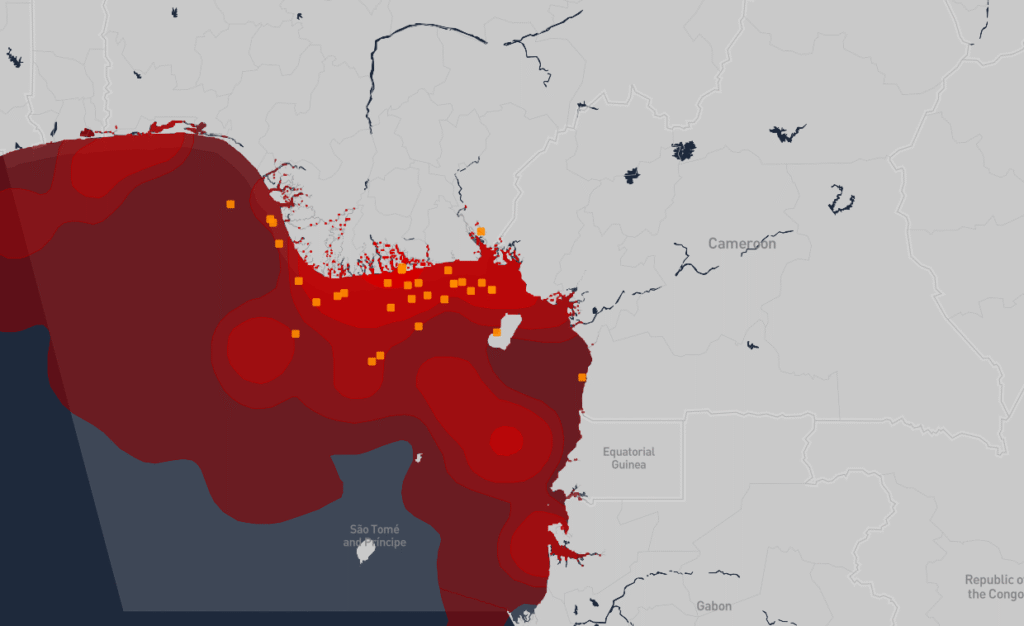
- Curfews and travel restrictions could realistically disrupt Douala port operations, Cameroon security escort vessel services and offshore infrastructure crew rotations/supplies to Massongo (evacuating Kole, Moudi crude), which depend on Douala.
- In this scenario, it is unlikely that the Ebome Marine terminal, Kome-Kribi, Kribi seaport and Limbe would need be significantly impacted.
- There are realistic possibilities of more disruptive scenarios, including an attempted elite coup or mass civil unrest.
Political and Security Context in Cameroon
President Paul Biya, now 92, has confirmed his candidacy for an eighth term as President on 13 July. Two days later, Biya announced the promotion of new chiefs of staff across all three branches of the military, including Major General Saly Mohamadou, who was aide-de-camp to the previous President, amongst other appointments. Biya has used such powers of patronage during another sensitive period, when in October 2024 he was absent and abroad for more than a month.
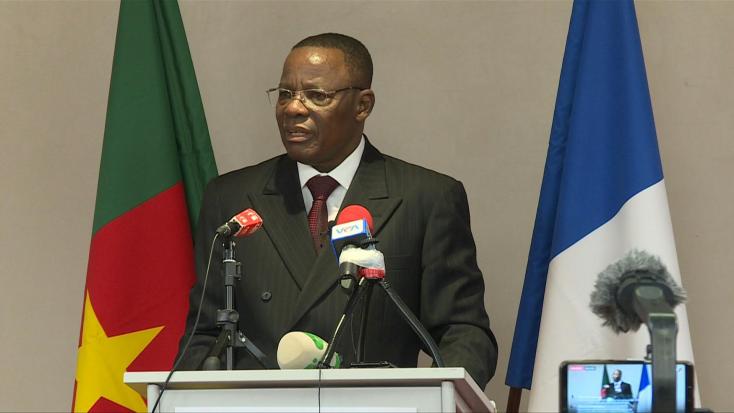
On 26 July, Cameroon’s electoral commission barred Maurice Kamto from running for office. Kamto was the runner-up in the last Presidential election, in 2018. The country’s Constitutional Council upheld this decision on 5 August. Whilst his exclusion was probably the most prominent, it was not the only one in the contest. In June and July two politicians close to the president Issa Tchiroma Bakary, and Bello Bouba Maïgari announced their own candidacies for the presidency. Tchiroma openly criticised Biya and described the government of which he had been a part, of dysfunctionality.
In August, a national institutional representative, the Archbishop of Douala, Samuel Kleda, issued a pastoral letter highly critical of the government, including its contractual agreements over exploration, drilling and oil. He has previously called on Biya not to seek re-election.
In 2018, the last presidential election, there was a significant delay between the election and the announcement of the results. Though ballots are counted immediately after the polls close, the Constitutional Council has up to 15 days to announce the results.
Cameroon is considered a part of the Françafrique. The country’s currency is the Central African CFA franc. French-owned Perenco, operates the Ebome terminal and Massongo terminal, and CMA CGM has a significant stake in Kribi seaport. Other French companies operate in Douala port. In recent years, there has been further investment from other international companies, including China Harbour Engineering Company at Kribi seaport, and ExxonMobil at the Kome-Kribi terminal, evacuating Chad-origin crude oil. Foreign investments have been criticised by some in the opposition, but largely in the context of inequality and corruption allegations.
Analysis of Cameroon 2025 Presidential Election Maritime Risks
Risk of Civil Unrest and Political Instability
It is a likely that Biya’s military appointments are an attempt to maintain civil order and to reward loyalty. The military in Cameroon is a source of regime stability but also vulnerability. In October 2023, just minutes after the re-election of the long-standing President of Gabon, Ali Bongo, the head of the Republican Guard, Brice Oligui Nguema, led a successful military coup. A military coup in Cameroon is possible, but less likely. Cameroon’s Battalion D’Intervention Rapide (BIR) is an equivalent power base, but power is assessed to be more distributed across the armed forces.
Impact on Douala Port and Offshore Operations
The opposition has not unified behind a single presidential candidate. Small-scale mobilisation of Kamto’s supporters outside the Constitutional Council were quashed; authorities used tear gas and arrested several protestors. Though they have had talks on forming a united opposition, Tchiroma and Bello Bouba have so far been unable to coalesce, and their participation in the current administration as ministers could undermine their bids. The opposition of the Archbishop of Douala could be more problematic should a political alternative emerge. The Church played a moderating role following the coup in Gabon, which could be argued to have legitimised it, but encouraged dialogue. It could perform a similar role should there be instability. A significant delay to the announcement of the results, akin to the 15-day delay in 2018, could lead to prolonged uncertainty.
The most likely scenario is continuity: Biya secures re-election with protests contained by security forces. The impending succession crisis, whether to a family member, a military figure or a political figure, is left to another day. Douala will likely face curfews in the days before, during and after the election. This could slow port operations and cause congestion. The deployment of security forces to maintain order could disrupt the provision of offshore security services, leading to some increased vulnerability to piracy. A lower but realistic possibility is a military-backed coup d’etat or an opposition victory and imposition of a state of emergency. In this scenario, and as seen in Gabon, there would likely be a border closure for several days. Port operations in Douala and Kribi would likely be suspended. Offshore platforms would likely continue operations, as they will have made contingency plans, but could be hampered by restrictions on crew rotations and supplies. The duration would be dependent upon elite/military negotiations, which could be more complex than in the Gabonese context. There are other, more remote, scenarios which could have greater consequences should there be a vacuum given recent history.
Recommendations for Shipping Companies
It is advised that shipping companies plan for extended operational delays, particularly if calling Douala, which could precede the 12 October election day and the following 2-3 weeks. This includes reviewing routes to identify lower risk drifting areas. Those calling offshore oil terminals, particularly Massongo, should prepare for logistical delays even if production continues, as crew changes and supply runs rely heavily on Douala port. Container shipping is advised to plan for regional rotation flexibility. Kribi seaport should be treated as the principal contingency port. Regularly check-in with agents and security operators over the period to understand operational statuses. Hull (War) Insurance cover for the Gulf of Guinea Joint War Committee Listed Area should be sought well in advance to secure preferential rates. Further advice will be provided if the forecasts change.
CONTACT INFORMATION
Ambrey: +44 203 503 0320, intelligence@ambrey.com
AMBREY – For Every Seafarer, Every Vessel, Everywhere.