Houthi Ban on Israeli Shipping and Red Sea Threat Update
Date released: 08 June 2026
Source: This document has been approved for distribution by Ambrey Analytics Ltd.
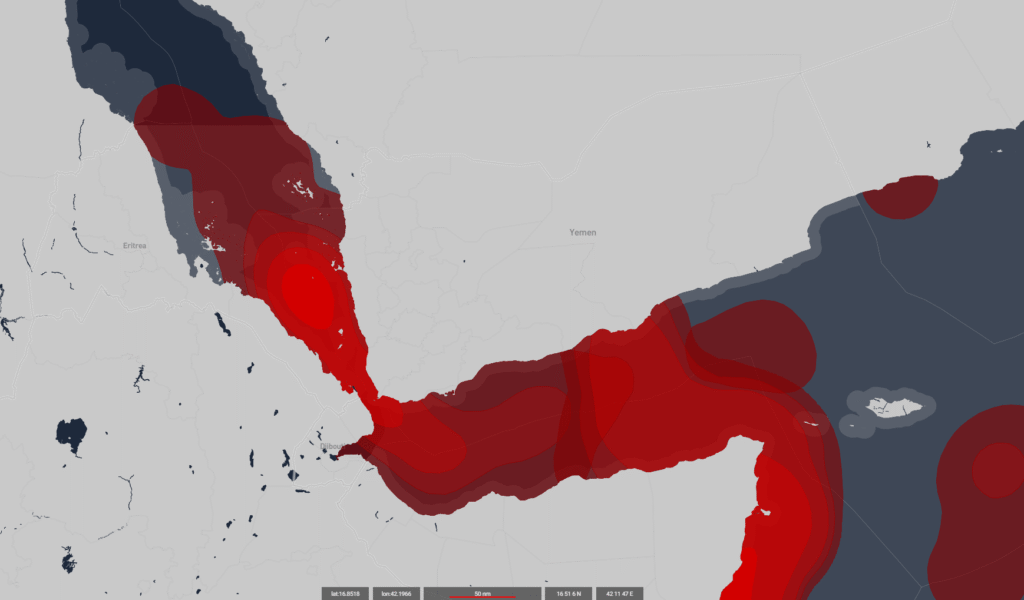
“Following escalation between Israel and Iran, the Houthis launched an attack against Israel on 8 June 2026. The same day, the military spokesperson for the Houthis, Yahya Sare’e, declared that the Houthis reinstated their ‘ban’ on Israeli shipping, increasing Houthi ban on Israeli shipping risk across the Red Sea and Gulf of Aden. Ambrey assesses Israel-owned/-operated/-managed shipping to be at high risk transiting the Red Sea and Gulf of Aden.”

POST-CEASEFIRE RED SEA ROUTING: RISK & RESUMPTION
- Israel targeted Beirut, Lebanon, triggering Iranian attacks on Israel. Israel retaliated against Iran, and further engagement has been reported.
- The Houthis launched an attack against Israel in support of Iran and Hezbollah.
- At the time of writing, the US had not participated in the escalation.
- The Houthis have reinstated their ‘ban’ on Israeli shipping. Israeli shipping is assessed to be determined by ownership, operatorship, and management. Israel port calling companies are assessed to constitute a realistic future target profile.
- Israeli shipping is assessed to be at high risk in the Red Sea and Gulf of Aden.
- Vessels calling Israel are assessed to be at risk of collateral damage.
- Threat levels in the Arabian/Persian Gulf, Strait of Hormuz, and Gulf of Oman are assessed to remain unchanged. Potential for escalation expanding across the Arabian Peninsula persists.
- Shipping companies are strongly advised to conduct thorough affiliation checks as part of a transit risk assessment.
Situation Overview
Missile Attacks and Regional Escalation Timeline
On 8 June 2026, the military spokesperson for the Houthis, Yahya Sare’e declared that the Houthis had launched a missile toward Israel, reinstated their ‘ban’ on Israeli shipping, and that the group would “respond to escalation with escalation”.
The announcement had been preceded by regional escalation. On 7 June, Israel targeted Hezbollah in Beirut, Lebanon. Iran had declared such an attack a ‘red line’, with Iran’s Foreign Minister, Abbas Araghchi, stating on 3 June that Iran’ armed forces would respond to an Israeli attack on Beirut.
Israeli and Iranian Military Responses
Following the Israeli strike, Iran launched missile salvos toward Israel, with air raid sirens sounding across the country. The majority of missiles have been intercepted, with not impacts in populated areas reported. Israel retaliated by launching a long-range attack on Iran. Reportedly, the attack was launched from Israeli aircraft in Iraqi airspace, and from Israeli naval assets in the Mediterranean Sea. During the Israeli attack, a petrochemical facility in Bandar Imam Khomeini was struck, resulting in its temporary shut-down.
On the morning of 8 June, new Iranian missile launches toward Israel were reported. Further, two explosions were reported at Prince Sultan Air Base, Saudi Arabia, and the Houthis launched their attack on Israel. The US had indicated it would not participate in this escalation.
Maritime Threat Update
Red Sea Shipping Threat Assessment
Ambrey assesses Israel-owned/-operated/-managed shipping to be at high risk transiting the Red Sea and Gulf of Aden.
In past announcements, the Houthis have distinguished between Israeli companies and Israel-trading companies. Companies with Israel trade relations are assessed to constitute a realistic future target profile if escalation continues.
Vessels calling Israel are at risk of collateral damage during attacks on Israel. Israel’s Mediterranean Sea ports have not sustained significant damage in previous rounds of escalation, though a risk to shipping persists.
Escalation Risks Across the Arabian Peninsula
The current situation carries the potential for further escalation to full-scale regional conflict. Israeli attacks on Iran, have historically resulted in likewise calibrated retaliation. It is assessed unlikely that Iran would retaliate against other countries in the region, though US participation would almost certainly result in Iranian attack against US interests across the Arabian Peninsula.
Recommendations for Shipping Operators
Red Sea & Gulf of Aden: Transit Risk Assessments and Affiliation Checks
- Affiliation checks: Ambrey recommends a thorough affiliation check as part of a transit risk assessment is performed for Gulf of Aden and Red Sea voyages. Ambrey continues to adjust these as per the developing intent and threat.
Bab al Mandeb Transit and Armed Security Measures
- Vessels strongly affiliated with the target profile are advised to avoid transiting the Bab al Mandeb Strait unless they engage close protection naval services. These need to be arranged in advance. A naval response is not guaranteed if the vessel proceeds without close protection and comes under attack.
Ship Security and Voyage Risk Mitigation
- Voyage risk assessment: Vessels are advised to also avoid the planned voyage if the residual risk after mitigations is assessed to be high risk.
- Ship Security Assessments: Merchant shipping assessed to be at heightened risk is advised to carry out Ship Security Assessments tailored to the threat, and to implement recommended and proportionate ship protection measures before sailing.
- Armed security: this has been effective at stopping pirate action groups and unmanned surface vessels. Vessels at heightened risk of attack, or which are vulnerable to Somali piracy, are advised to embark armed security teams, and to enhance the configuration where assessed appropriate.
Israeli waters: Bab al Mandeb Transit and Armed Security Measures
- Vessels in Israeli ports are advised to designate a Safe Muster Point (SMP) which is above the waterline and central within the superstructure. In the event of air raid sirens, crew are advised to muster in the SMP. Vessels in port are advised to adhere to port authority instructions.
- Vessels in the anchorage or approaching Israeli territorial waters are advised to remain at least 5NM offshore and 5NM away from offshore installations.
CONTACT INFORMATION
Ambrey: +44 203 503 0320, intelligence@ambrey.com
AMBREY – For Every Seafarer, Every Vessel, Everywhere.