AMBREY THREAT CIRCULAR> HOUTHIS ANNOUNCE ACTIVE PARTICIPATION IN WAR
Date update released: 30 March 2026
Source: This document has been approved for distribution by Ambrey Analytics Ltd.
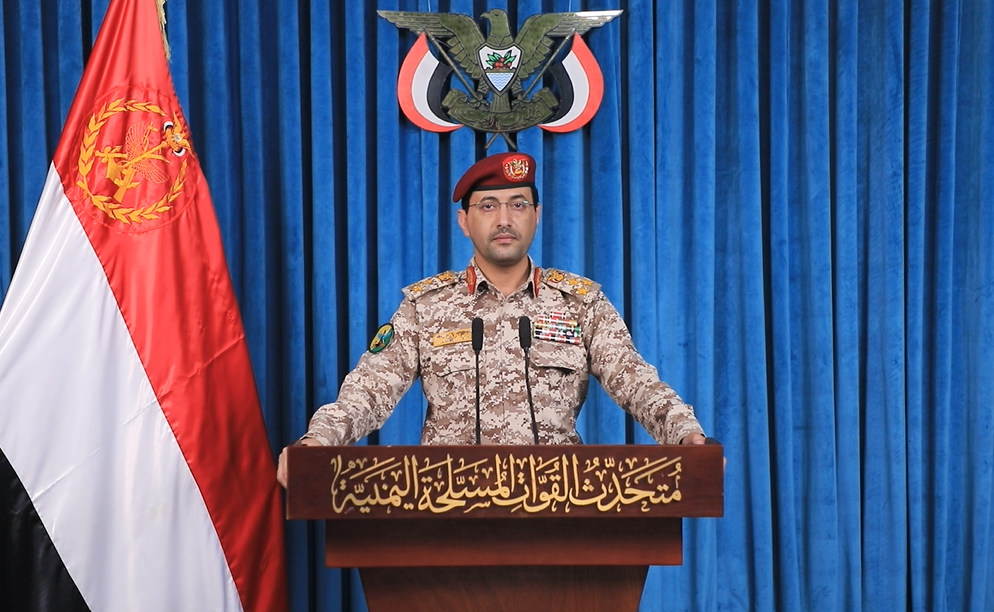
“On 27 March, the Houthis military spokesperson, Yahya Sare’e, stated the group’s readiness for direct military intervention in regard to three specified cases. Less than 12 hours later, the first missile attack had been launched toward southern Israel. Ambrey assesses it almost certain that attacks against Israel will continue. Ambrey assesses it likely, that the Houthis will extend their operations to include merchant shipping. The extent of Houthis participation remains deliberately ambiguous – realistic scenarios have been assessed by Ambrey in this Circular.”
EXECUTIVE SUMMARY
- On 27 March the Houthis announced their readiness for direct military intervention in three specified cases.
- The morning after, on 28 March, the Houthis announced their first military operation against Israeli territory. This was followed by a second attack later that day.
- There is assessed to be a high risk in the Red Sea and Gulf of Aden to Israel- and US-affiliated shipping. This is assessed to now be ‘strongly-affiliated’ with the Houthi target profile.
- The extent of Houthis participation remains deliberately ambiguous – realistic scenarios have been assessed by Ambrey in this Circular. There is no clearly articulated escalation ladder.
- Shipping is advised to conduct Voyage Risk Assessments. Vessels at high risk after mitigation measures have been considered are advised not to proceed.
SITUATION
On 27 March, the Houthis military spokesperson, Yahya Sare’e, stated the group’s readiness for direct military intervention in regard to three specified cases (see Appendix I). Less than 12 hours later, the first missile attack had been launched toward southern Israel. Relevant statements have remained vague as to the intended extent of Houthi participation. According to the Houthis, the first two stated attacks targeted military infrastructure in southern Israel with Unmanned Aerial Vehicles, cruise and ballistic missiles. The IDF stated that all threats to Israeli territory had been intercepted.
The Houthis have not explicitly expressed their goals, raising the questions of the extent of military engagement the Houthis are willing to accept. Unlike Hezbollah and militants in Iraq, the Houthis have waited one month to join the conflict.
ANALYSIS
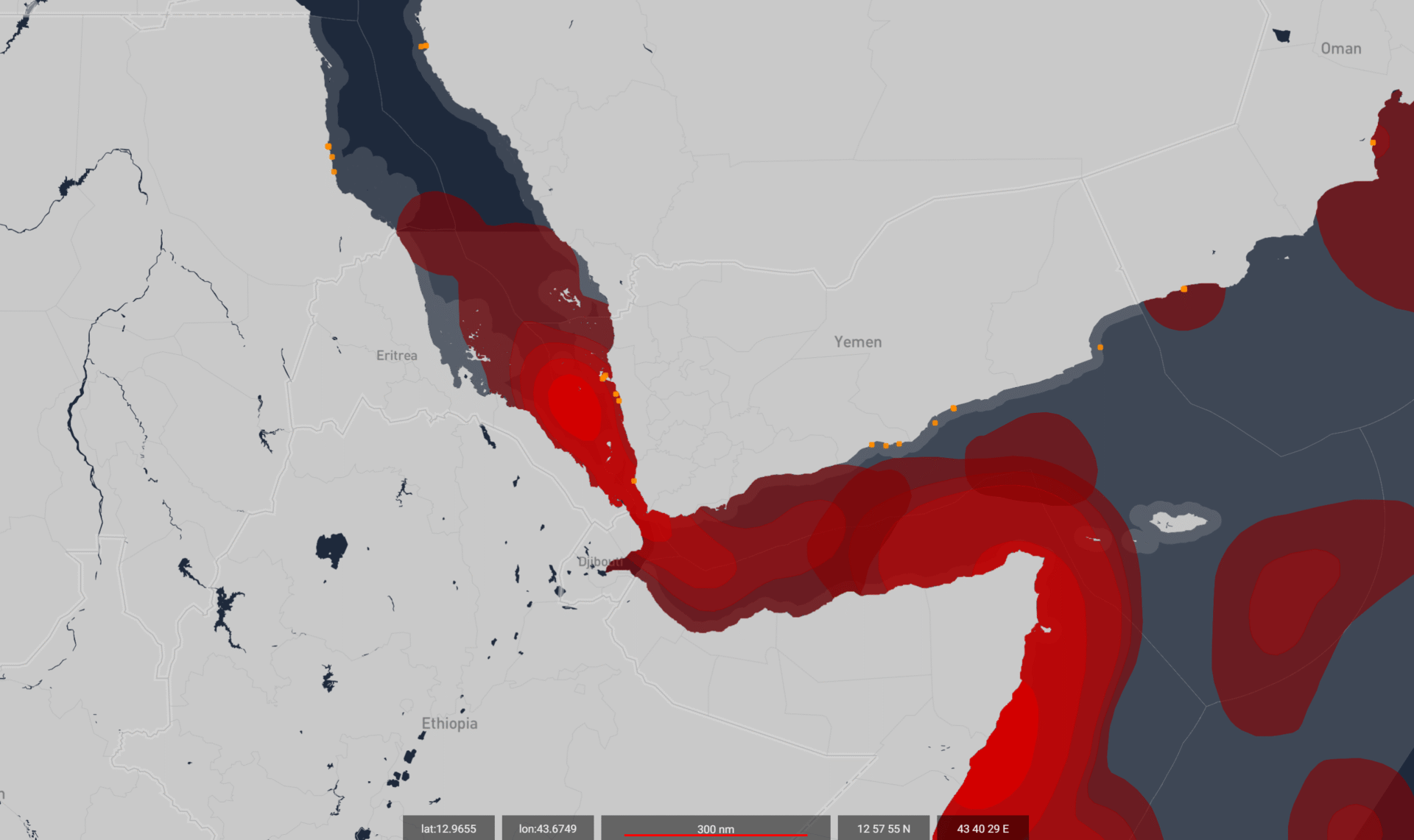
Ambrey assesses it almost certain that attacks against Israel will continue. Ambrey assesses it likely, that the Houthis will extend their operations to include merchant shipping. The development of the Red Sea Crisis showcased an expansion to commercial shipping, after attacks against Israel proved to be futile. A similar escalation process is assessed likely.
The Houthis have clearly defined their “enemy” as Israel and the US. In the past the Houthis did not attack nationalities that had not been seen as an ‘aggressor’. The ‘aggressor’ was limited to those who struck Houthis targets in Yemen and not defensive operations, e.g. merchant vessels were not targeted for EU-affiliations although EU NAVFOR Aspides intercepted Houthi attacks.
It is highly likely that the Houthis consider a vessel to be “American” or “Israeli” based on flag, ownership and commercial operator/disponent ownership. ‘Ownership’ is also highly likely to be considered “American” or “Israeli” if the company is headquartered in Israel or the US, or if the company is listed on an Israeli or American stock exchange. The Houthis have made mistakes as they have likely used data derived from out-of-date open-source maritime databases. During the Houthi ‘ban’ on shipping calling Israel, vessels were at risk for company Israel trade, regardless of the specific vessel’s operational past. This variable is assessed to be included in a realistic scenario.
Below, Ambrey outlines possible scenarios for Houthi military engagement of shipping. It is assumed that the Houthis will launch attacks against Israel under all circumstances and is therefore not further specified. These attacks, however, are assessed to increase the risk of collateral damage in the northern Red Sea and Gulf of Aqaba.
Scenario 1: Military-centric warfare and targeting of Israeli territory
Likelihood: Present scenario
Impact to shipping: Moderate (collateral damage risk to merchant shipping)
Primary targets: Israel and naval vessels
The Houthis are showcasing their burden sharing with the ‘Axis of Resistance’ with an emphasis on symbolism. It is unlikely to be on a scale to displace Israeli nationals, even locally. To mitigate the repercussions to the organisation, it is assessed likely the Houthis would concentrate their efforts on targeting military installations in Israel, refraining from targeting US interests and commercial shipping. An escalated version of this scenario could include the targeting of Israeli and US naval assets, though not extending beyond the targeting of military assets. The Houthis maintain this level of engagement, is assessed to rely on the group’s perception of the likelihood of Iran coming to a separate deal with the US and the forecast duration of the conflict. Premature escalation to commercial targeting in a short-period conflict is assessed to likely leave the Houthis fighting the US alone once more.
Scenario 2: Independent Houthi strategy (repeat of Red Sea Crisis)
Likelihood: Likely
Impact to shipping: Major
Primary targets: US/Israeli-affiliated shipping off Yemen in the Red Sea and Gulf of Aden, continued attacks against Israel
Ambrey assesses that an independent Houthis strategy would refrain from targeting oil and gas exports and focus on inflicting maximum damage on Israel and US affiliated shipping. This would likely require an agreement between the Houthis and Iran/Hezbollah to continue fighting and ending the conflict together. This approach could also be triggered by military strikes against the Houthis in Yemen. This strategy would place Israeli and US shipping as defined above at high risk, as well as companies conducting Israel port calls. This could include vessels which were destined for or had loaded at west coast Saudi ports, given the proximity to Yemen and the availability of Israeli and US vessels within the Houthis’ area of operations.
Scenario 3: Restricting Israeli and US oil exports
Likelihood: Realistic possibility
Impact to shipping: Severe
Primary targets: US/Israeli-affiliated shipping with focus on tankers, oil export facilities and efforts offshore Saudi Arabia
This could be triggered by Israel/US military strikes on Iranian oil and gas facilities. Ambrey assesses it highly likely the Houthis would target Israel- and US-affiliated shipping, preferably tankers, in the Red Sea and Gulf of Aden. These vessels are most likely operating off the Saudi Arabian west coast, which would likely result in an operational focus off Yanbu and Jeddah. This focus would cause a heightened risk of collateral damage to non-affiliated shipping in the area. An expansion of the intent, to targeting other shipping or onshore facilities is assessed to be unlikely.
Scenario 4: Restricting other oil exports via the Red Sea
Likelihood: Unlikely
Impact to shipping: Severe
Primary targets: Initially US/Israeli-affiliated shipping with focus on tankers, expansion to other shipping, oil export efforts off and in Saudi Arabia
This could be triggered by a request from Iran, should international efforts to manage oil prices begin to succeed and the Israel/US conflict in Iran continues. The Houthis might directly target the oil export efforts on Saudi Arabia’s Red Sea coast to further aggravate international energy prices. This strategy is assessed to have been applied in the Arabian Gulf to exert a higher political price for continued Israeli/US military operations. Opening a second front would impede the effect of any US efforts to lower oil/gas prices or to forcefully enable safe passage of the Strait of Hormuz. Secondary Houthi targets would be Israel- and US-affiliated shipping, with a focus on oil and gas tankers. The absence of such vessels would lead to the targeting of other vessel types with relevant affiliations.
Scenario 5: Houthi imitate Iran
Likelihood: Unlikely
Impact to shipping: Severe
Primary targets: All shipping not permitted to transit, Israel
For this, it is assumed the Houthi are not seeking to align with Iranian strategy but seek to directly profit from joining the conflict. The Houthis could consider imitating the Iranian mechanism for transiting the Strait of Hormuz. In this scenario, shipping in general would be threatened and prevented from transiting the Bab el-Mandeb Strait. Subsequently, the Houthis would establish a mechanism to approve vessels for transit, akin to the already exerted influence of the HOCC. Vessels would be subject to prior approval and quite likely a ‘toll’. The desire for international recognition as a legitimate governing authority, as well as the availability of an alternative route around the Cape of Good Hope are assessed to reduce the likelihood of this scenario. Even Iran appears to be considering allowing some shipping through the Strait of Hormuz as it maintains its own international relations.
Military response:
Sustained Houthis attacks are highly likely to invoke airstrikes by the US and Israel. These military strikes would aim to degrade Houthi offensive capabilities, though may also opt for commercial repercussions.
EU NAVFOR Aspides
Likely to continue to be active in the region, providing close protection and monitoring support for vessels requesting support. Demand highly likely would exceed availability of EU naval support, which is expected to lead to triaging of requests and operational focus on higher risk vessels. Under sustained pressure of Houthi attacks, close protection may be suspended until the offensive capability has been sufficiently degraded.
US Navy
The Carrier Strike Group (CSG) GERALD R FORD moved out of the Red Sea and is reportedly to be replaced by the CSG GEORGE H.W. BUSH. The group reportedly departed Norfolk, USA, on 28 March and was assessed likely to require 2-3 weeks before reaching the area of operations. Until the CSG arrives in the Red Sea, other US naval assets are assessed unlikely to be deployed to defend against a Houthi threat, given the operational requirements of the wider conflict. It will require US military power to forcefully reduce the Houthi threat to shipping. With an operational focus on Iran, relief in the Bab el-Mandeb Strait may further be delayed.
Israel Defence Forces (IDF)
The IDF has responded to the Houthi threat during the Red Sea Crisis by launching airstrikes against military, dual-use, and political targets, including the Houthi-controlled ports of Ras Issa, Saleef, and Hodeidah. The IDF is assessed to be reliant on US aerial refuelling support to conduct these airstrikes. The relevant aircraft are already in theatre, so that an Israeli response to Houthi aggression could materialise in a short period of time. This would require shifting focus of some Israeli and US aerial assets from targeting Iran to engaging the Houthis.
RECOMMENDATIONS
INDIAN OCEAN REGION
- Affiliation checks: Ambrey recommends a thorough affiliation check as part of a transit risk assessment is performed for Gulf of Aden and Red Sea voyages. Ambrey continues to adjust these as per the developing intent and threat.
- Vessels strongly affiliated with the target profile are advised to avoid transiting the Bab al Mandeb Strait unless they engage close protection naval services. These need to be arranged in advance. A naval response is not guaranteed if the vessel proceeds without close protection and comes under attack.
- Voyage risk assessment: Vessels are advised to also avoid the planned voyage if the residual risk after mitigations is assessed to be high risk.
- Ship Security Assessments: Merchant shipping assessed to be at heightened risk is advised to carry out Ship Security Assessments tailored to the threat, and to implement recommended and proportionate ship protection measures before sailing.
- Armed security: this has been effective at stopping pirate action groups and unmanned surface vessels. Vessels at heightened risk of attack, or which are vulnerable to Somali piracy, are advised to embark armed security teams, and to enhance the configuration where assessed appropriate.
ISRAELI WATERS
- Vessels in Israeli ports are advised to designate a Safe Muster Point (SMP) which is above the waterline and central within the superstructure. In the event of air raid sirens, crew are advised to muster in the SMP. Vessels in port are advised to adhere to port authority instructions.
- Vessels in the anchorage or approaching Israeli territorial waters are advised to remain at least 5NM offshore and 5NM away from offshore installations.
CONTACT INFORMATION
Ambrey: +44 (0)203 503 0320, intelligence@ambrey.com
AMBREY – For Every Seafarer, Every Vessel, Everywhere.
END OF DOCUMENT