AMBREY THREAT CIRCULAR> SOMALI PIRATE HIJACKINGS
Date update released: 29 April 2026
Source: This document has been approved for distribution by Ambrey Analytics Ltd.
“Three attacks this month highlight a renewed surge in Somali piracy, driven by opportunistic attacks on vulnerable vessels operating close to shore. The analysis shows that factors such as low freeboard, slow speed, and lack of armed security are significantly increasing exposure to hijack and K&R risk, particularly on routes to Mogadishu and Garacad. Smarter routing, risk mitigation, and informed insurance decision-making are needed in this heightened threat environment.”
EXECUTIVE SUMMARY
- A tanker and a general cargo ship are highly likely under the control of Somali pirate action groups (PAGs).
- The vessels are currently held in Somali Indian Ocean territorial seas in known holding areas.
- These events, that occurred since 21 April 2026, underlined a heightened risk of a K&R claim enroute to/from Mogadishu and Garacad.
- This research also highlighted the importance of understanding an insured vessel’s routing, as a vulnerable bulker was at increased risk over the last month despite not breaching Somali territorial seas.
- This is the first simultaneous hijacking of merchant vessels since March 2024, when the bulkers RUEN and ABDULLAH were under pirate control.
- Somali PAGs continue to operate opportunistically, with recent incidents confirming the known capability.
- Armed security highly likely prevented the hijacking of another general cargo ship.
SITUATION
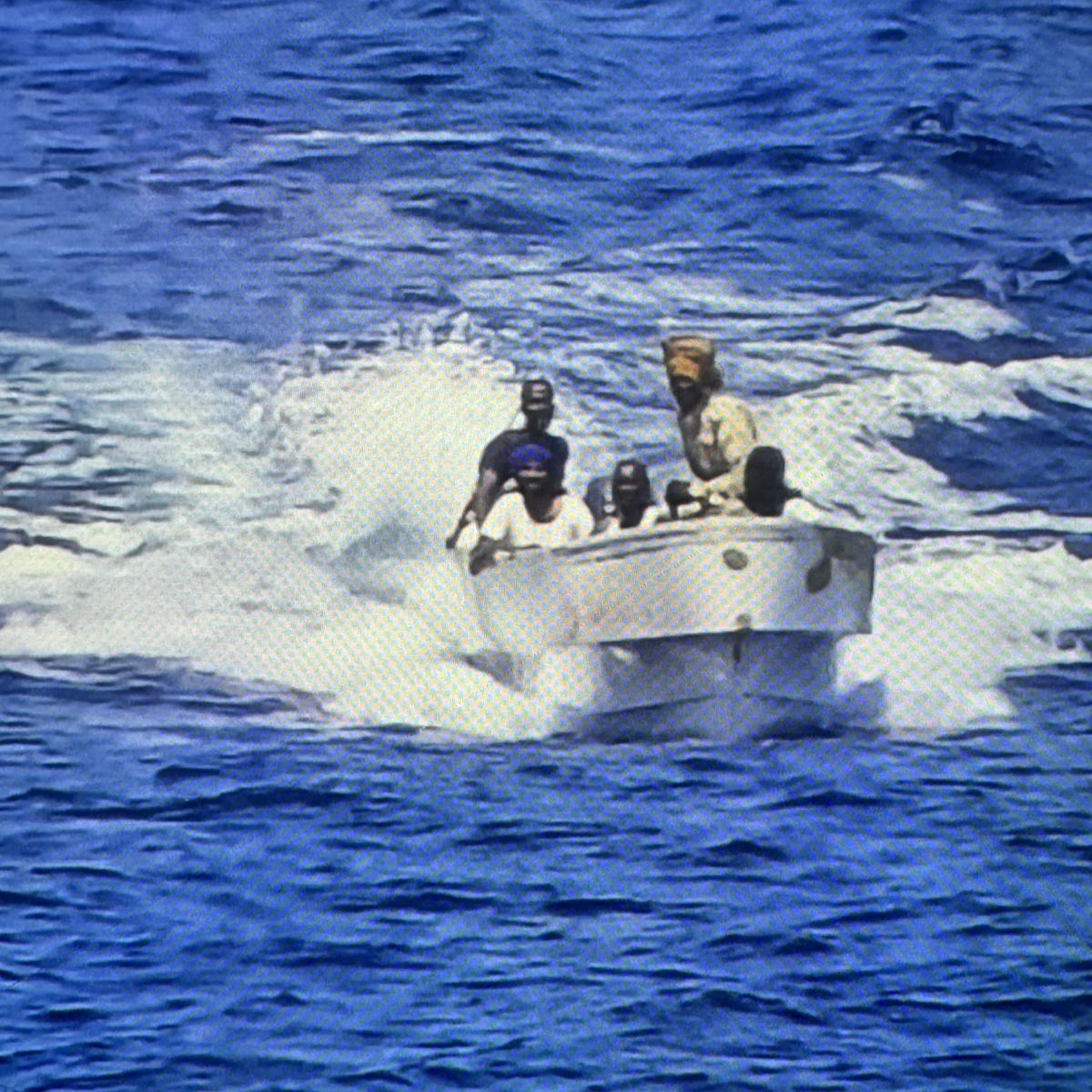
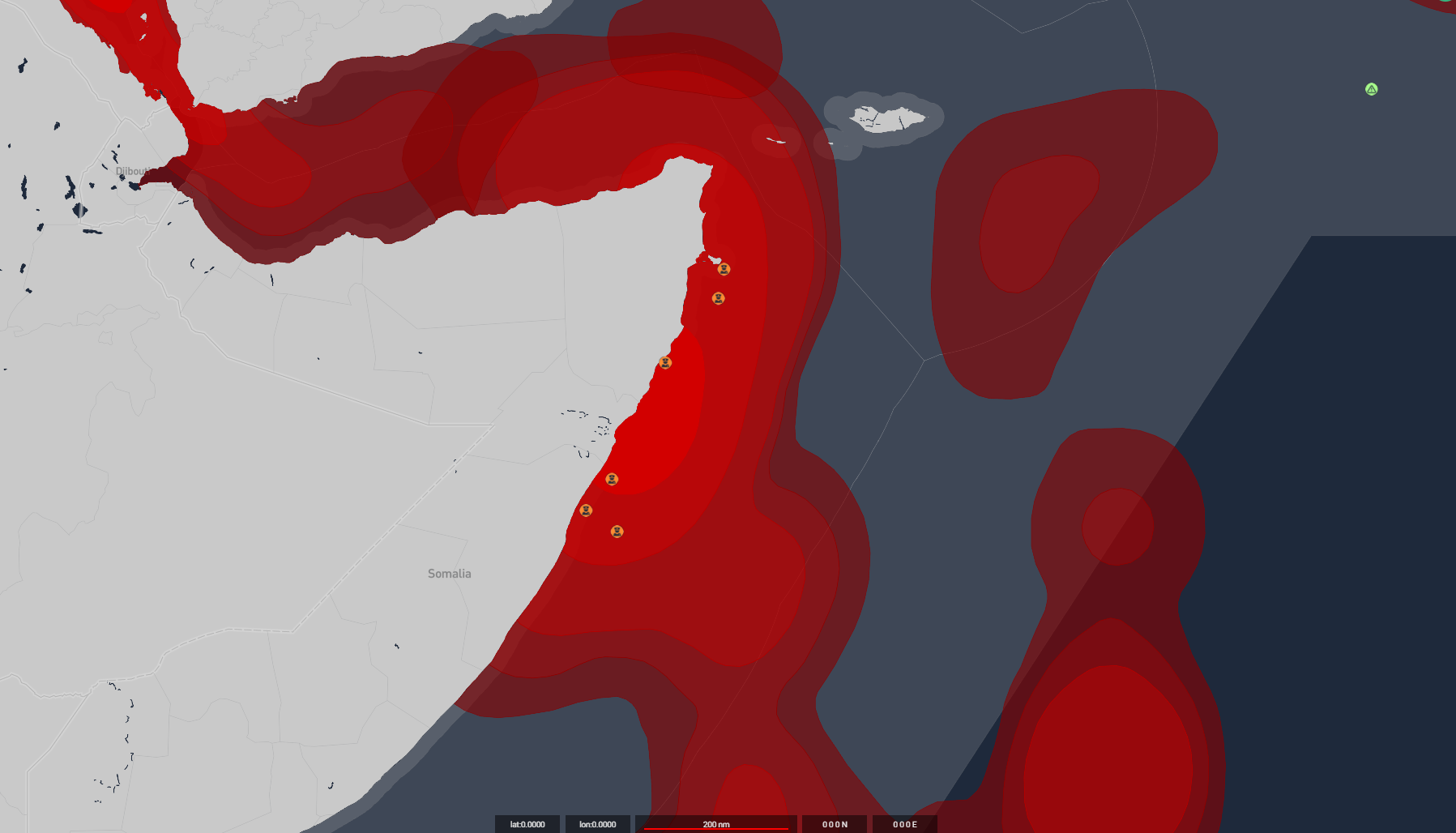
Since 21 April 2026, Somali PAGs have hijacked a Palau-flagged combined chemical and oil tanker, and a St Kitts-Nevis-flagged general cargo ship. Another merchant vessel also came under attack. All attacks occurred along the Indian Ocean Somali coastline, within 42nm of the shore.
On 26 April, a St Kitts-Nevis-flagged, Vietnam-owned, general cargo ship was hijacked 49NM south of Eyl. Ten pirates approached the vessel in three skiffs. Most of the fifteen crew members mustered on the bridge during the incident. There were no reports of using a citadel. The vessel was underway at 8.5kts between Al Adabiyah, Egypt, destined for Mombasa, Kenya, at the time. She had a low 2.1m estimated freeboard, which likely explained her routing behaviour close to the Somali coast, approximately 12NM offshore. The vessel did not call a Vessel Borne Armoury before the incident; there were no indications of armed guards being aboard.
On 23 April, a Barbados-flagged general cargo ship was attacked 44NM southeast of Garacad, Somalia. Five suspects approached in a white-hulled skiff to within 0.3NM. The suspects then opened fire with automatic weapons, and the embarked private armed security team fired four warning shots. The skiff subsequently turned away. The general cargo ship had an estimated freeboard of 7.6m and was underway between Mogadishu and Karachi, Pakistan, 40NM offshore Somalia.
On 21 April, a Palau-flagged tanker was hijacked whilst underway 32.5NM south-southeast of Hafun. Six pirates boarded the vessel, armed with AK-variants and an RPG. Some crew, Pakistani and Sri Lankan nationals, gathered in the citadel during the event. The vessel was vulnerable, with only a 0.9m estimated freeboard. Her low freeboard may explain why she was transiting within territorial seas. The vessel had an opaque ownership, registered to a trust in the Marshall Islands, was formerly Chinese-owned. She was destined for Mogadishu at the time of the hijacking. Prior to this, she was regularly loading cargo off the UAE and calling into Somali ports in Berbera and Boosaaso. Her loading operations were also opaque. On two occasions in the previous year, she appeared to perform STS with Iran-linked tankers. However, she was not sanctioned. There were no indications she was supplying fishing vessels operating offshore Somalia; though she had a very low speed, between 3-5 kts, she did not alter course significantly during her transit. Her route was not unusual for a small tanker calling Mogadishu. She did report on AIS “MOGADISHO.ARMGAURD” as her destination, however, the vessel did not appear to call a Vessel Borne Armoury during her transit, and there was no mention of guards in the incident details. It is unlikely any were aboard. Her hull market value was estimated to be US $3.25m.
The vessels were taken to areas known to be used by PAGs as holding areas. AIS and satellite imagery indicated they were being held for ransom. Neither of the vessels were being used as ‘motherships’ from which further attacks could be launched.
THREAT UPDATE
This marked a noticeable increase in Somali piracy activity. The last boarding of a merchant vessel was a Malta-flagged product tanker in November 2025; the last hijacking of a merchant vessel was a Bangladesh-flagged bulker in March 2024.
The pirates were operating offshore well-known hotspots, off Eyl and Garacad. All of these incidents occurred within the two highest levels of Ambrey’s 5-tier Dynamic Elevated Threat Areas for Somali piracy. These areas are based on attacks, and pirate holding positions, weighted for recency. These vessels should not have been proceeding through these areas without rigorous application of BMP-MS, including in their cases, the proportionate use of armed security.
Over the last month, 14 merchant vessels have transited within 40NM of the coastline exposed to Somali piracy.
Based on just these voyages, there are indications, requiring further research, that speed could have influenced targeting. Ambrey reviewed the speeds of all these vessels and, accounting for the relative time spent in the elevated threat area, attacks were still concentrated among slower merchant vessels.
Both vessels boarded had low freeboards. No ladder sightings were mentioned in either of these reports, but Somali PAGs have carried ladders in other recent events. At no more than 2.1m, the freeboards were comfortably within the known capabilities.
None of those vessels boarded had a private armed security team onboard. However, it would have been possible for anyone able to back-track that the vessel that had an armed security team had a team. This indicates the pirates did not research their targets’ security status.
The insurance industry may be interested to know that 13/14 of the transits within 40NM were to/from the Somali ports of Mogadishu or Garacad. The heightened risk of these vessels’ voyages could have been priced into Kidnap and Ransom insurance for Somali territorial seas and Indian Ocean breaches. However, it is notable that one vessel was at increased risk but would not have breached Somali territorial seas. This was a Barbados-flagged, Greek-owned and operated bulker underway from Brazil to Djibouti, and was not carrying armed guards, with a vulnerable freeboard of 5.1m. She had a market value of US $4.46m.
Also based on the available vessels, the targets had some of the lowest hull values available. There was no indication that the pirates were targeting the vessels using this information. There was also one other laden tanker with a low freeboard and without armed guards that passed within 30NM.
None of the vessels hijacked or attacked were associated with other target profiles (Iranian/Houthi).
The region is set to enter the Southwest Monsoon soon – typically between June and September. During this period, weather conditions are assessed likely to disrupt PAG operations further offshore, restricting safe operations to coastal waters. Over the coming weeks, a possible threat persists to vessels further offshore until the monsoon weather conditions set in.
RECOMMENDATIONS
- Merchant shipping is advised to conduct a Voyage Risk Assessment that takes into account the vessel’s characteristics and voyage plan. Consider alternate routing based on the vessel’s protection and security.
- Once a VRA is completed, if a merchant vessel is assessed to be at moderate risk or higher, it is advised to implement further ship protection measures. There is evidence that physical barriers and citadels are effective at mitigating risk. On certain routes, it may be advised to embark a private armed security team; they are highly effective at preventing boardings.
- If guards are recommended, it is advised to embark a minimum of three armed guards on transits through Ambrey’s dynamic elevated threat areas offshore Somalia. This is to ensure round-the-clock armed watches. Additional guards may be advisable depending on the vessel’s specifications.
- Enrol vessels with an intelligence provider; there have been several cases in recent years where intelligence providers have been able to re-route merchant vessels around tracked PAGs without the need for exchanges of fire. They have also been able to provide more granular advice than the typical industry advice to avoid a certain distance around the last attack, saving the need for an unnecessary deviation.
- Insurers with exposure to K&R in the Indian Ocean are advised to consider the behaviour of the insured, particularly if a citadel is not warranted or tested if fit-for-purpose, and if guards are not warranted.
CONTACT INFORMATION
Ambrey: +44 (0)203 503 0320, intelligence@ambrey.com
AMBREY – For Every Seafarer, Every Vessel, Everywhere.
END OF DOCUMENT