AMBREY INSIGHT> Western Mexico Clashes Following CJNG Leader Death: Implications for Port Security
Date issued: 27 February 2026
“The death of “El Mencho” is likely to cause uneven disruption across Mexico’s port system, highlighting the contrast between consolidated CJNG strongholds and contested gateways. In the medium term, shifting cartel dynamics may influence port security conditions and the reliability of maritime logistics.””
Source: This document has been approved for distribution by Ambrey Analytics Ltd.
EXECUTIVE SUMMARY
- The death of CJNG leader Nemesio Oseguera Cervantes (“El Mencho”) on 22 February 2026 triggered coordinated violence and road blockades across western Mexico, raising short-term maritime security risk around key port surrounding areas.
- Port of Manzanillo, a core CJNG trafficking hub, saw conflicting suspension reports; local access disruptions show cartel capacity to influence port environments during leadership transition.
- Heightened insecurity in the states of Jalisco, Michoacán and Colima raises the risk of disruptions to port access, supply chains, and coastal transfer networks used for both commercial and illicit activities.
- Port of Veracruz remains a cartel-contested port, making it likely to face short- to medium-term escalation that could affect shipping security and cargo flows as rival groups attempt to challenge CJNG control.
CONTEXT
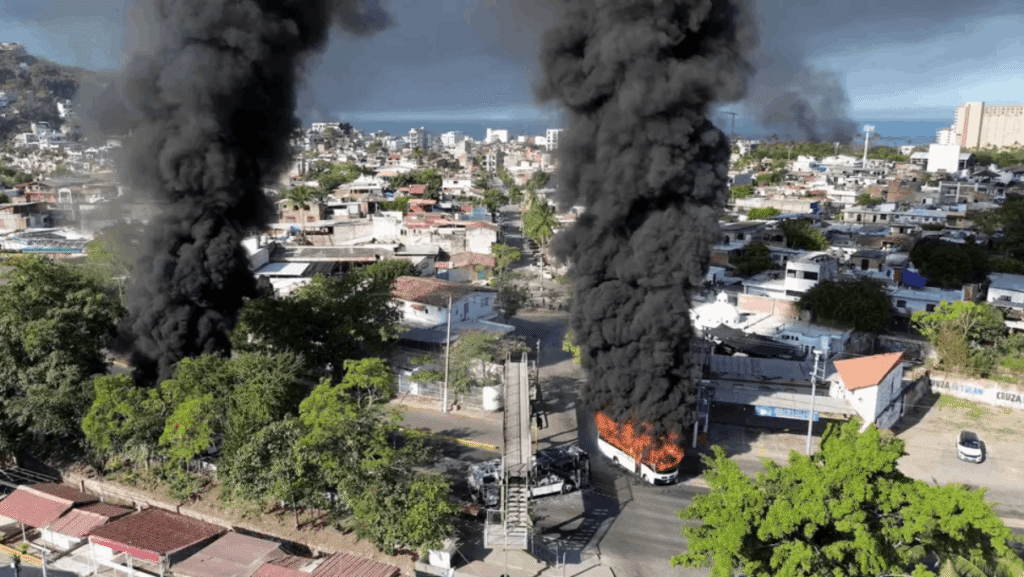
Members of the Jalisco New Generation Cartel (CJNG), one of Mexico’s most powerful and violent criminal organisations, launched a wave of coordinated violence across several Mexican states following the death of its leader, Nemesio Oseguera Cervantes (“El Mencho”), who was killed by Mexican security forces on 22 February 2026 after years of joint intelligence efforts by Mexico and the United States.
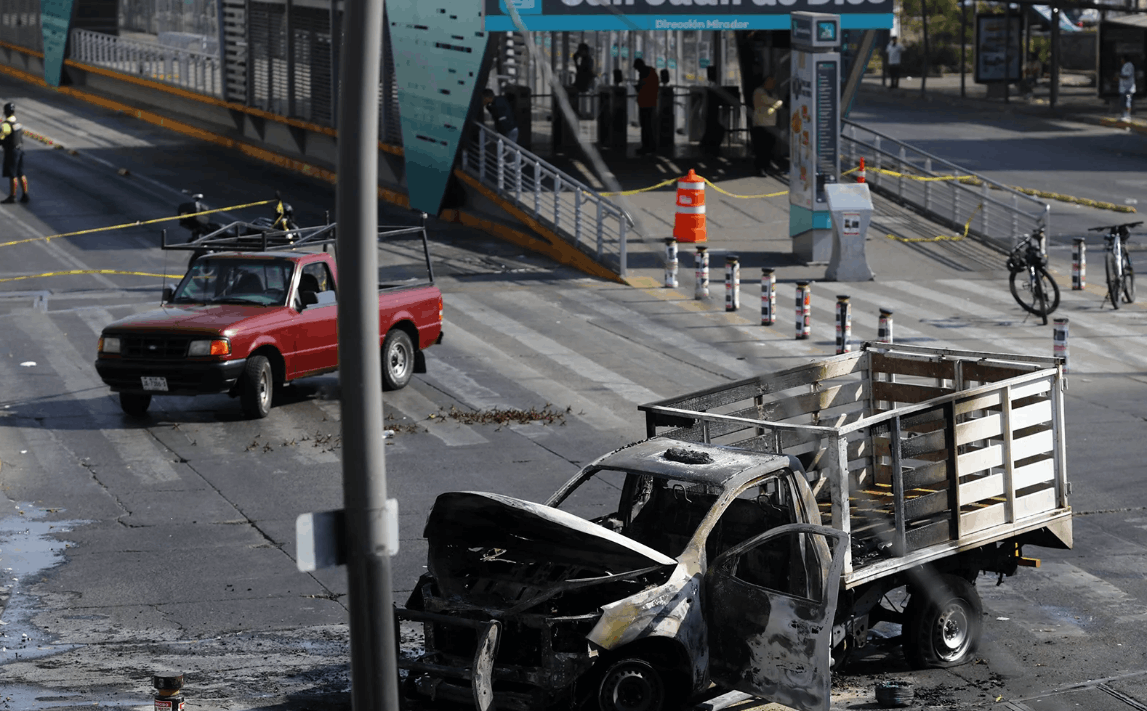
In retaliation, CJNG members carried out widespread narco-blockades and armed clashes with security forces across western and central Mexico, particularly in Jalisco, Michoacán, Guanajuato, Zacatecas, and Colima, where the group maintains significant influence. In several towns, they scattered spikes and nails on roads, hijacked buses and other vehicles, and set them on fire to block highways and disrupt emergency response. Cartel members also burned banks and local businesses, including pharmacies. Following the escalation, several major cruise lines cancelled scheduled calls at Puerto Vallarta, Jalisco, after the US Embassy in Mexico issued a security alert.
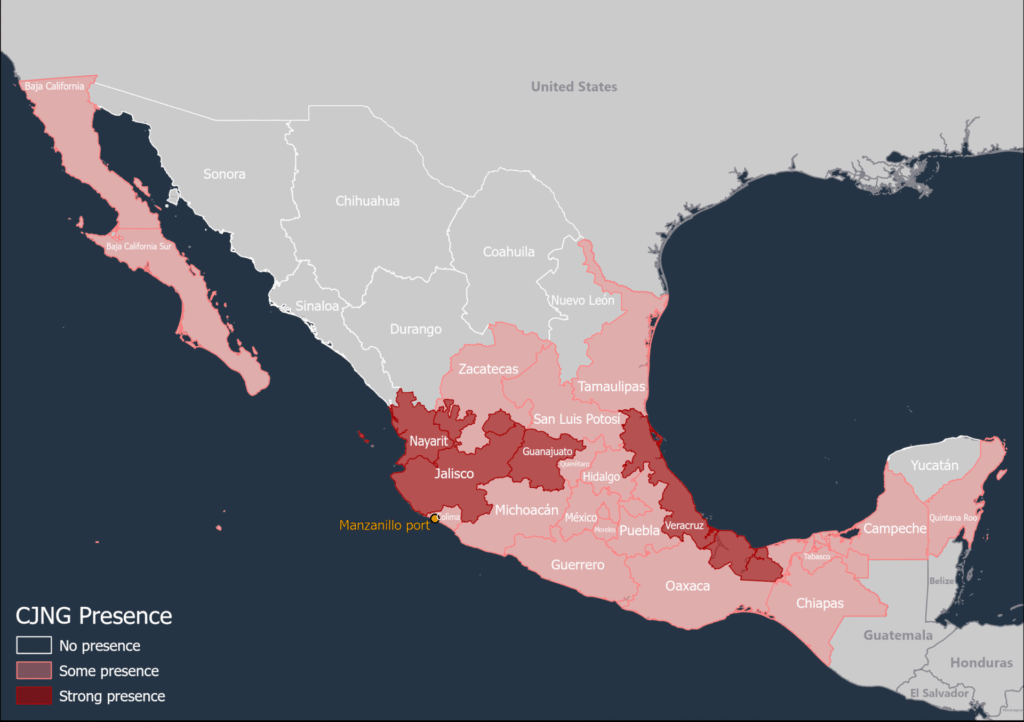
The CJNG emerged in 2010 after Mexican forces killed Sinaloa Cartel leader Ignacio Coronel. Since then, the group has expanded rapidly and now operates across Mexico, although its level of control varies by region. It remains the dominant criminal actor in Jalisco, Nayarit, and Colima, particularly around the port of Manzanillo, as well as in Veracruz and the central states of Guanajuato, Puebla, Querétaro, and Hidalgo. CJNG activity in Mexico’s maritime domain has historically centred on control and exploitation of key commercial seaports within its areas of influence, particularly Manzanillo, Lázaro Cárdenas, and Veracruz. Historically, these ports serve as strategic entry points for cocaine shipments from South America and for chemical precursors imported from Asia for the production of synthetic drugs, such as fentanyl and methamphetamine. CJNG has used corruption, intimidation, and coercion of port officials, customs agents, and logistics operators to facilitate the movement of illicit cargo through containerised maritime trade and coastal trans-shipment networks.
ANALYSIS
The port of Manzanillo has been identified as a major hub for precursor chemical imports and drug trafficking operations linked to CJNG networks. Following the death of El Mencho, open source information indicated that activities at the port of Manzanillo were suspended until further notice. This disruption suggests that CJNG may have sought to assert control over the surrounding area and restrict movement around a critical trafficking hub during a period of internal transition, highlighting the group’s capacity to influence port operations in territories central to its logistics network.
Hours later, Mexico’s Secretariat of the Navy issued a contradictory statement declaring the port “continues to operate normally in all areas” with “no suspension of port activities or general closures.” Local partners confirmed to Ambrey that no direct impact on port activities has been identified; however, road blockades and localized mobility disruptions have been reported in the surroundings of the port.
Historically, similar exploitation to the one in port of Manzanillo has been reported at the ports of Lázaro Cárdenas in Michoacán, a state also assessed as facing heightened security risk following CJNG actions linked to the death of El Mencho, and at Veracruz. Ambrey confirmed through AIS tracking that port activity continued without disruptions in Manzanillo and Lazaro Cardenas. In Veracruz, although the port isn’t located in one of the areas reported to be affected by the armed clashes, vessels were observed alongside the port on 22 February 2026, however, no arrivals or departures were observed at the same or subsequent day. At Puerto Vallarta, no vessel activity was observed after 22 February 2026.
Veracruz has historically been a contested port city, with influence divided among the CJNG, the Gulf Cartel, and Los Zetas. In contrast to CJNG strongholds such as Manzanillo or Colima, where cartel control is relatively consolidated, Veracruz is vulnerable to sudden escalations as rival groups attempt to assert dominance over port operations, following the death of CJNG leader. Such confrontations could include the disruption of shipping routes, attacks on logistics infrastructure, or clashes at transit hubs, potentially affecting both the movement of illicit cargo and the safety of legitimate maritime trade.
From a narco‑trafficking perspective, the contested environment suggests that cocaine and precursor shipments passing through Veracruz may be subject to greater operational risk than in CJNG-dominated ports. If Gulf Cartel or Los Zetas attempt to challenge CJNG control, maritime narcotics flows could be interrupted temporarily or redirected, and security forces may face difficulty responding to rapidly shifting threats.
RECOMMENDATIONS
Merchant shipping is advised to:
- Engage with an industry-recognised intelligence specialist to assess voyage risk to Mexican ports and create a comprehensive, dynamic, risk profile.
- Minimise crew shore leave in ports within CJNG-influenced states, particularly where transport routes between port and urban areas may be disrupted or insecure.
- Vessels scheduled to call at Mexican ports are advised to contact their local agents to confirm the current operational status of port facilities and assess any associated risks.
CONTACT INFORMATION
Ambrey: +44 203 503 0320, intelligence@ambrey.com
AMBREY – For Every Seafarer, Every Vessel, Everywhere.
END OF DOCUMENT