AMBREY THREAT CIRCULAR> IRAN’S STRAIT OF HORMUZ POSTURE
Date update released: 23 March 2026
Source: This document has been approved for distribution by Ambrey Analytics Ltd.
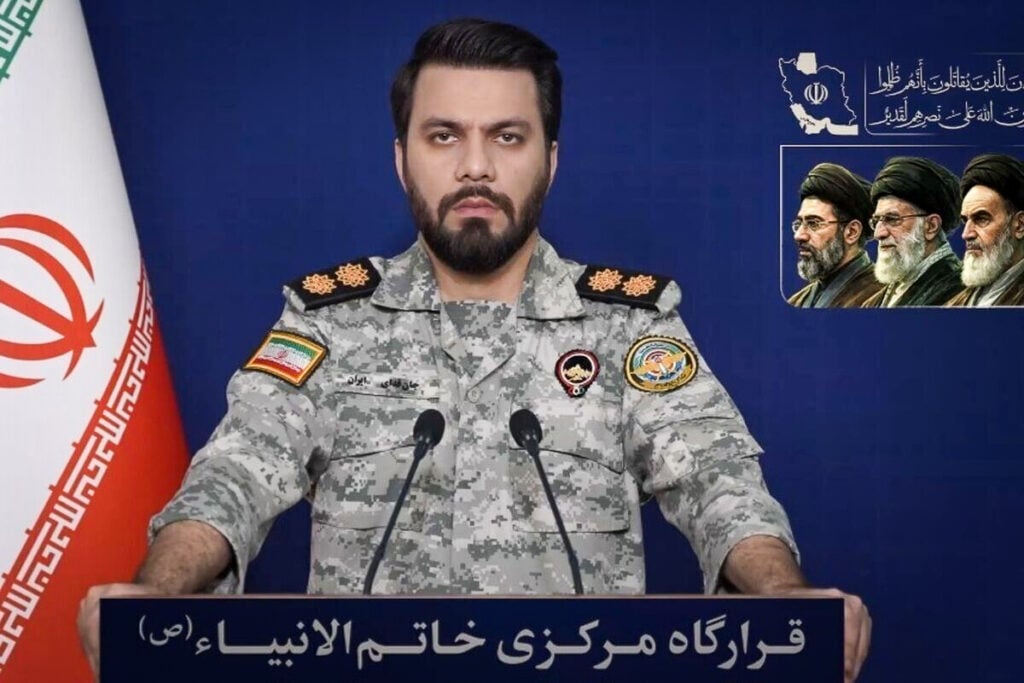
“There has been a significant difference between the official Iranian stance and the observed behaviour. Do not make assumptions based on public statements.”
EXECUTIVE SUMMARY
- Iran is assessed highly likely still capable of damaging shipping transiting the Strait of Hormuz.
- Iran is using calibrated maritime attacks in the Strait of Hormuz to signal a credible capacity to disrupt transit without full closure, increasing global oil price volatility, shipping risk premiums, and responding to US and Israeli actions.
- The most likely explanation is an IRGC-led escalation with operational autonomy, resulting in inconsistent, coercive behaviour that shapes vessel conduct while maintaining strategic ambiguity.
- The primary risk is misinterpreting public statements by senior figures in the Iran, leading shipping companies to make unilateral decisions that may inadvertently increase operational and crew safety risks.
- Another risk is the gradual erosion of transit rights under United Nations Convention on the Law of the Sea (UNCLOS), particularly if interference and bilateral access arrangements normalise selective or conditional transit.
- Shipping faces dual exposure: war and legal risk, especially due to US sanctions on the Islamic Revolutionary Guard Corps (IRGC), where even coerced interactions may trigger liability.
- Companies should adopt a risk-managed approach that preserves safety and legal defensibility while avoiding normalisation of coercive practices, maintaining neutrality, documenting incidents, and planning for both structured escalation and opportunistic behaviour.
SITUATION
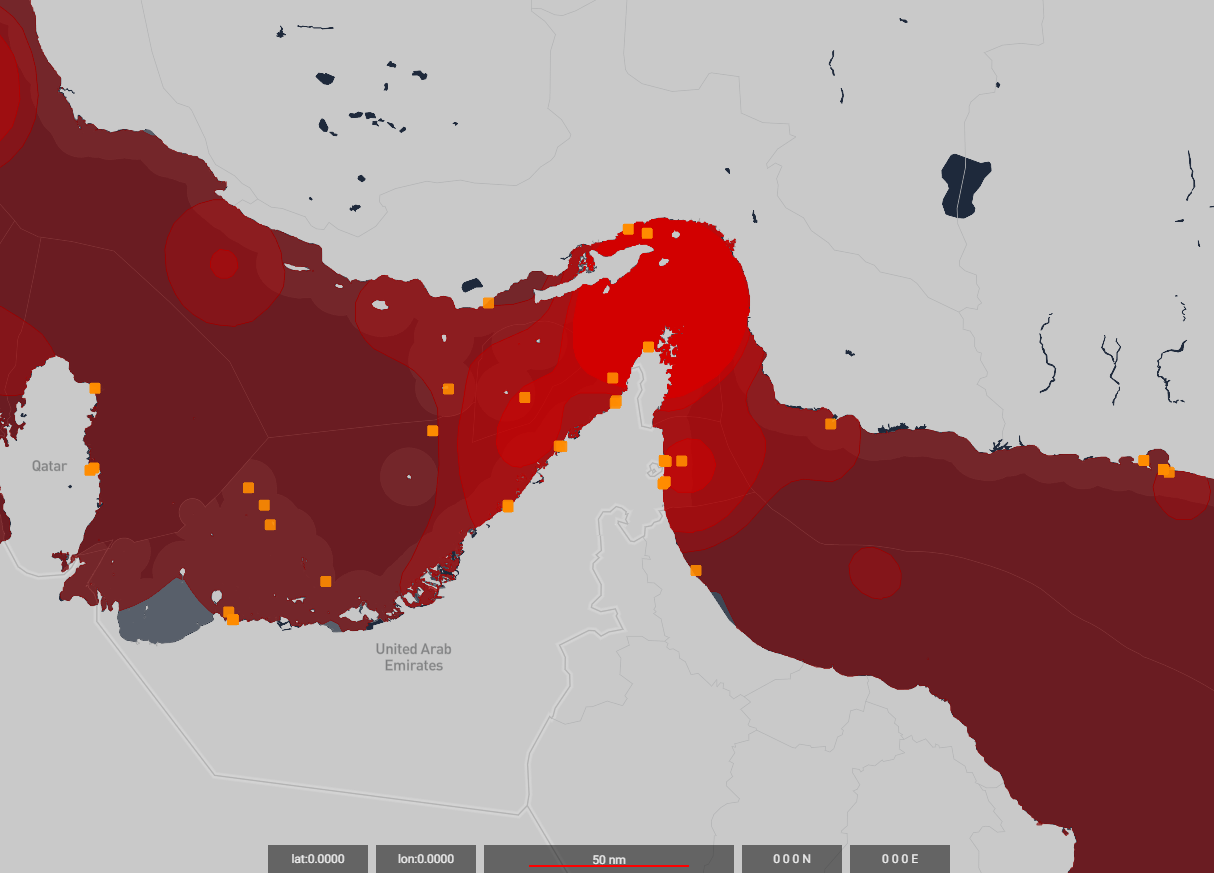
The Islamic Republic is using attacks in Strait of Hormuz to signal a credible capacity to disrupt transits and to respond to US/Israeli actions in Iran.
The military has threatened to close the Strait completely if Trump directs the US military to strike Iranian energy facilities. Closure would likely take the form of graduated disruption, particularly in a scenario of already-escalated conflict or degraded Iranian export capacity.
Controlling the Strait has had the effect of pressuring global oil prices and their perceived control of the Strait increases insurance costs, shipping risk premiums, and volatility in futures markets. Following attempts to assuage the markets, Iran has used their leverage over the Strait to reset the narrative.
There is a difference between the official narrative, which is targeted, and ‘enemy’-focused and observed behaviour, which is broader, less discriminating.
It is highly likely the IRGC exercises significant operational autonomy, and differences in emphasis between military actions and political messaging suggest variation in execution. This complicates external response thresholds.
Related to this, the IRGC has established a pattern of coercive, inspection-like interactions in the Strait that are shaping vessel behaviour.
Statements by members of the Islamic Consultative Assembly and Expediency Discernment Council advocating for a new protocol in the Strait of Hormuz, including a transit fee, and a sanctions regime may reflect attempts to codify or legitimise emerging practices.
Past signalling from members of the Supreme National Security Council leaves uncertainty as to whether these practices are contingent wartime measures or indicative of an emerging enduring policy.
ANALYSIS
Scenario A: IRGC-led escalation with partial autonomy
Likelihood: Likely
Description: The IRGC is pushing more aggressive maritime tactics within loosely defined strategic boundaries.
Assessment: Most consistent with available evidence. Could realistically revert when the conflict ends.
Scenario B: Emergent de-facto Strait of Hormuz control strategy
Likelihood: Realistic possibility
Description: Iran is intentionally moving toward establishing a normalised regime of control over transit.
Assessment: Possible but currently under-evidenced.
Scenario C: Coordinated central strategy
Likelihood: Unlikely
Description: Iran’s actions are tightly coordinated across military and political leadership, with minimal divergence.
Assessment: Plausible but less consistent with observed variation in execution
Scenario D: Opportunistic, non-strategic behaviour
Likelihood: Unlikely
Description: Actions are reactive, fragmented, and not part of a coherent strategy, partly a result of a decapitation strategy.
Assessment: Probably underestimates Iranian plans for regime survivability and Iranian doctrine.
RECOMMENDATIONS
- Avoid sanctions risks: Any interaction with the IRGC poses significant legal and financial risk for shipping, as the US designation of the IRGC as a Foreign Terrorist Organization (FTO) and Specially Designated Global Terrorist (SDGT) means even coerced compliance can trigger sanctions exposure. Operators must therefore balance immediate safety against potential sanctions liability, requiring careful documentation, legal oversight, and risk-managed decision-making.
- Navigating bilateral arrangements: Bilateral arrangements—like those possibly emerging between Iran and some other countries could institutionalise selective access and accelerate the erosion of universal transit rights. In these circumstances, shipping should use intermediated, not direct, engagement, escalated to the state-level, maintaining the company’s status as a commercial actor. Align company policy/operations with that of flag state, UBOs, and flag state, amongst other key stakeholders. Do not assume that a bilateral arrangement applies to your vessel, unless it is explicit.
- Avoid normalisation by accident: Shipping companies alone cannot stop coercive behaviour, but they can influence whether it becomes normalised practice or a contested violation. Even when compliance is necessary for safety, it should be framed as exceptional and coerced, not standard practice. This helps prevent the gradual creation of custom through acquiescence under UNCLOS. All interference should be reported to flag states, maritime security organisations and industry bodies.
- Manage over-confidence in an explanation of Iran’s intentions: Do not rely solely on predictable patterns or negotiated expectations—conditions may shift rapidly without warning. Operational plans should consider multiple contingencies, even when passage has been negotiated, and feasibility of operations should be regularly reviewed.
CONTACT INFORMATION
Ambrey: +44 (0)203 503 0320, intelligence@ambrey.com
AMBREY – For Every Seafarer, Every Vessel, Everywhere.
END OF DOCUMENT