AMBREY INSIGHT >HEIGHTENED OPERATIONAL & SECURITY rISKS AT CHATTOGRAM PORT
Date issued: 21 November 2025
“Ambrey advises that intermittent disruption at Chattogram Port is likely through mid-December; operators should build schedule buffers, activate contingency plans, maintain heightened anchorage security, and stay closely aligned with agents and charterers for timely, actionable updates amid ongoing Chattogram Port operational and security risks.”
Source: This document has been approved for distribution by Ambrey Analytics Ltd.
EVENT
Chattogram Port Operational and Security Risks
Ambrey has observed an escalation in operational and security risks to commercial vessels calling at, or transiting in the vicinity of, Chattogram Port. This is being driven by ongoing labour unrest, including recent disputes over increased port tariffs and entry fees, and contentious plans to introduce long-term foreign operators at key container terminals.
Foreign Operator Agreements at Chattogram Port
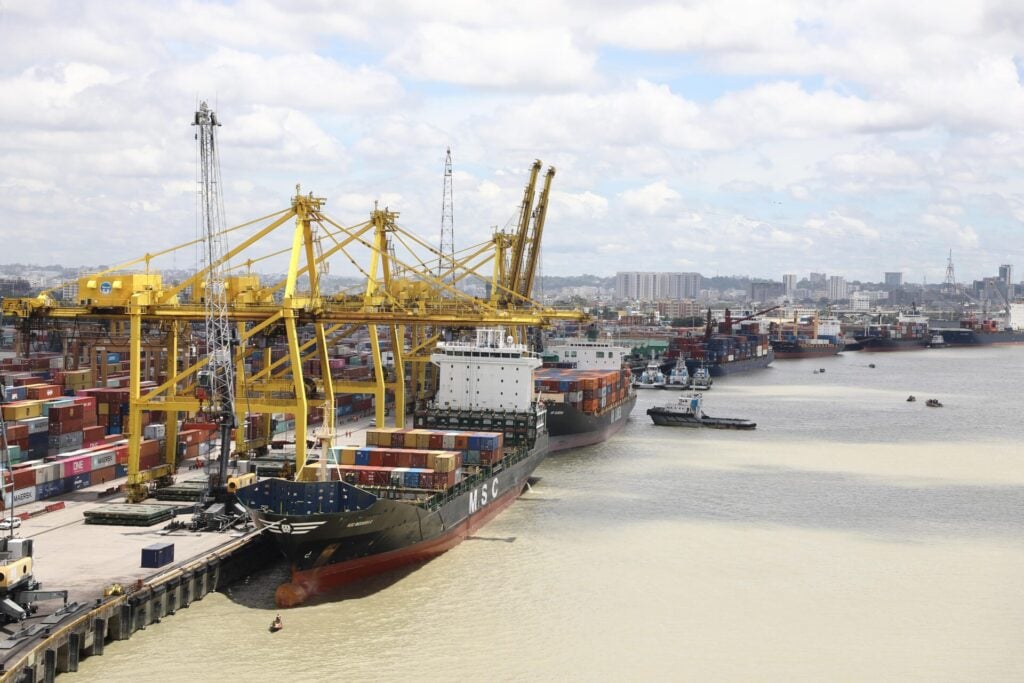
In particular, on or around 17 November 2025, the Chittagong Port Authority (CPA) signed a 30-year agreement with APM Terminals/Maersk to operate the new Laldia Container Terminal. A parallel agreement under which DP World is expected to assume control of the New Mooring Container Terminal (NCT) remains in preparation. While ownership of the infrastructure will remain with the state, operational control and a significant share of terminal revenues will transfer to these operators.
Labour Unrest and Potential Port Disruption
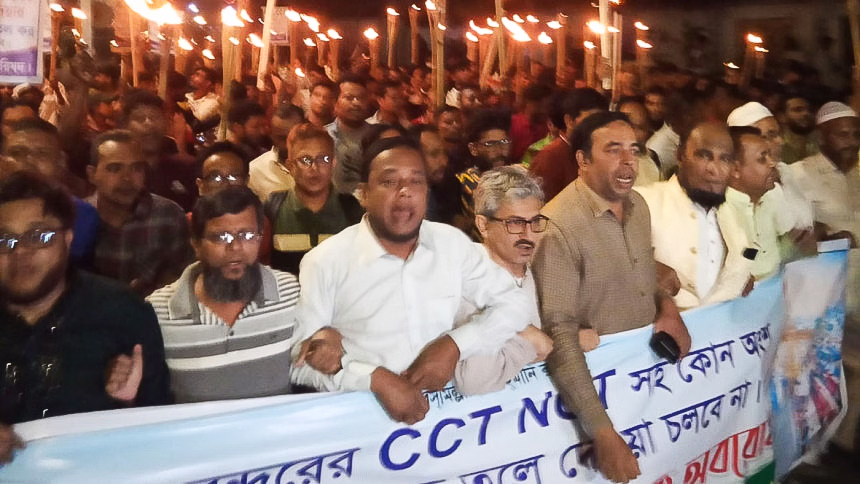
In response, port labour coalitions under the Sramik Karmachari Oikya Parishad (SKOP) and allied groups have escalated from limited stoppages to wider measures including strikes, hunger strikes, sit-ins and torchlight marches. The Chattogram Metropolitan Police have imposed a ban on public gatherings in and around the port area until 14 December, while unions have announced a joint meeting on 22 November at which they may call for wider blockades or a general strike. Preparations to sign the DP World–NCT agreement around mid-December constitute an additional potential trigger for renewed disruption. These dates are likely to be focal points for further labour action and associated delays.
Background to Chattogram Port Disruptions
History of Labour-Related Disruption at Chattogram Port
Chattogram Port handles the majority of Bangladesh’s seaborne trade and is widely regarded as a critical national asset and strategic gateway. Over the past year, the port has repeatedly experienced labour-related business interruption, including a strike by the Bangladesh Boat Workers Federation in December 2024 that left around 20 vessels unloaded, and a series of strikes by the Prime Mover Trailer Workers Union in early February 2025 that blocked access roads and delayed multiple container vessels. More recently, on 18–19 October 2025, heavy vehicle operators staged industrial action over higher port surcharges, during which six container vessels were reported to have departed without loading cargo. Taken together, these events illustrate a pattern in which industrial disputes can quickly translate into operational delays, congestion and part-loaded departures at Chattogram.
Growing Opposition to Foreign Port Operators
Building on this pattern of disruption, organised political and labour opposition to foreign operators has emerged as an increasingly prominent and explicit movement. In May 2025, the Bangladesh Nationalist Labour Party trade union federation led a torch march and rally that closed NCT Gate 3 and contributed to multi-day backlogs, openly protesting the proposed lease of the NCT. In late June 2025, the Anti-Imperialist Patriotic People Party organised a two-day march from Dhaka to Chattogram specifically opposing foreign involvement in the management of the port.
Escalating Anti-Lease Protests and Industrial Action
While these May and June mobilisations marked the start of an openly anti-lease campaign, the movement broadened further on 1 November 2025 when approximately 200 dock workers launched an industrial strike and mass hunger strike at Chattogram, again citing the government’s plan to lease operating licences to a foreign company and disrupting cargo loading and discharge. Building on this momentum, it was reported that labour groups staged a torch procession in mid-November, warning of “tougher action” if foreign-operator leases were not scrapped, indicating that mobilisation was intensifying in the weeks ahead of key December decisions. These actions strengthened earlier cost-driven grievances by adding sovereignty and control concerns, setting the stage for the broader SKOP-led mobilisation against the foreign-operator model.
Strategic Concerns Over Foreign Control of Port Infrastructure
The government’s signing of the Laldia agreement with APM Terminals/Maersk, and plan to bring in foreign operators at NCT is formally presented as a modernisation and efficiency drive intended to expand capacity and improve terminal performance. However, the series of protests and strikes described above shows that the policy has drawn strong opposition from port labour unions, local business groups and several political and religious organisations. Critics argue that the process lacks transparency and risks weakening national control over core trade infrastructure. For many stakeholders, the concern is not only commercial but also strategic, given the port’s central role in Bangladesh’s economy and wider security posture.
ANALYSIS— From Tariff Dispute to Lease-Driven Labour Confrontation
The recent pattern at Chattogram reflects a sustained escalation of labour unrest driven by two overlapping pressures. The first is economic, where disputes over tariffs, surcharges and working conditions have periodically triggered road blockades, gate closures and delays. The second is political, with opposition to foreign operators at Laldia and NCT evolving into the dominant rallying point for unions and activist groups. As these strands have converged, cost-related grievances have merged with concerns over sovereignty, employment security and control of key infrastructure, broadening the scope of mobilisations and increasing their frequency, scale and political intensity.
Operational Risks for Commercial Shipping
For ship masters and operators, this environment points to a risk of intermittent disruption to port operations rather than a single, clearly defined shutdown. Short-notice industrial action can delay cargo arrival at the terminal, slow loading and discharge, and in some cases result in vessels departing without all planned export containers. The police ban on gatherings around the port area indicates that the authorities anticipate further unrest, but enforcement measures themselves can create access frictions and congestion on port approaches.
Offshore Security and Anchorage Risks
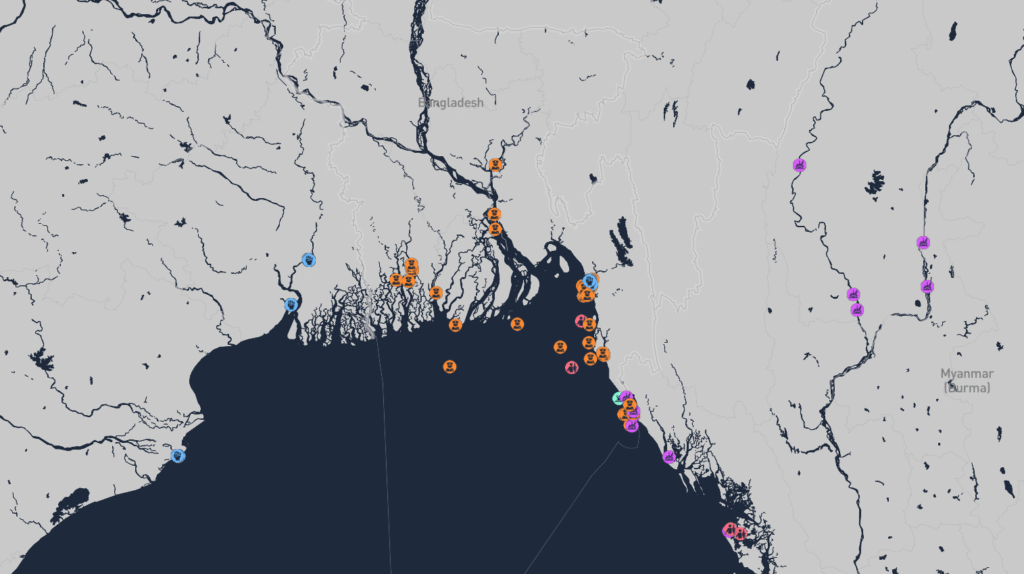
There is also a security dimension offshore. Chattogram’s anchorages and approaches have seen a pattern of low-level but recurrent opportunistic boardings and armed robbery, including thefts of stores and cargo, typically around one or two incidents per month in 2024–2025. With security forces and port authorities currently focused on managing protests, strikes and access control on land, there is an increased risk that supervision of offshore security and safety may be relatively reduced, creating additional space for small-boat boarding attempts and theft of stores or equipment.
Implications and Operational Recommendations
Operational Watchpoints at Chattogram Port
Through late November and into mid-December, Ambrey assesses a continued risk of intermittent disruption at Chattogram Port. Key operational watchpoints include:
- The union joint meeting on 22 November, which may announce wider blockades or a general strike.
- Any change, extension or tightening of the police ban on gatherings in the port area (currently in force until 14 December).
- Union reaction to the signing of the APM Terminals agreement, including possible escalation.
- Formal steps towards signing the DP World–NCT agreement around mid-December, which could act as a further trigger for protest activity.
Ambrey will continue to monitor labour actions, enforcement measures and offshore security incidents at Chattogram and update its assessments as the situation evolves. In the meantime, ship masters and operators should consider the following measures.
Day-to-Day Operating Considerations at Chattogram Port
- Treat calls at Chattogram as exposed to intermittent delay through at least mid-December.
- Build schedule buffers for possible late cargo arrival, slower stevedoring and congested gate operations.
- Anticipate short-notice changes in labour availability and the potential for part-loaded departures if industrial action intensifies.
- Coordinate early with charterers, cargo interests and agents on contingency plans for rolled or short-shipped containers.
Anchorage Security Measures at Chattogram Port
- Maintain an elevated security posture offshore, with vessels enhancing security measures and maintaining strict watchkeeping protocols while at anchor.
- Report any suspicious approaches or attempted boardings promptly to the company, local agents and relevant authorities.
Documentation and Communication Procedures
- Ensure masters receive up-to-date guidance from charterers, agents and terminals on any planned or ongoing industrial action before arrival.
- Maintain close contact with local agents during port stays for early warning of protest activity, road closures or access restrictions affecting crew changes, spares and provisions.
- Keep port call documentation, authority notices and agent advisories readily available on the bridge to support rapid decision-making if conditions change.
CONTACT INFORMATION
Ambrey: +44 203 503 0320, intelligence@ambrey.com
AMBREY – For Every Seafarer, Every Vessel, Everywhere.