AMBREY THREAT CIRCULAR> EUROPEAN COMPLIANCE ENFORCEMENT AND POTENTIAL REPERCUSSIONS
Date update released: 20 February 2026
Source: This document has been approved for distribution by Ambrey Analytics Ltd.
“Danish authorities detain Iranian vessel, potentially raising risks for Danish shipping off Iran”
EXECUTIVE SUMMARY
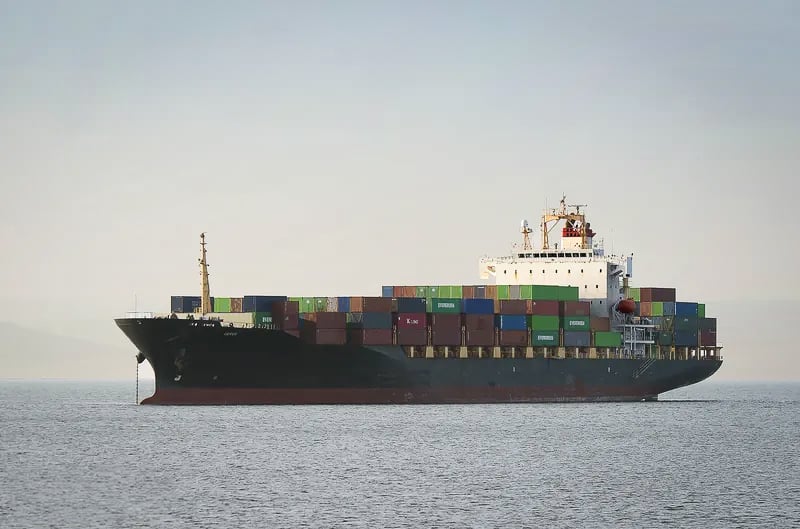
- The Danish Maritime Authority detained a falsely flagged Iranian container ship off Denmark.
- Some European states are coordinating to inspect, detain, fine, and potentially seize Russia-affiliated vessels – especially those sailing under false or invalid flags – while expanding sanctions, port bans, and legal powers to disrupt sanctions evasion.
- This vessel was OFAC-sanctioned and linked to a political advisor of the Supreme Leader of Iran.
- Iran has retaliated against the detention of its vessels before by seizing affiliated shipping.
- Danish-owned/-operated or -flagged vessels are assessed to be at heightened risk of seizure in the Strait of Hormuz and Gulf of Oman as long as the Iranian vessel remains detained.
SITUATION
On 19 February 2026, it was reported that the Danish Maritime Authority detained the container ship NORA in the Ålbæk Bugt, Denmark. The vessel was detained over compliance irregularities. Initially flying the flag of Comoros, Danish authorities confirmed the vessel was not registered with the Comoros flag registry. Upon inspection by Danish authorities, the container ship reportedly hoisted the flag of Iran, raising questions over the vessel’s truthful registration. Additionally, the vessel was sanctioned under its previous name CERUS by the US in July 2025 in an expansion of the sanctions regime aimed at Iran. The US linked the vessel to Mohammad Hossein Shamkhani, who is understood to be the son of Ali Shamkhani, a political advisor to the Supreme Leader of Iran, Ali Khamenei. There have been no reports of Iranian diplomatic reaction, such as summoning the Danish Ambassador to Iran.
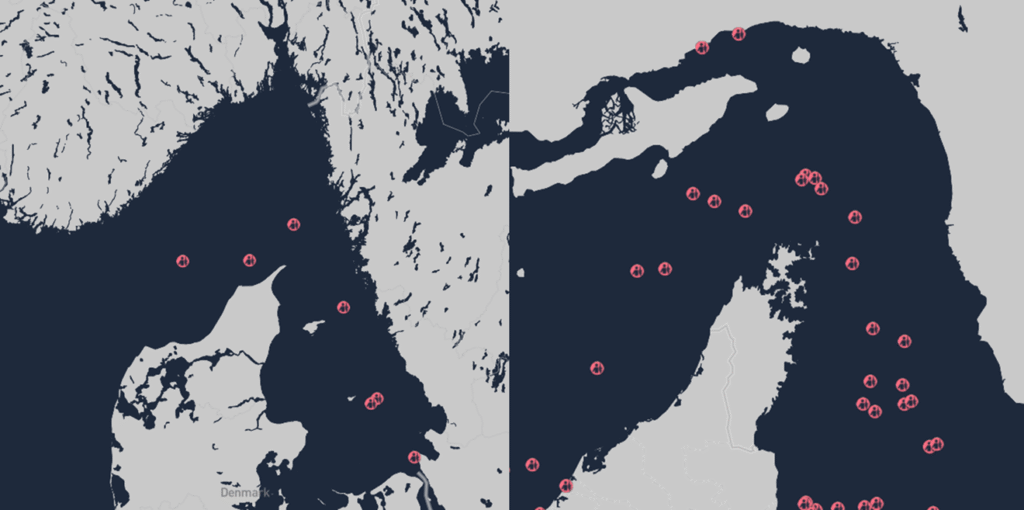
European countries have increasingly grown wary of vessels with sub-standard compliance sailing via North and Baltic Seas into and out of Russian ports. The majority conduct regular trade, some of which falls under US, EU, or UK sanctions regimes. To enhance maritime security and safety, neighbouring countries of the North and Baltic Seas have launched additional measures and efforts to enforce existing compliance regulations. Whilst these measures first and foremost aim to protect Europe’s waters of potential environmental pollution/catastrophes caused by poorly or un-regulated, -insured, or -maintained vessels, some countries are increasingly interested in utilising compliance checks to disrupt Russian trade through the Baltic Sea and thus hamper Russia’s war efforts against Ukraine.
THREAT UPDATE
Iran has in the past responded to the detention of Iranian vessels by seizing vessels affiliated with the detaining nation in the Strait of Hormuz and Gulf of Oman. The detention of the Iranian vessel by Danish authorities is assessed to increase the risk of seizure to Danish-flagged or -owned merchant vessels transiting the Strait of Hormuz or Gulf of Oman. This threat stands separate to regional tensions and is in line with previously observed correlations.
Other merchant shipping is not assessed to be at heightened risk as a result of this incident and is guided by Ambrey’s updated Threat Circular released on 19 February 2026. There has been no recorded direct European Union or NATO involvement. US involvement is possible given the OFAC-designation; however, none has been reported. There was US involvement in the UK and Greek detentions of Iranian vessels. This is unlikely to increase the already high risk to US shipping.
As the Iranian armed forces are already on high alert due to regional tensions, the operational tempo for retaliatory action may be quicker than in historic cases. Against US sanctions enforcement, reprisal statistically occurred within up to 14 days. That timeframe accounted for realisation of sanctions enforcement, identification of potential retaliation target, and tasking of naval units. The Danish detention has been widely publicised, Iran has been monitoring merchant shipping through the Strait of Hormuz with heightened focus for the past month, and Iranian naval forces have been on high alert and actively exercising in the region. The release of the Iranian vessel will result in a reduced risk to Danish shipping in this context.
RECOMMENDATIONS
- Affiliation checks against the Iran target profile:
- Ambrey recommends a thorough affiliation check as part of a transit risk assessment is performed for Arabian Sea, Gulf of Oman, and Persian/Arabian Gulf voyages. Ambrey continues to adjust these as per the developing intent and threat.
- Vessels strongly affiliated with the target profile are advised to avoid the Arabian Sea, Gulf of Oman, and Persian/Arabian Gulf where possible.
- If the company is in these regions, it would be advised to limit aggregate risk, by people, hull, and value to an acceptable level.
- Companies and vessels are advised to prepare rerouting of high-risk transits following military strikes. In the event of escalation, merchant vessels are advised to reconsider transiting through the Strait of Hormuz and close to Iranian waters, as well as to seek drifting locations close to friendly and protected territorial waters.
- Ship Security Assessments: Merchant shipping assessed to be at heightened risk is advised to carry out Ship Security Assessments tailored to the threat, and to implement recommended and proportionate ship protection measures before sailing.
- Bridge support: Unarmed advisors to prepare and reassure crew and assist with military liaison. Digital operations can also support with route planning, voyage preparation, and keep the bridge and shore staff informed of any changes in risk while enroute.
CONTACT INFORMATION
Ambrey: +44 (0)203 503 0320, intelligence@ambrey.com
AMBREY – For Every Seafarer, Every Vessel, Everywhere.
END OF DOCUMENT