AMBREY INSIGHT> UAV Strike on Tanker Near Novorossiysk: Targeted Signalling Rather Than Destruction
Date issued: 17 March 2026
“The temporary lifting of US sanctions on Russian crude is likely to create a target-rich operating environment for hostile actors. As tanker traffic to these terminals increases, vessels associated with Russian crude exports may face heightened exposure to targeted disruptive activity. Operators are therefore advised to commission dynamic voyage risk assessments and conduct thorough affiliation and exposure checks prior to operating in the northern Black Sea, particularly when calling at Russian energy export terminals.”
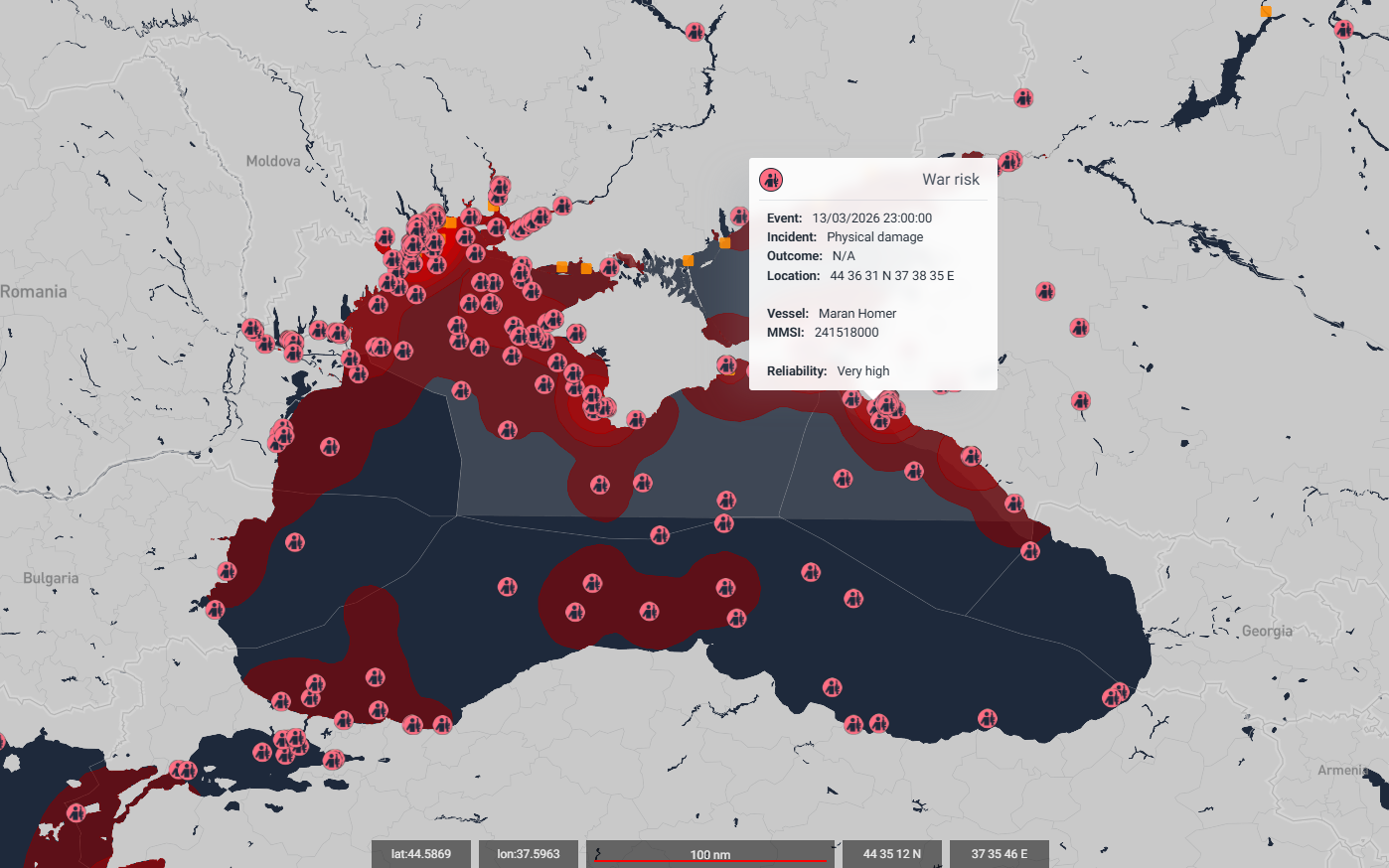
Source: This document has been approved for distribution by Ambrey Analytics Ltd.
EXECUTIVE SUMMARY
A Greece-flagged tanker was recently targeted while in ballast condition awaiting its scheduled port call at a Caspian Pipeline Consortium (CPC) terminal offshore Novorossiysk. Notably, the CPC terminal has a US economic interest in the form of partial Chevron ownership.
According to initial reports, the vessel was struck by what was likely a quadcopter unmanned aerial vehicle (QUAV). The impact caused minor structural damage to the main deck, and a small fire broke out in the manifold area, which was quickly extinguished by the crew. No injuries or pollution were reported. Following the incident, the tanker departed Russian waters without loading cargo at the CPC terminal.
The strike was highly targeted and operationally precise. Unlike other unmanned-system attacks in the Black Sea, the damage was limited primarily to deck-level equipment around the manifold, causing functional disruption rather than structural damage. It is also likely that the quadcopter UAVs were launched from an unmanned surface vessel positioned near the tanker. This indicates that the threat actor could have deployed more destructive weapon systems yet deliberately opted to use a small-payload UAV. The limited scale of the attack reduced the risk of casualties or environmental damage while still rendering the vessel unable to conduct loading operations. This level of damage is sufficient to prevent a tanker from safely loading cargo, particularly crude oil, without necessarily threatening the vessel’s seaworthiness.
PATTERN OF SIMILAR INCIDENTS
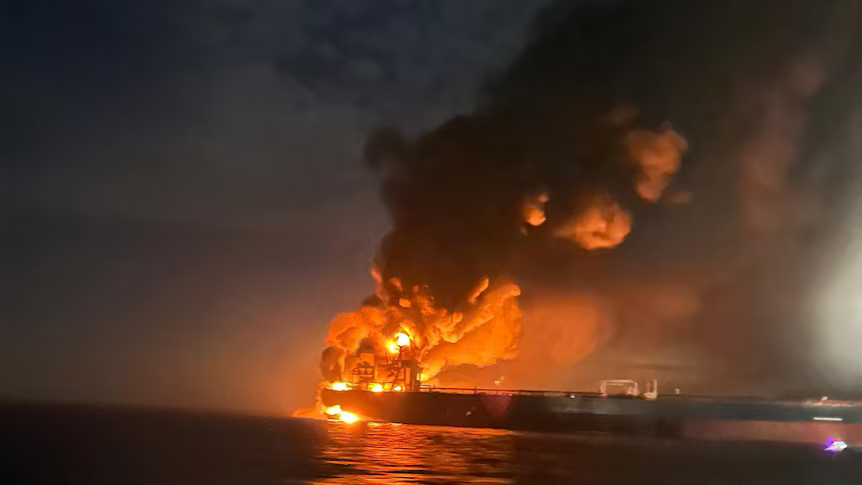
The attack mirrors two similar incidents recorded in early 2026, in which vessels in ballast, awaiting calls at CPC facilities or the port of Novorossiysk, were also targeted by QUAVs
In those cases, the damage likewise affected deck infrastructure rather than the hull, and the vessels ultimately departed without loading cargo. This emerging pattern suggests a specific operational intent. Ambrey assessed that these incidents likely constitute coercive signalling directed at non-sanctioned tanker operators calling at Russian export terminals.
Rather than attempting to sink or disable vessels outright, the attacks were designed to:
By damaging loading-critical equipment such as manifolds, the belligerent can effectively prevent a cargo operation while keeping escalation limited. In contrast with earlier attacks on sanctioned vessels, these incidents differ markedly from the more destructive attacks recorded in late 2025 against sanctioned tankers. In those cases, unmanned surface vessels were used, resulting in significant hull damage and loss of propulsion. Those attacks were intended to disable vessels outright, representing a higher level of escalation.
ASSESSMENT
The recent UAV strike near Novorossiysk is therefore assessed as deterrent messaging rather than destructive interdiction.
The use of QUAVs, the limited scale of damage, and the specific targeting of the systems that make loading of crude impossible all indicate a calibrated approach aimed at:
- signalling risk,
- deterring participation in Russian oil exports,
- and disrupting cargo operations without escalating to major maritime casualties.
As the Black Sea continues to evolve as an operational theatre, targeted UAV activity against commercial shipping is likely to remain a persistent risk, particularly around strategic energy export infrastructure. Rather than directly targeting the CPC terminal, which forms part of infrastructure linked to US economic interests, the threat appears to be focused on vessels calling at the terminal. This approach allows the threat actor to disrupt export operations while limiting broader geopolitical escalation. The temporary lifting of US sanctions on Russian crude is likely to create a target-rich environment in the vicinity of Russian Black Sea ports. Vessel operators are therefore advised to conduct dynamic voyage risk assessments and thorough affiliation checks when planning operations in the northern Black Sea, particularly when calling at energy export terminals.
CONTACT INFORMATION
Ambrey: +44 203 503 0320, intelligence@ambrey.com
AMBREY – For Every Seafarer, Every Vessel, Everywhere.
END OF DOCUMENT