Black Sea Maritime Security Threats for Commercial Shipping
Date released: 04 December 2025
“Ambrey advises companies calling at Russian and Ukrainian ports should secure dynamic risk assessments, align early with charterers on safe-port expectations and request hull inspections after Russian port calls amid heightened Black Sea maritime security threats.”
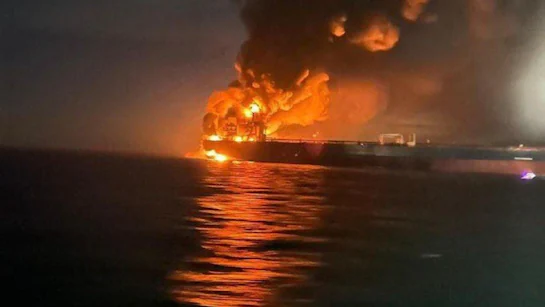
Source: This document has been approved for distribution by Ambrey Analytics Ltd.
EXECUTIVE SUMMARY
- Ukraine has escalated maritime strikes, conducting overt USV and UAV attacks against Russian energy infrastructure and Russia-linked tankers.
- Russia has signalled readiness to expand retaliation, including strikes on Ukrainian ports and, if Ukrainian attacks continue, potentially on vessels belonging to states supporting Ukraine.
- Threat levels for tankers calling Russian ports and vessels calling Ukrainian ports have significantly increased, driven by both operational activity and strategic ambiguity.
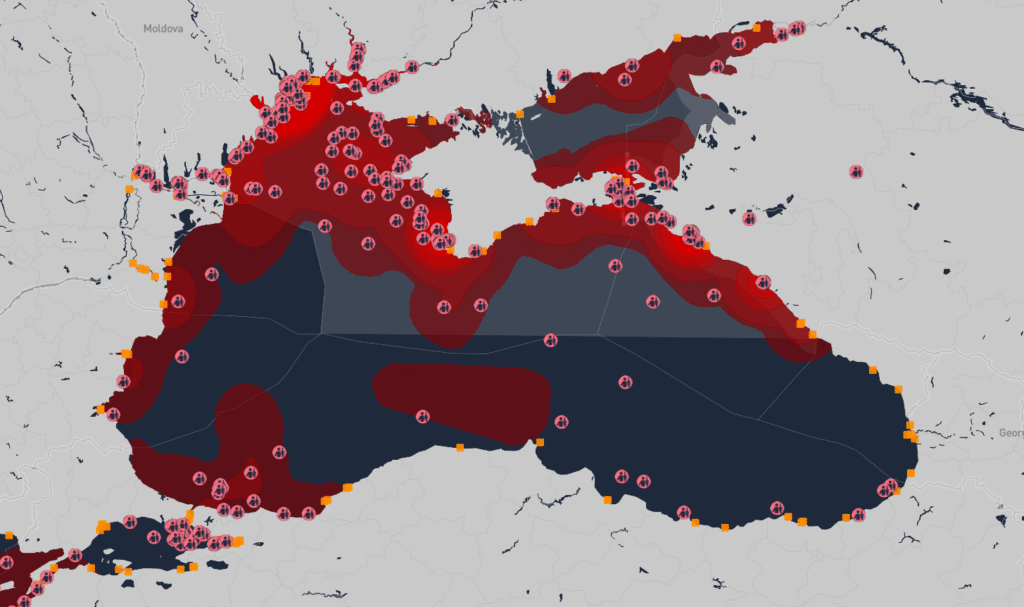
Escalation of Ukrainian Maritime Strike Operations
Following US sanctions against Rosneft, Lukoil, and associated shadow-fleet entities, Ukraine appears to be increasing efforts to degrade Russia’s export and logistics capacity.
Ukrainian USV Attacks Target Shadow-Fleet Tankers
On 28 November, Ukrainian forces conducted USV attacks on two crude oil carriers that were:
- sanctioned;
- recently de-flagged;
- of opaque ownership; and
- in ballast.
Ukraine released combat footage shortly after, clearly signalling intention to claim the operation. Prior to this, Ukraine’s only confirmed USV strike on a tanker was the 2023 attack on a Russian-affiliated vessel on the “Syrian express” route.
Suspected Limpet-Mine Attack on Tanker Off Senegal
On 29 November, a Panama-flagged products tanker sustained four underwater explosions off Senegal. Although not sanctioned and transparent in ownership, the vessel regularly called Russian export terminals in the Baltic and Black Sea.
- Ambrey assesses it highly likely that the vessel suffered a limpet-mine attack.
- The owner has since ceased all calls at Russian ports, a decision that may incentivise further punitive signalling attacks against similar vessels.
This follows earlier, ambiguous sabotage against vessels after Russian port calls.
UAV Strike on Russia-Flagged Tanker Raises Attribution Questions
On 2 December, a Russia-flagged chemical and oil tanker reported a UAV strike. Ambrey’s review of imagery confirmed damage to the port-side wheelhouse consistent with known Ukrainian systems.
Ukraine publicly denied involvement. The strike was atypical in impacting the bridge—an area routinely occupied by the crew. For this reason, it is a realistic possibility that the attack was not conducted by Ukrainian forces. However, sabotage operations can result in similar lethality for engineers working below deck. The vessel was reportedly carrying biodiesel feedstock at the time, which had not been targeted by Ukraine before. Nevertheless, open-source cargo histories indicate previous gasoil carriage. A sister vessel has been sanctioned by Ukraine for transporting oil products.
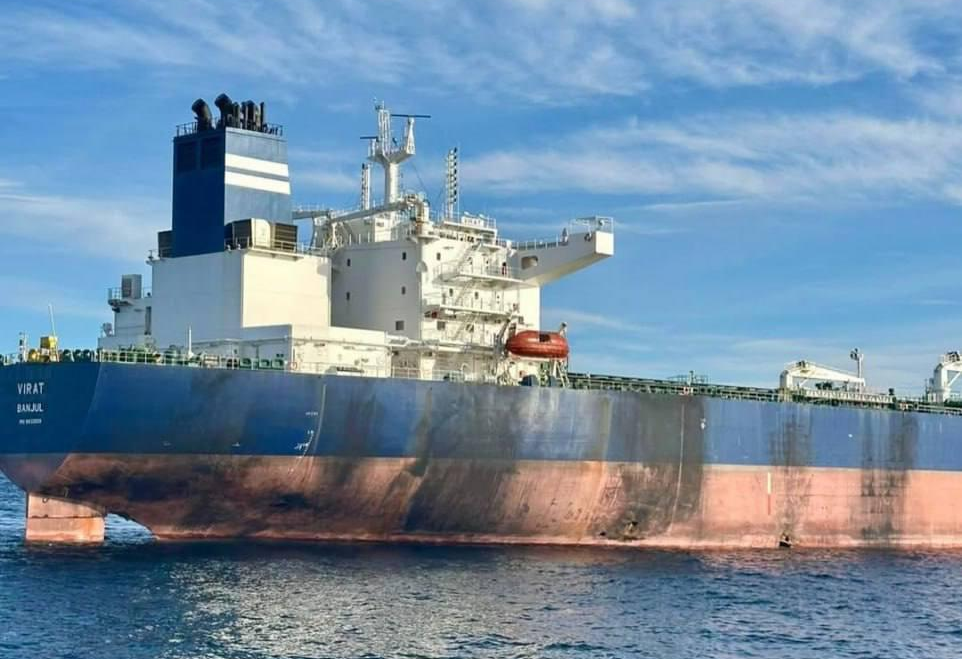
Russia Signals Potential Escalation in the Black Sea
In comments published on the Kremlin website, President Putin stated: “We will expand the range of our strikes against port infrastructure and ships that enter Ukrainian ports… If this does not stop, we will consider… reciprocal attacks against the ships of those countries that help Ukraine carry out these acts of piracy… The most radical option would be to cut Ukraine off from the sea.”
- Russian commentary on “cutting Ukraine off from the sea” reflects strategic signalling; achieving this functionally would require a de facto maritime blockade and represents a significantly higher threshold of escalation.
- Russia is highly likely to intensify strikes on vessels calling Ukrainian ports.
- Russia has previously targeted multiple vessel types—there is no indication it will limit future attacks to tankers.
- The reference to “reciprocal attacks” is most plausibly a deterrent message directed at European supporters of Ukraine.
Risk Mitigation Measures for Shipping Companies
Shipping companies calling Russian and Ukrainian ports should:
- Obtain dynamic voyage and port-specific risk assessments prior to fixtures.
- Engage charterers early regarding evolving safe-port and due-diligence expectations.
- Note that current attack patterns create a credible basis for charter party challenges under safe-port or due-diligence clauses.
- Enhance watchkeeping and drills to address USV, UAV, and underwater threat vectors.
- Implement strict crew-movement controls during elevated threat periods to reduce exposure.
- Request hull inspections for vessels that have recently called Russian ports.
CONTACT INFORMATION
Ambrey: +44 203 503 0320, intelligence@ambrey.com
AMBREY – For Every Seafarer, Every Vessel, Everywhere.