US-China Vessel Fees and Global Shipping Risks
“Ambrey provides geopolitical risk assessment, corporate affiliation and structure advisory, and sanctions exposure reviews — helping shipping companies navigate the operational and compliance challenges linked to US-China vessel fees while sustaining operations through policy shifts and improving decision readiness.“
Source: This document has been approved for distribution by Ambrey Analytics Ltd.
How US-China Vessel Fees Impacted Global Shipping
On 30 October 2025, China and the United States (US) announced a one-year suspension of their newly imposed vessel-fee regimes. The US paused its Section 301 fees targeting China’s maritime, logistics and shipbuilding sectors, while China reciprocally suspended its “special port dues” on US-linked ships. The move followed two intense weeks of operational adjustments and served as a joint de-escalation measure in response to mounting industry pressure. Although the suspension eliminates immediate cash liabilities, both measures remain legally intact to be reassessed after a year. Operators should treat the suspension as prospective, not retroactive, until official policy papers or implementing notices are published; refunds for previously paid fees are not expected.
The announcement pauses a rapidly escalating, policy-driven shock to container liner networks. Both sides have agreed to a one-year truce, but how durable is this calm, and how long can the market rely on it? For two weeks, carriers were forced to make real-time operational decisions between paying substantial port dues or rerouting fleets through third-country gateways. The one-year pause offers breathing space, but it does not erase the stress–test lessons the industry has just learned.
US Section 301 Maritime Fees
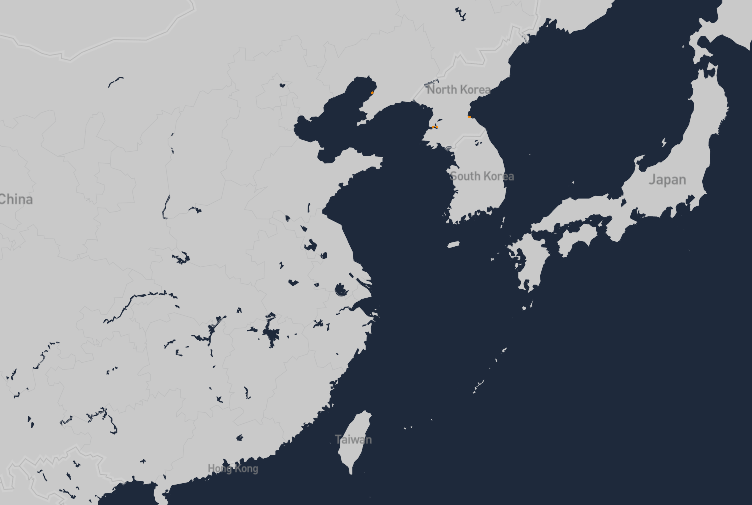
Understanding the suspension’s significance requires recalling how the two regimes were structured and what occurred during the activation fortnight from 14 to 30 October 2025. The US Section 301 regime targeted three categories of vessels. Annex I covered Chinese-owned or operated ships, Annex II extended the levy to China-built vessels regardless of ownership, and Annex III applied to vehicle carriers. Operators were required to self-assess and pre-pay via Pay.gov, uploading proof to the Vessel Entrance and Clearance System (VECS) before arrival. The fees began at US$50 per net ton per voyage under Annex I, rising to US$140 by 2028. Annex II allowed the greater of US$18 per net ton or US$120 per container, while Annex III applied a similar per-ton scale to vehicle carriers. Exemptions were narrowly defined – smaller or short-haul vessels of ≤55,000 DWT and voyages ≤2,000 nm from last foreign port to first US port could qualify for reduced or waived rates. These terms made compliance complex and imposed a heavy administrative burden on owners and agents alike.
How China Responded to US-China Vessel Fees
China’s “special port dues” were a mirror response, applied at the first Chinese port of call to US-linked vessels. The base rate was RMB 400 (about US$56) per net ton, scheduled to rise to RMB 1,120 (about US$157) by April 2028, with a cap of five chargeable voyages per vessel per fee year. China-built ships and repair calls in ballast were exempt. Like the US regime, China’s measures introduced both a financial and logistical deterrent to routine port calls, compelling carriers to redesign their rotations.
Immediate Operational Impact on Global Shipping
The impact was immediate. On the first day of activation, Matson’s US-flagged Manukai berthed at Ningbo Meishan and paid RMB 4.46 million (about US$627,943) in special port dues, followed hours later by Matson Waikiki at Shanghai, which incurred RMB 12.09 million (about US$1.7 million). On the US side, the Hong Kong-flagged COSCO Shipping Jasmine arrived at Savannah after a two-day refusal period and was charged roughly US$4.25 million, illustrating how first-call exposure can crystallise substantial cash liability within a single tide window. Within days, Maersk rerouted US-flagged tonnage to Busan, South Korea, for compliant relay operations, and several cruise lines bypassed Chinese ports altogether. The adjustments tightened effective container capacity and lifted freight indices within a week.
In the wider context of global shipping, the scope of exposure was even clearer. According to BIMCO, around 35 per cent of ships calling at US ports in 2024 would have fallen within the Section 301 scope – roughly 70 per cent through Chinese ownership or operation and 30 per cent through China-built tonnage. Alphaliner projected that if current deployments persist into 2026, eight of the world’s top ten container carriers, including COSCO and OOCL, would collectively face about US$3.2 billion in annual fees. On China’s side, research suggested that 12–15 per cent of the global tanker fleet and around 10 per cent of the container fleet could be affected, depending on equity-influence tests and exemptions. In operational terms, however, container services showed the strain first: their fixed schedules and multi-call rotations left little flexibility to absorb additional costs or delays, underscoring that liner shipping, rather than bulk shipping, remains the frontline barometer of regulatory and geopolitical stress at sea.
The two weeks of activation thus served as a pressure test for the entire industry. The subsequent suspension does not nullify the regimes but simply pauses enforcement. The structures and rates remain in place, ready for reactivation after review. These mechanics, and the operational responses they provoked, now form a living archive of lessons for the year ahead.
Why Network Reliability Became the Main Constraint
The activation fortnight revealed structural truths about global liner operations under geopolitical pressure. Firstly, reliability, not fleet size, proved the binding constraint. When reroutings, relays, and compliance checks consume available buffer time, network reliability degrades faster than capacity statistics suggest. Effective supply tightened even as nominal TEU capacity held steady.
Container Shipping Faced the Greatest Operational Pressure
Secondly, containers bore the brunt. Annex II’s per-container alternative drove higher costs for modern container ships, and multi-port loops magnified the number of chargeable gateways. By contrast, tankers and bulk carriers with flexible itineraries and fewer calls absorbed the impact with less disruption.
Dual Exposure Risks for COSCO, OOCL, and US-Linked Carriers
Thirdly, dual-trigger exposure was most severe for integrated carriers like COSCO/OOCL – captured under both ownership/operation (Annex I) and build origin (Annex II) – and for US-linked operators such as Matson under China’s regime. The former faced compounding liabilities; the latter, constrained by tight timetables, had little room to adapt. Each was forced to re-evaluate its operational elasticity.
How Shipping Companies Adapted to US-China Vessel Fees
Fourthly, the mitigation playbook proved effective, but it was also costly. Carriers rotated China-built hulls off US loops, restructured ownership and governance to lower attribution risk, and routed via third-country hubs in Northeast Asia, Canada, Mexico and the Caribbean. Departures were timed to avoid new fee activation windows, and contracts were tightened to define liability for future regulatory changes. While these measures helped reduce port fees, they added a new constraint on service reliability and an additional layer of administrative cost.
Why US-China Vessel Fees Remain a Long-Term Shipping Risk
The final lesson is forward-looking. The pause is a respite, not a resolution. The criteria that triggered the fees remain in place and will be reactivated should bilateral negotiations stall. Against this backdrop, heightened policy volatility in Washington, combined with the persistent fragility of US–China relations, adds renewed uncertainty to global shipping. The present calm is operationally useful but politically contingent, and the industry should treat policy snapbacks as an active risk rather than a remote possibility. So long as the US’s objective of reviving its maritime and shipbuilding base remains in focus, and while structural asymmetries in capacity, ownership, and build origin between the two economies persist, the bilateral policy risk will endure. Fee-based instruments may recede in the near term, but as a class of tools, they remain readily available and politically salient; re-imposition on short notice should therefore be treated as a baseline contingency, with triggers monitored through official policy papers, implementing notices, and signalling in trade or industrial policy. express product leaves little tolerance for schedule shifts, while COSCO/OOCL remains the most structurally burdened because of dual exposure and alliance commitments.
Recommendations for Shipping Companies
The suspension provides operators with a one-year window not for rest, but for reinforcement. The past fortnight has shown how quickly policy shocks can cascade through global networks; the coming year should therefore be used to harden operational and governance systems against recurrence. Yet this breathing space unfolds against a still-volatile policy backdrop: Washington’s drive to revitalise its maritime and shipbuilding industries and the enduring structural asymmetries with China mean that bilateral uncertainty is likely to persist beyond the pause. Operators should therefore treat the current stability as provisional and continue strengthening compliance, routing, and governance frameworks in anticipation of potential policy reactivation.
Strengthen Compliance Readiness
- Maintain readiness, not rollback. Hold rotation changes until official policy papers or implementing notices confirm effective timestamps (the pause remains prospective).
- Sustain updated compliance documentation– including build, flag, ownership, charter, Pay.gov receipts, VECS and China Single Window records – to ensure instant compliance.
- Mark call-cap trackers “inactive,” not deleted, for quick reinstatement if regimes resume.
Review Operational Resilience
- Conduct a stress-test review: capture which decisions worked, which proved costly, and codify the findings into a standing crisis manual.
- Strengthen contract hygiene with clear regulatory-change and cost-sharing clauses.
- Audit governance structures and ownership to anticipate exposure under US Annex I/II and China’s 25 % influence test.
- Consolidate network options via third-country gateways in Canada, Mexico, and Northeast Asia.
- Digitise “bridge-ready proof packs” and link them with voyage systems for fast re-activation.
Prepare for Policy Reactivation
- Re-activate mitigations upon fee re-imposition notices or VECS/Single Window updates.
- Re-price reliability as well as cost to identify the best response per voyage.
- Communicate early with shippers and terminals to reduce uncertainty.
The pause is not a cancellation but a strategic window. Operators that codify lessons, validate alternative gateways, and automate compliance will emerge stronger and more resilient to future regulatory or geopolitical shocks.
Ambrey provides geopolitical risk assessment, corporate affiliation and structure advisory, and sanctions exposure reviews – sustaining operations through policy shifts and improving decision readiness.
CONTACT INFORMATION
Ambrey: +44 203 503 0320, intelligence@ambrey.com
AMBREY – For Every Seafarer, Every Vessel, Everywhere.
END OF DOCUMENT