tHE IMPACT OF THE WAR IN IRAN ON THE GULF OF GUINEA
Date issued: 1 April 2026
“The Gulf of Guinea is unlikely to increase capacity enough to offset the shortfall in crude and refined products. The Nigerian National Petroleum Company expects production to rise by only ~100,000 bpd this year, limiting any significant increase in tanker activity. The Dangote Refinery was already unable to operate at full capacity due to crude shortages, so refined product output will likely remain constrained. While oil and gas terminals may see a revenue boost, Bonny Light prices have risen from ~$72 to ~$112 per barrel. As seen globally, refined fuel costs have increased significantly in Nigeria, while other West African regulated markets have absorbed price rises.”

EXECUTIVE SUMMARY
- The Gulf of Guinea does not have the capability to significantly increase production of crude oil and refined products.
- The price of Bonny Light has increased to approximately $112 per barrel.
- There is not expected to be an increase in kidnappings.
- There could realistically be an uptick in oil product tanker hijackings.
- There could also be a reversion to an earlier pattern of attacks closer to the Niger Delta.
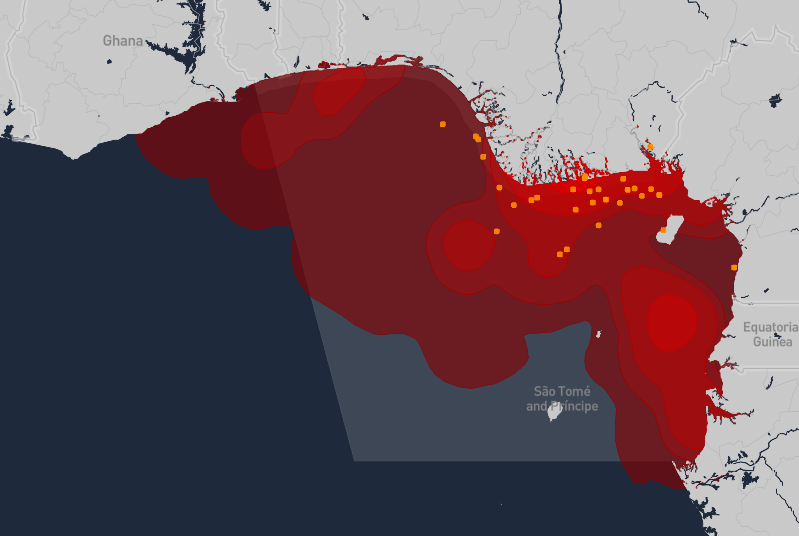
Impact on Gulf of Guinea security
There is an inverse correlation between kidnap for ransom and oil price in the Gulf of Guinea. This means that the increase in oil prices is expected to mitigate the risk of kidnap for ransom. The opposite is the case for oil products tanker hijackings: there is a moderate correlation between oil price and hijacking. The oil price has reached approximately 2022 levels, around which time there were two tanker hijackings reported. The last hijacking of a chemical/products tanker was reported in April of 2023.
There is a theory that the criminals engage in illicit oil production and that could mean that if there were restriction on illegal production, they may resort hijacking tankers. Crew members kidnapped for ransom have been held in or near illicit oil refining sites. Official reports have suggested that Nigeria has successfully reduced illicit oil production since the introduction of the Petroleum Industry Act in 2021. Also, there are continued operations in the Delta the latest being Operation Delta Sanity. On 22 March 2026, illegally refined automotive gas oil was interdicted by the Nigerian Navy in the forward operating base NNS PATHFINDER. However, Ambrey has found there is only a weak correlation between illicit oil production and hijackings. This indicates that these criminal groups are not engaging in these activities or that they represent a minority of those that are engaged in illicit oil production.
There is also assessed to be increased costs to security providers, both public and private. Private security escort vessels are estimated to increase by approximately 30%, due to the increase in fuel prices. A reduction in SEV provision could increase the number of attacks closer to the Niger Delta but, in the short term, it is unlikely to significantly change the number of attacks in the region. Security provision likely displaces threat.
Foreign naval presence likely displaces threat. There have been reported PAG attacks whilst a foreign naval vessel is in the GoG. Currently, there is one naval vessel, the ESPS FUROR (P46), operating offshore Gabon. There have been no reported changes to the EU’s Coordinated Maritime Presence (CMP) despite the increase in fuel prices. However, participation in the EU CMP is voluntary, if the fuel price continues to increase there is a realistic possibility that ongoing and future operations with the GoG may be reconsidered/shortened.
Outlook
- Vessels calling ports in the Gulf of Guinea advised to implement all proportionate Ship Protection Measures.
- Voyage risk assessment: Vessels are advised to also avoid the planned voyage if the residual risk after mitigations is assessed to be high risk.
- Ship Security Assessments: Merchant shipping assessed to be at heightened risk is advised to carry out Ship Security Assessments tailored to the threat, and to implement recommended and proportionate ship protection measures before sailing.
- Armed security: this has been effective at stopping pirate action groups. Vessels are advised to engage security where feasible and when vulnerable.
Ambrey: +44 203 503 0320, intelligence@ambrey.com
AMBREY – For Every Seafarer, Every Vessel, Everywhere.