AMBREY THREAT CIRCULAR> ISRAEL-HAMAS CEASEFIRE
“Ambrey recommends a thorough affiliation check as part of a transit risk assessment is performed for Red Sea and Gulf of Aden voyages.”

Source: This document has been approved for distribution by Ambrey Analytics Ltd.
EXECUTIVE SUMMARY
- The Israel and Hamas ceasefire is fragile as major issues are yet to be settled.
- The Houthis have not announced a change in their target intent, though during the last ceasefire their stated intent was restricted to Israel-flagged and –owned shipping.
- Leading Houthis continue to reject the State of Israel, and allege ‘violations’.
- The US sanctions regime against the Houthis remains in place, and the retaliatory Houthi ‘sanctions’ have not been withdrawn.
- In spite of sanctions and the destruction of Houthi-controlled port facilities, some shipping is still calling their ports, indicating that the coalition actions thus far have been insufficient to force the Houthis to stop their attacks.
- It is possible that, as in January 2025, the Houthis will cease operations against a broad interpretation of ‘Israeli’ shipping for the duration of the ceasefire, but it is too early to be certain.
- Many shipping companies that previously transited the Red Sea and Gulf of Aden may now have greater confidence that the risk has decreased following the ceasefire.
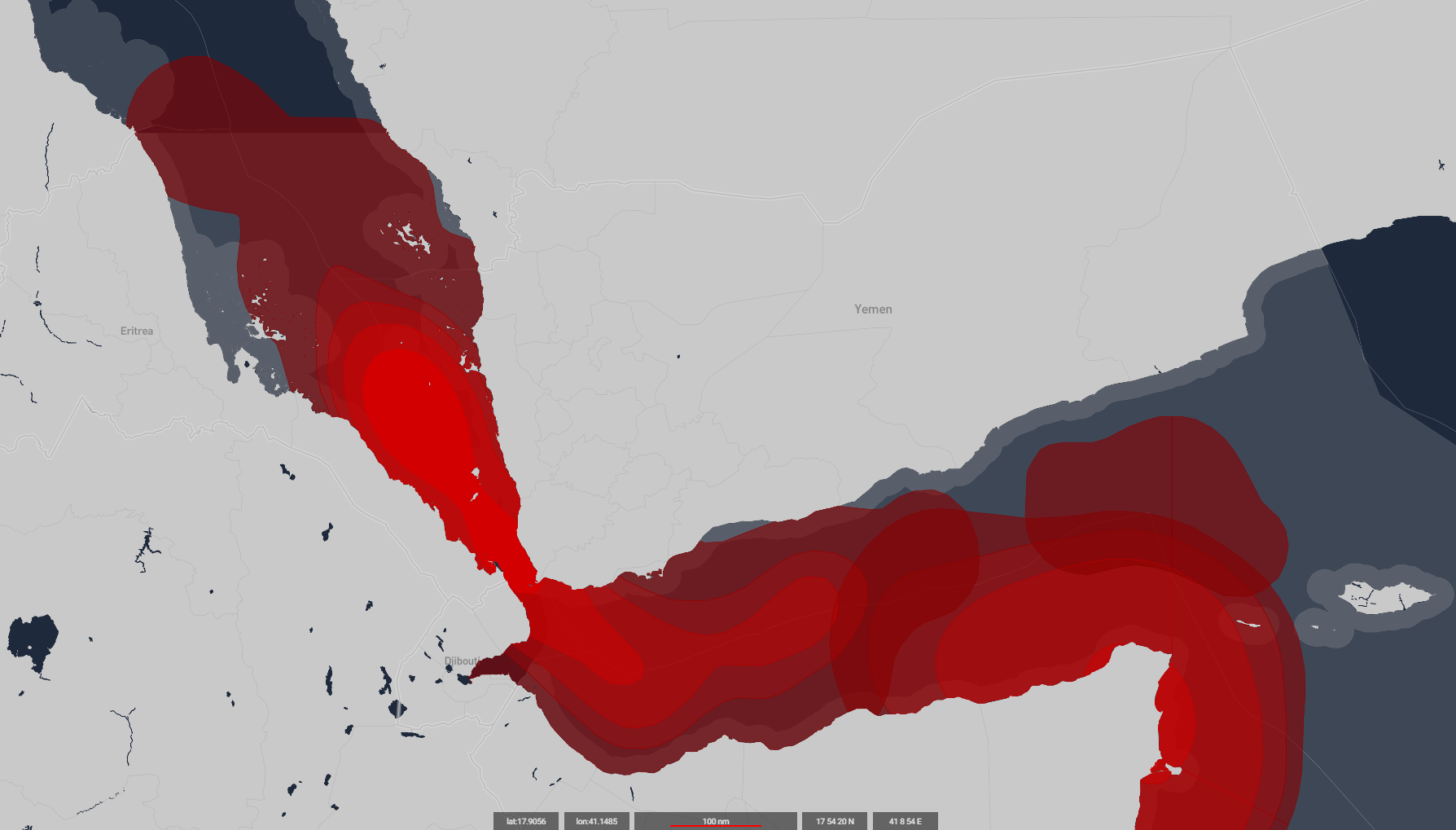
SITUATION
Some media reports seen by Ambrey quoted a member of the Houthi political leadership, and unspecified sources in the Saudi Arabian government, claiming the Houthis decided to cease operations against shipping. Neither source has been corroborated, and official Houthi statements have not offered such assurances.
Just hours after the ceasefire was announced, the Houthi leader declared the group would ‘remain fully alert and prepared’ and closely monitor the agreement’s implementation. His remarks stopped short of declaring an end to Houthi military operations, but neither did they confirm a continuation of previous targeting activity. Similar statements were made in a speech given by the Chair of the Houthis’ Supreme Political Council, Mahdi al-Mashat, on 13 October.
As of 15 October, the ‘Humanitarian Operations Coordination Center’ (HOCC) has not issued any changes in targeting guidance.
The Houthis have continued to reject the State of Israel. The Houthi Defense Minister and Chief of Staff on 14 October framed the ‘battle of Yemen’ as “to liberate Palestine and Al Quds and to confront the Zionist project.”
THREAT UPDATE
During the previous ceasefire, between 19 January 2025 and 18 March 2025, the Houthis maintained a stated threat toward Israeli-flagged and -owned shipping, while emphasising a willingness to return to full-scale targeting should Israel violate the ceasefire agreement. At the time, the ceasefire agreement consisted of two 40-day periods. In the first phase, hostages were to be exchanged for prisoners and the conditions for phase 2 negotiated. The ceasefire never entered phase 2, and the Houthis reissued their threat towards shipping trading with Israel.
The latest ceasefire iteration has no designated phases, albeit a first stage was the release of all remaining hostages, the release of prisoners, the entry of humanitarian aid, and the withdrawal of the Israel Defense Forces (IDF) to a designated line resulting in the IDF’s control of approximately 53% percent of the Gaza Strip. Any subsequent steps remained to be negotiated with demands for a disarmament of Hamas, international interim government, and a security buffer zone under IDF control in the Gaza Strip still unresolved.
US President Donald Trump declared the war to be over, yet Israel’s Prime Minister, Benjamin Netanyahu, stated on 12 October, “the campaign is not over. There are still very big security challenges ahead of us.” A lasting agreement will likely require significant US guarantees and continued attention. This requirement, combined with the outstanding demands and absence of a timeline, highlight the fragile state of this ceasefire.
The US have maintained the existing sanctions regime against the Houthis, which had led to retaliatory ‘sanctions’ on 30 September 2025. No statements were made regarding the ending of the Houthi ‘sanctions’. The willingness of the Houthis to act on the threat has not been tested. Ambrey assessed it possible, that during the initial stage of the ceasefire, the Houthis will not target merchant shipping linked to Israel solely through trade. Ambrey assessed it probable that Israeli-flagged or -owned vessel will be targeted. Ambrey is aware of incidents for which the Houthis have not claimed responsibility. There is higher uncertainty about Houthi long-term intent toward Israeli-flagged and -owned shipping as they have consistently declined to recognise the State of Israel.
RECOMMENDATIONS
- Affiliation checks against the Houthi target profile: Ambrey recommends a thorough affiliation check as part of a transit risk assessment is performed for Red Sea and Gulf of Aden voyages.
- Ship Security Assessments: Merchant shipping assessed to be at heightened risk is advised to carry out Ship Security Assessments tailored to the threat, and to implement recommended and proportionate ship protection measures before sailing.
- Physical security: Private Armed Security Teams can be highly effective against certain threat vectors. Ambrey continues to recommend considering increased team sizes with appropriate armament.
- Bridge support: Private Armed Security Teams to prepare and reassure crew and assist with military liaison. Digital operations can also support with route planning and keep the bridge and shore staff informed of any changes in risk while enroute.
CONTACT INFORMATION
Ambrey: +44 203 503 0320, intelligence@ambrey.com
AMBREY – For Every Seafarer, Every Vessel, Everywhere.
END OF DOCUMENT