AMBREY INSIGHT> CHINA WEIGHS OPTIONS AFTER US MOVE IN VENEZUELA
Date issued: 12 January 2026
“The US operation in Venezuela signals a more coercive style of statecraft that ties security action to control over oil flows. For China, the shock is not confined to Caracas: it hits energy access, policy-bank exposure and the credibility of Beijing’s wider regional approach.“
Source: This document has been approved for distribution by Ambrey Analytics Ltd.
EVENT
On 3 January 2026, US forces carried out a military operation in Venezuela and captured President Nicolás Maduro, transferring him to the United States to face criminal proceedings. Beijing treated the move as a test of sovereignty norms and the UN Charter, rather than a Venezuela-only shock.
Washington then moved quickly to reshape Venezuela’s oil flows and oil industry access. US officials and intermediaries discussed mechanisms to channel Venezuelan crude to the United States, including a deal sized at roughly $2 billion (30–50 million barrels), alongside a wider plan to bring US firms and approved traders back into Venezuelan marketing. Reporting also said the US pushed for special licensing arrangements that would determine who can buy, lift and resell cargoes, and that it pressed Caracas to downgrade economic ties with China, Russia, Iran and Cuba while cooperating primarily with the US on energy.
For China, the immediate cost is not only political: it intersects with barrels, contracts and repayment streams. Reporting indicated that China-bound liftings were interrupted while some US-associated exports continued to move. Shipments to Asia were at a standstill, even as some sanctioned tankers departed Venezuelan waters after earlier delays. If oil access becomes conditional on political realignment, Beijing faces a compounded loss: fewer barrels in the near term and a weaker position to protect upstream assets, contracts and repayment channels over time. The wider message is clear: Washington is prepared to combine force with administrative control over energy trade. That combination can impose direct economic pain.

CONTEXT
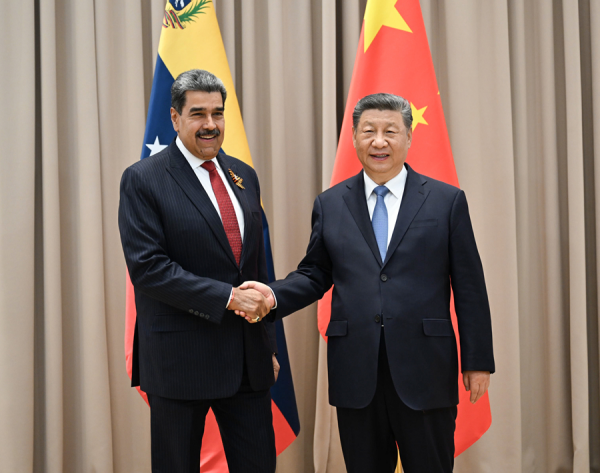
China’s interests in Venezuela centre on energy supply, state-backed finance, and strategic influence in Latin America.
China’s first stake is energy and commercial exposure: maintaining access to Venezuelan crude flows and the trade channels that deliver discounted barrels into parts of China’s refining system. Venezuela-linked crude shipments to China averaged about 470,000 bpd in 2025 (around 4.5% of China’s seaborne crude imports), with independent refiners (“teapots”) among the main buyers of discounted barrels. At the asset level, Sinopec and CNPC hold large oil entitlement reserves, and CNPC continues to produce through the Sinovensa joint venture with PDVSA.
China’s second stake is debt and oil-for-loans exposure: safeguarding repayment streams and recovering value from legacy policy-bank lending often serviced via oil-linked arrangements. Estimates put Venezuela’s outstanding debt to China at around $12 billion under an oil-for-loans programme associated with China Development Bank.
China’s third stake is strategic and diplomatic signalling: preserving political credibility in Latin America, where Venezuela has been treated as a flagship partner and a demonstration case for Beijing’s non-interference narrative. China and Venezuela elevated ties to an “all-weather strategic partnership” in 2023, and China sought to harden its investment position through an investment protection agreement signed in May 2024. Taken together, these links mean Beijing is weighing more than disrupted cargoes. It is also trying to protect repayments, safeguard assets, and manage the credibility of its wider approach to Latin America. Those three interests also provide a clear way to trace how the US move translates into pressure on China.
ANALYSIS: HOW THE VENEZUELA OPERATION HITS CHINA’S THREE INTERESTS
1) Energy Supply and Commercial Exposure: Access Becomes Conditional, and Shipping Risk Rises
The first impact is that oil access shifts from discount trade to permissioned trade. Much of the Venezuelan crude reaching China is bought at a discount and often moved through intermediaries and rebranded. Some volumes also support repayment flows. If Washington pushes future sales into “authorised” channels and restores privileged access for US-linked entities, China’s Venezuela hedge becomes conditional. Even if barrels still reach China, they may do so on worse terms, with less pricing advantage and higher disruption risk. This is not just implicit policy drift. Trump told oil executives the US intends to police who can market Venezuelan crude, reinforcing that access will be permissioned and political.
Upstream exposure also becomes leverage. CNPC’s continued presence through Sinovensa, and the large entitlement positions held by Chinese firms, give Washington and a US-influenced Caracas several pressure points: approvals, contract reviews, operational permits, export permissions, and the ability to steer offtake to preferred buyers. China’s upstream posture, therefore, becomes less a commercial matter and more a bargaining chip.
Shipping is where these constraints first show up. The reported interruption of China-bound liftings, alongside continued US-associated exports, suggests enforcement can be applied at the point of loading and export clearance. For China-linked liftings, that raises three risks: (1) compliance and interdiction pressure on tankers, insurers and financiers; (2) stronger incentives for opaque shipping practices that increase operational and reputational risk; and (3) longer planning uncertainty, including delays, demurrage and stop–start supply. In effect, shipping becomes part of the mechanism that gates access, rather than a neutral logistics layer.
2) State-Backed Finance and Debt Recovery: Repayment Becomes Contestable
The second impact is on debt recovery. China’s exposure is concentrated in legacy lending and oil-linked repayment mechanisms, so the ability to redirect oil flows matters directly. Moves by the US to protect Venezuelan oil revenues held in US jurisdictions and to limit third-party claims underline how repayment can be constrained through legal authority and custody of funds. That risk also grows if US-backed firms expand output under rules that prioritise controlled revenues, narrowing space for oil-linked repayment to legacy creditors.
First, repayment oil can be diverted. If the US side can steer export destinations and marketing channels, barrels that support repayment can be reallocated. That does not cancel the debt, but it can disrupt the method through which China extracts value.
Second, legal and administrative uncertainty increases. A new governing structure in Caracas, negotiating under US pressure, can reopen contract terms, payment schedules, and creditor priorities in practice. China’s investment protection agreement signals an attempt to anchor protections, but enforcement depends on political control and legal institutions.
Third, creditors can become leverage targets. If Washington uses licensing and revenue oversight to shape Venezuela’s external ties, then China’s creditor status becomes a vulnerability: Beijing may have to choose between pressing repayment aggressively (risking exclusion) and accepting slower recovery (to preserve access and influence).
3) Strategic Influence in Latin America: A Credibility Test
Beijing has framed its regional approach as investment-led, non-interference and development-first. Venezuela, given the “all-weather strategic partnership” label, has been a visible signal of that model. The Maduro operation exerts pressure on the model in two ways.
A “US backyard” policy becomes more explicit. Analysts have linked the episode to renewed US primacy enforcement in the hemisphere and sharper scrutiny of China’s footprint in strategic resources and infrastructure. For Beijing, Venezuela is a warning case: commercial projects can be reclassified as strategic and constrained through political change.
China’s leverage is also mostly economic and reputational. China can condemn, lobby and signal support, but it has limited capacity to change facts on the ground. That pushes Beijing towards limiting spillover to other partners and avoiding a pattern where political labels are not matched by protectable outcomes.
The risks are not confined to Venezuela. US threats towards other countries, including Cuba and Colombia, widen the message from “punishing Caracas” to “shaping alignment” across the hemisphere. Because China has close strategic ties with Cuba and is expanding economic engagement with Colombia, this can raise perceived political risk for governments, investors, and counterparties doing business with China. A concrete enforcement signal followed: Trump said no more Venezuelan oil or money should go to Cuba, reinforcing that oil flows can be used to pressure third countries, not just Caracas. In practice, it can delay China-linked projects, harden financing terms, and encourage regional actors to keep China cooperation lower-profile to avoid US pushback. That broader pressure environment shapes how Beijing calibrates its response.
CHINA’S CURRENT AND POSSIBLE FUTURE REACTIONS TO US PRESSURE
China’s likely approach remains two-track: strong public opposition paired with pragmatic loss control. In practice, Beijing is likely to prioritise measures that protect immediate economic interests while keeping escalation risks manageable. Responses can be organised against the same three interests.
1) Energy Supply and Commercial Exposure
Official moves: Beijing can deepen diversification and accelerate substitution away from Venezuelan barrels at the margin. State firms are also likely to keep channels open to preserve upstream positions, even if that means operating in a more compliance-heavy environment to protect long-dated asset value.
Beijing may also consider calibrated retaliation against US energy firms if it concludes that a “Donroe Doctrine” is using corporate actors to displace China. Any retaliation would likely be selective and deniable, such as regulatory friction, tougher approvals, procurement shifts, while avoiding steps that would harm China’s own energy security.
Market moves: Teapot refiners are likely to pivot towards other discounted heavy grades, including sanctioned supply from Iran and Russia, to protect margins. That cushions near-term disruption but increases exposure to enforcement, shipping and insurance constraints. Some shipping activity may adapt through more complex routing and higher risk tolerance if opaque channels become the only route to sustain Venezuelan flows.
2) State-Backed Finance and Debt Recovery
Official moves: Beijing is likely to shift from expansion to recovery-focused diplomacy, focusing on protecting legal standing, preserving collateral where possible, and seeking structured repayment that can survive political change. New headline lending is less likely until governance and export rules stabilise.
Market moves: Contractors and private firms may de-risk by slowing project timelines, reducing onsite exposure, and demanding clearer payment and export rights before committing capital, especially for long-dated oilfield development plans.
3) Strategic Influence in Latin America
Official moves: Beijing is likely to double down on non-interference messaging and reassure partners that China’s cooperation does not require political alignment. It may also steer towards lower-profile, less contestable projects, those that are economically useful but less likely to trigger US pushback.
Narrative moves: China will continue to position itself in the information space, framing US actions as coercion for resources. The aim is to shape regional perceptions even where China cannot change outcomes in Caracas.
Near-term and longer-term strategic calculation: the Iran stress-test
A key risk for Beijing is that pressure in Venezuela pushes Chinese teapot refiners deeper into Iranian and Russian supply, just as US enforcement or regional escalation could tighten constraints around Iran. If Washington increases pressure on Iran, or instability disrupts output and shipping, China could face a compounded shock: Venezuelan discounts fade while Iranian routes become more costly and risky.
Overall, the Venezuela episode is likely to reinforce a conservative Chinese approach: avoid direct confrontation with Washington in the Americas, harden energy resilience, protect contracts and repayment where feasible, and reduce exposure to US-controlled choke points in finance, insurance and licensing, while keeping multiple supply options open even if some carry sanctions-related risk.
CONTACT INFORMATION
Ambrey: +44 203 503 0320, intelligence@ambrey.com
AMBREY – For Every Seafarer, Every Vessel, Everywhere.
END OF DOCUMENT