AMBREY THREAT CIRCULAR> US SEIZES A VENEZUELA AND IRAN LINKED VLCC OFFSHORE VENEZUELA
Date released: 11 December 2025
“Ambrey urges shipping companies to conduct robust affiliation checks through comprehensive voyage risk assessments and to consider possible alternate or lower-risk voyage plans amid rising Venezuela maritime security risks.”

Source: This document has been approved for distribution by Ambrey Analytics Ltd.
EXECUTIVE SUMMARY
- The US has seized a sanctioned Venezuela-Iran linked VLCC offshore Venezuela.
- The US publicised that military personnel boarded the tanker from a helicopter.
- Ambrey assesses it highly likely that the US will continue to target vessels with a similar nexus, and that, given US sanctions on Venezuela, this could extend.
- It is likely that Iran will retaliate for the seizure, US-affiliated shipping in the Arabian/Persian Gulf and Sea of Oman is assessed to be at heightened risk, particularly laden crude oil tankers.
- There is a lower likelihood that Venezuela will retaliate given the risks involved, and options to de-escalate, but it is advisable to evaluate available risk treatment options if the company/ship bears a US-affiliation.
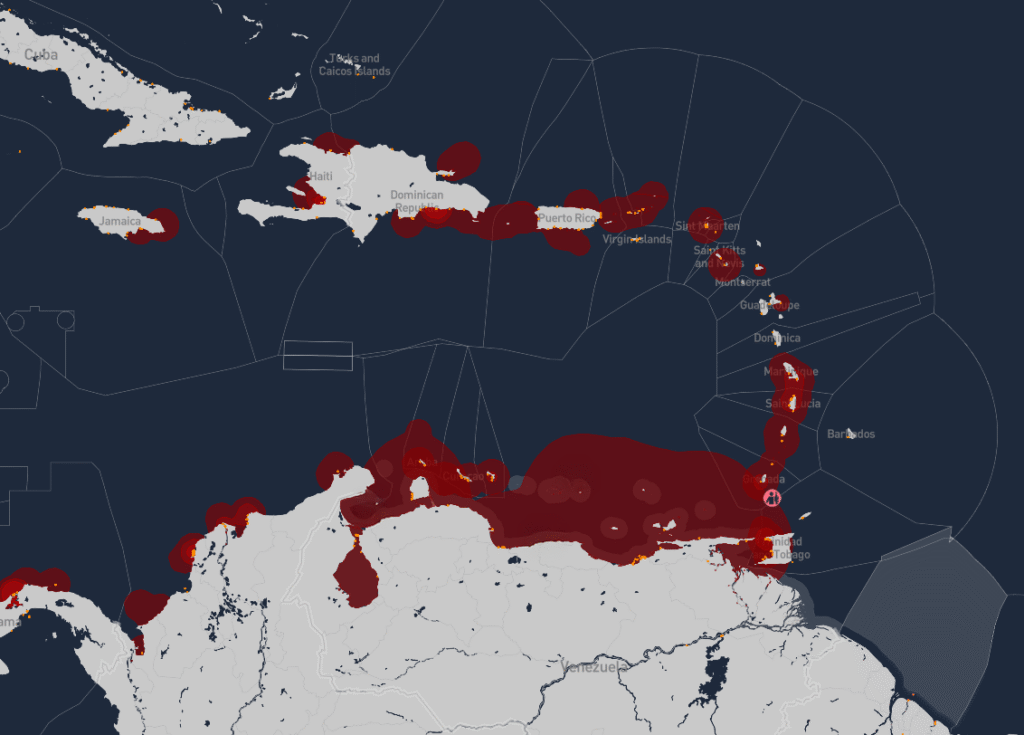
SITUATION
US Forces Conduct High-Profile Tanker Seizure
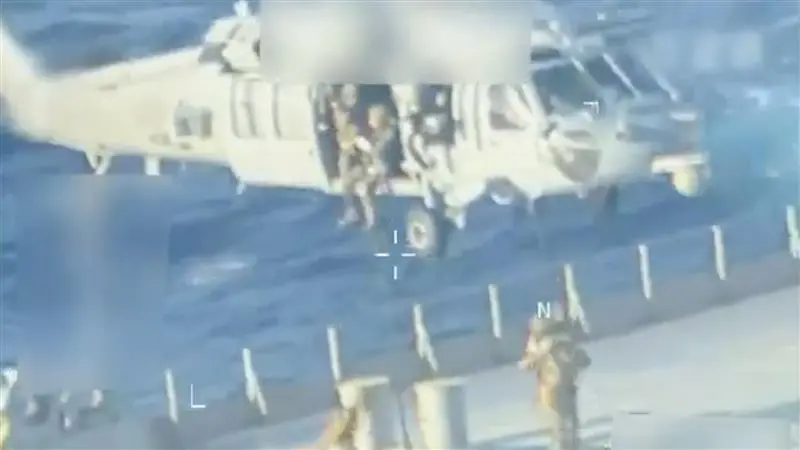
On 10 December 2025 the US announced that it seized a tanker offshore Venezuela. Ambrey understands that the tanker was an unflagged, already-sanctioned, VLCC. The US Attorney General announced that the “Federal Bureau of Investigations, and the US Coast Guard, with support from the Department of War executed a seizure warrant” for the tanker. This was alongside a video showing US forces, carrying small arms, fast-roping from a helicopter onto the deck of the VLCC.
AIS Spoofing and Sanctions Evasion Activity
An industry source reported that the vessel had previously called the José Terminal, Venezuela. She was spoofing and withholding her AIS transmissions during the call. Prior to this, she had spent time in the Sea of Oman.
US and Venezuelan Reactions to the Seizure
President Trump announced, “We’ve just seized a tanker on the coast of Venezuela, a large tanker, very large, largest one ever seized, actually” and, responding to a question about the oil cargo: “Well, we keep it, I suppose.” The Venezuelan government accused the US of “theft” and claimed that the US had a “deliberate plan to plunder our energy resources”.
Operation SOUTHERN SPEAR and Caribbean Naval Expansion
Operation SOUTHERN SPEAR and Caribbean Naval Expansion
Since August 2025, the US has increased its naval presence in the southern Caribbean Sea offshore Venezuela. This deployment has been described by US officials as a counter-narcotics operation.
US Pressure on Venezuela and the Cártel de los Soles
It has been accompanied by increasing pressure on the administration in Venezuela, members of which the US accuses of leading a narco-trafficking cartel. In August, the US increased its bounty rewarding information leading to the arrest of President Maduro. In November, the US announced Operation SOUTHERN SPEAR, a significant military deployment to the southern Caribbean Sea. The US administration also designated the Cártel de los Soles a Foreign Terrorist Organisation and asserted that it was led by President Maduro.
FAA Warnings and Heightened Regional Security Concerns
The same month, the US Federal Aviation Agency issued a warning in the Maiquetia Flight Information Region, Venezuela, due to the “worsening security situation and heightened military activity”. In addition, the US has installed a military RADAR on Tobago and has requested permission to install another in Grenada.
This is the first time since Operation SOUTHERN SPEAR that the US has seized a Venezuela-linked tanker. In November 2025, the Arleigh-Burke-class USS STOCKDALE deterred the transit of a Cameroon-flagged products tanker, carrying naphtha from Cuba to Venezuela. Nevertheless, the tanker did subsequently resume her voyage and called Venezuela. The vessel was not sanctioned by the US Office of Foreign Assets Control (OFAC), but the cargo could have been.
Previous US Interdictions of Venezuela-Linked Shipping
This is not the first time that the US has acted against an Iran-Venezuela linked cargo. In August 2020, the US announced that it had made the largest seizure of Iranian oil products in history with the civil forfeiture action involving four tankers, all headed from Iran, destined for Venezuela. OFAC sanctioned the vessel seized on 10 December 2025 several years before, on 3 November 2022. This was under Executive Order 13224, which pertains to the funding of entities linked to terrorism, due to the controller’s alleged links to Iran.
Ambrey assesses it is significant that the US has conducted this seizure. The publicity surrounding the seizure is different to previous actions. It is likely intended to be seen as part of the broader campaign to pressure the Venezuelan and Iranian administrations, and to assert the “Trump corollary” to the Monroe Doctrine announced in the US National Security Strategy, released December 2025.
Implications for Commercial Shipping and Tanker Operators
Expanding Risks for Sanctioned and Venezuela-Linked Shipping
Unless this action has the effect of deterring subsequent transits, Ambrey assesses it highly likely that the US will continue to target sanctioned shipping with a similar nexus. Given US sanctions on Venezuela, and the FTO designation of members of the Venezuelan government, there is a significant risk that this target profile could extend.
Potential Iranian Retaliation Against US-Affiliated Tankers
Ambrey assesses it likely that Iran will retaliate. Iran has retaliated in the past for similar seizures, and the publicity surrounding the seizure appears to have a dual intent, toward Venezuela, and Iran. In this case, it is unlikely that the shipowner or operator voluntarily cooperated with the US. Therefore, it is unlikely that the same companies will be subject to Iranian or Venezuelan countermeasures. This US seizure likely results in a higher risk towards US-owned/listed/operated/chartered vessels, or vessels headed to the US, especially laden crude oil tankers. This is also likely to manifest in the Arabian/Persian Gulf and Sea of Oman. This was last seen in April 2023, when Iran seized a US-chartered and destined, laden, crude oil tanker.
Risk Mitigation for US-Affiliated Vessels Near Venezuela
Ambrey considers it appropriate for U.S.-affiliated vessels—especially tankers—transiting off the coast of Venezuela to assess their risks and adopt precautionary security measures. This is because it is unlikely, but not impossible, that Venezuela will retaliate. Any attempted retaliation would be high-risk given the presence of the US naval force, and the risk of miscalculation/provoking President Trump’s administration. There are practices that could be adopted to lower risk, and, for those with lower risk tolerances/possible higher impacts, there are alternative routes further from Venezuela.
De-Escalation Dynamics and Commercial Considerations
It is assessed to be counterproductive for Venezuela to threaten a US-affiliated tanker or related operations in Venezuela. It has been reported that amid the apparent hindrance of the Cuban naphtha shipment, that Venezuela sought and secured a US charterer’s support to source a shipment of naphtha from the US Virgin Islands. This indicates such relations may be a bridge between the sides, and a means to de-escalate/limit effects.
Maritime Security Recommendations for High-Risk Voyages
- Affiliation checks against target profiles: Ambrey recommends a thorough check as part of a voyage risk assessment is performed for Arabian/Persian Gulf, Sea of Oman and Caribbean Sea transits. Ambrey continues to adjust these as per the developing intent and threat.
- Shipping companies are welcome to have a conversation with Ambrey to talk through scenarios.
- If strongly affiliated with the Iranian target profile, it would be advised to limit aggregate risk, by people, hull, and value to an acceptable level.
- Voyage risk assessments: It would be advised to conduct these assessments, and to consider possible alternate/lower risk voyage plans.
- Whole-of-voyage risk mitigation: Digital operations can support with route planning, voyage preparation, and keep the bridge and shore staff informed of any changes in risk while enroute.
- Ship Security Assessments: Merchant shipping assessed to be at heightened risk is advised to carry out Ship Security Assessments tailored to the threats, and to implement recommended and proportionate ship protection measures before sailing.
- Bridge support: Unarmed advisors are available to prepare and reassure crew and assist with military liaison.
CONTACT INFORMATION
Ambrey: +44 203 503 0320, intelligence@ambrey.com
AMBREY – For Every Seafarer, Every Vessel, Everywhere.