AMBREY THREAT CIRCULAR> HOUTHIS SIGNAL OPERATIONAL PAUSE
Date released: 11 November 2025
“Following a careful re-evaluation, Ambrey assesses that the risk to some vessels transiting the Bab el-Mandeb has returned to tolerable levels for certain companies.”

Source: This document has been approved for distribution by Ambrey Analytics Ltd.
EXECUTIVE SUMMARY
- The Israel and Hamas ceasefire has already held for a month, though remains fragile as major issues are yet to be settled.
- The Houthi Chief of Staff has indicated that their ‘ban on Israel shipping’ is on hold during the ceasefire.
- The Houthi ‘sanctions regime’ on some US-affiliated companies remained on the HOCC website, though attacks have yet to materialise.
- Bab el-Mandeb transits have modestly increased. Two Greek companies have restarted transits, and other companies are openly transiting when they have previously withheld AIS transmissions.
- Ambrey has been asked to re-evaluate company policies on avoiding the Bab el-Mandeb and has advised that, for some, the risk has now returned to levels tolerable to them.
SITUATION
Since the Israel-Hamas ceasefire on 10 October 2025, no Houthi-related attacks against merchant shipping have been recorded. The Houthis did not offer explicit statements on the organisation’s intent toward shipping in the immediate wake of the ceasefire.
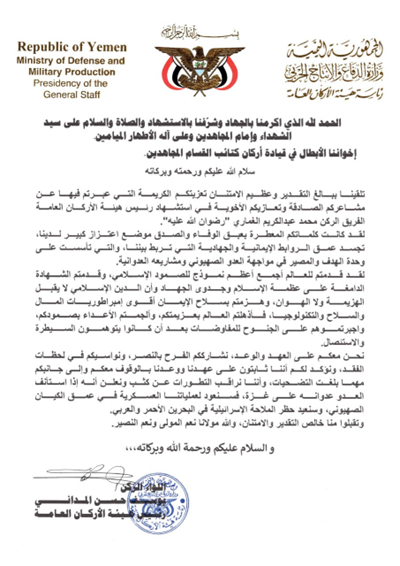
On 9 November 2025, the Chief of Staff of the Houthi Armed Forces published a letter to Hamas, in which, the Houthi official directly stated: “If the enemy resumes its aggression, we will escalate our operations deep within the Zionist entity and the ban on Israeli navigation will be continued/reinstated in the Red and Arabian Seas.” This was the first official statement, explicitly stating the Houthi intent to not target merchant shipping related to Israel since this ceasefire.
The ceasefire is assessed to remain fragile, as there is yet to be a peace agreement. This means that Houthi attacks could resume at short or no notice. The last ceasefire broke down with little notice.
Israel has not signed an agreement with the Houthis, and there is also a risk that direct conflict causes a breakdown. On 2 November, Israeli Prime Minister Benjamin Netanyahu stated that the Houthis are “a very serious threat to Israel and we will do everything we can to remove it”. In response, Mohammed Al-Farrah, a member of the Houthi political office stated that the “group is fully prepared to respond with practical options that will turn every hostile step into a political, economic, and strategic cost for Israel.”
Since the ceasefire, Ambrey has recorded several incidents of weapons seizures in the Gulf of Aden and southern Red Sea, showcasing the Houthis’ efforts to replenish their arsenal for future military operations.
THREAT UPDATE
It is assessed likely that the Houthis have suspended their targeting of Israel-affiliated shipping. The statement has been authenticated. It was published on multiple Houthi outlets, including the organisation’s official site, and some hours have passed since the publication without contradiction. The Houthi HOCC site has not changed. However, given the statement has been issued by the Chief of Staff of the Yemeni Armed Forces, it is assessed to credibly reflect Houthi military policy; the threat intent has likely changed. It is also assessed probable that the Houthis will not target American shipping provided the US does not enforce sanctions.
There are several circumstances in which targeting could resume. Houthi leaders do occasionally accuse Israel of breaching the ceasefire and, ideologically, Houthis reject the State of Israel. The Houthis could resume targeting of Israel-flagged and -owned shipping, and companies that call Israel at short notice. Israeli leaders have also signalled their will to remove the Houthi threat. If Israel were to target Houthi interests, such as port infrastructure or shipping destined for Houthi-controlled ports, it is highly likely that the Houthis would reinstate the ‘ban’. Israeli attacks on shipping could be harder to attribute, as they did with Iranian shipments to Syria.
The Houthis maintain a ‘sanctions regime’ against select companies related to US oil trade. These were announced in response to US sanctions, related to the designation of the Houthis as a Foreign Terrorist Organisation. The Houthi ‘sanctions’ entailed a threat of attack, though the threat has yet to materialise. The latest statement did not expressly mention this ‘sanctions regime’. Given the political risks of conducting such military operations, and given the present degree of US enforcement of sanctions, it is probable that the Houthis will not be the first to target.
It is assessed that the Houthi capability to carry out attacks remains. Furthermore, the Houthis are demonstrably attempting to restock arms they have used to target shipping.
The opportunity to target Israel-linked vessels and US oil companies designated under ‘sanctions’ has been limited in recent weeks. However, this may change following the latest statement. If hostilities were to resume, maintaining increased tactical separation (‘sea room’) from such vessels would be prudent.
IMPLICATIONS FOR SHIPPING
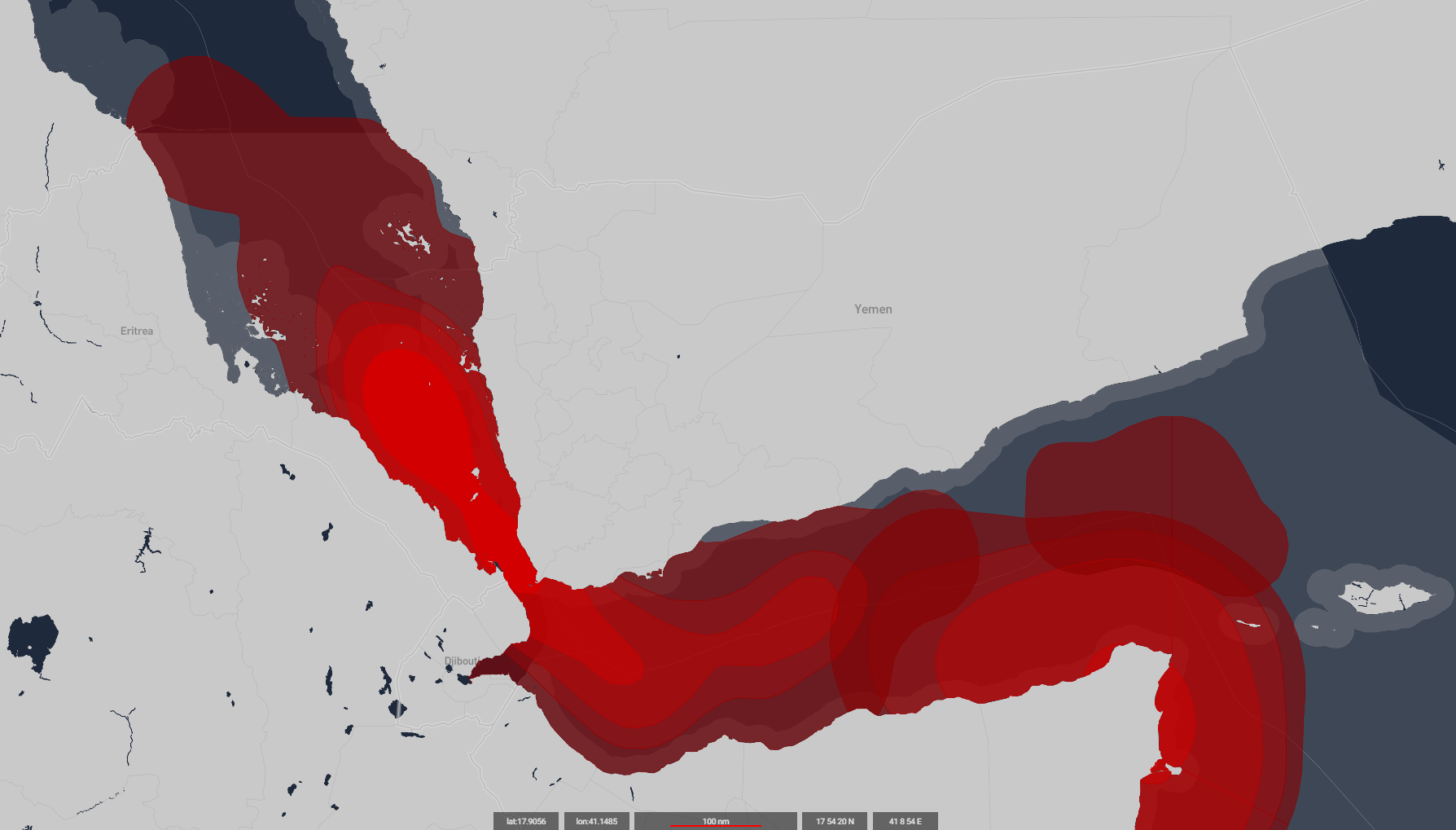
Shipping companies that are neither Israeli nor trading with Israel may now assess the risk in the Bab el-Mandeb as tolerable enough to resume transits.
Shipping companies that are Israeli, or that trade with Israel, are likely to face a finer margin of risk in deciding whether to resume transits.
Since the ceasefire commenced, Ambrey has observed a modest increase in Bab el-Mandeb transits. Among them there were companies resuming transits for the first time since the previous ceasefire ended on 18 March 2025. This included a Greek beneficial owner of 20 product tankers/dry bulkers and a Greek beneficial owner of 7 Suezmax/LR1/LR2 tankers. During the latest conflict period, these owners’ vessels had transited around the Cape of Good Hope. Neither of these owners were “Israeli” and neither company had traded with Israel recently.
Further, three companies that had previously transited the Southern Red Sea withholding AIS, transited with full AIS transmissions. This included Greek- and Korean-managed bulk carrier and tanker companies, including fleet seizes of 8, 9, and 12 vessels.
Houthi targeting has been highly discerning. Ambrey has estimated that of those vessels targeted, 90% fully matched the stated Houthi target profile, and approximately 1% were mistakenly targeted, during attacks on other ships. The remainder were targeted due to publicly available, out-of-date, information. The frequency of targeting shipping that fully matched their target profile was less than 1/10 and that of targeting shipping with out-of-date information was less than 1/250. The frequency of targeting by complete mistake was considerably lower, in the order of one event in several thousand transits. None of those assessed to have been complete mistakes have been constructive or complete total losses.
RECOMMENDATIONS
- Several shipping companies have contacted Ambrey to request a re-evaluation of their policy decision to avoid the Bab el-Mandeb. These are companies that are not Israeli and do not call Israel.
- As a result of the above policy reviews, Ambrey has briefed crews who plan to return to the Bab el-Mandeb and has conducted ship security assessments.
- Affiliation checks against the Houthi target profile: Ambrey recommends a thorough affiliation check as part of a transit risk assessment is performed for Red Sea and Gulf of Aden voyages. This can be performed at the company level, but must take into account the fleet’s specifics to understand the perceived risk.
- Ship Security Assessments: Merchant shipping assessed to be at heightened risk is advised to carry out Ship Security Assessments tailored to the threat, and to implement recommended and proportionate ship protection measures before sailing.
- Physical security: Private Armed Security Teams can be highly effective against certain threat vectors. Ambrey continues to recommend considering increased team sizes with appropriate armament.
- Bridge support: Private Armed Security Teams to prepare and reassure crew and assist with military liaison. Digital operations can also support with route planning and keep the bridge and shore staff informed of any changes in risk while enroute.
CONTACT INFORMATION
Ambrey: +44 203 503 0320, intelligence@ambrey.com
AMBREY – For Every Seafarer, Every Vessel, Everywhere.
END OF DOCUMENT
APPENDIX I – HOUTHI CHIEF OF STAFF’S STATEMENT