AMBREY THREAT CIRCULAR > HOUTHI SANCTIONS
Source: This document has been approved for distribution by Ambrey Analytics Ltd.
A. Executive Summary
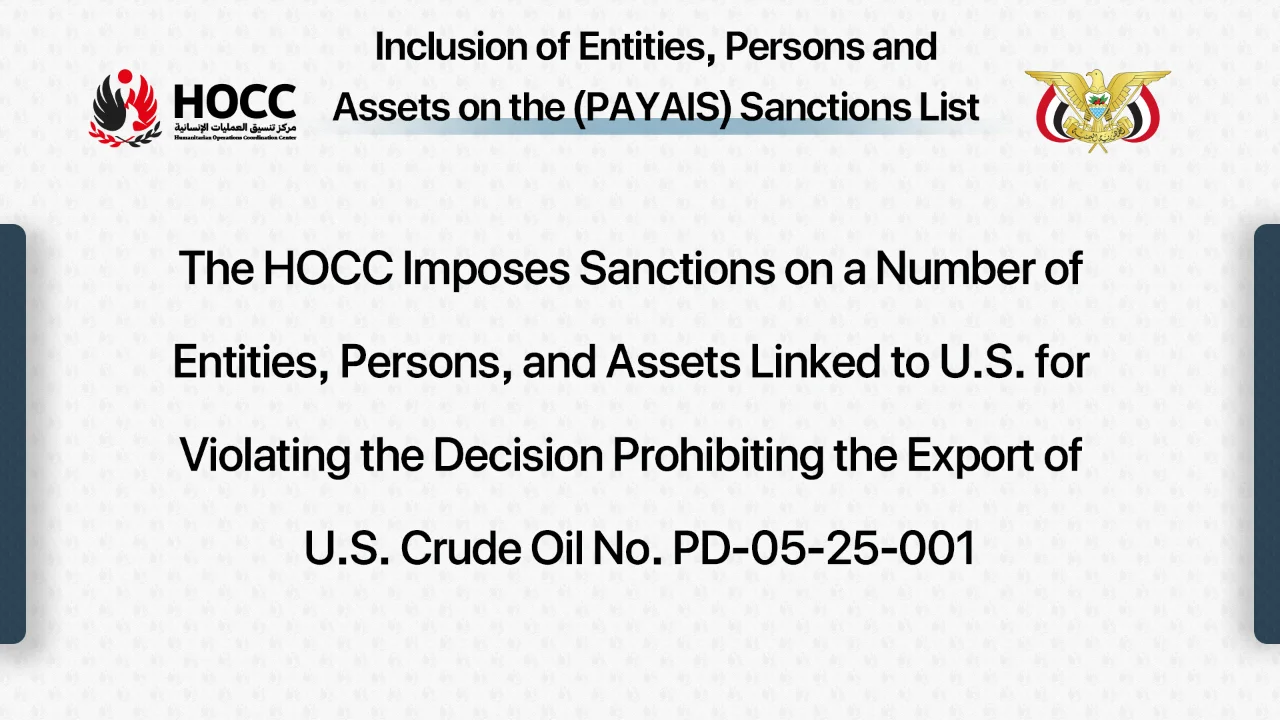
- Ansar Allah (“the Houthis”) sanctioned 13 entities, nine persons, and two vessels linked to facilitating US oil trade.
- Sanctions were announced in retaliation for US sanctions against the Houthis.
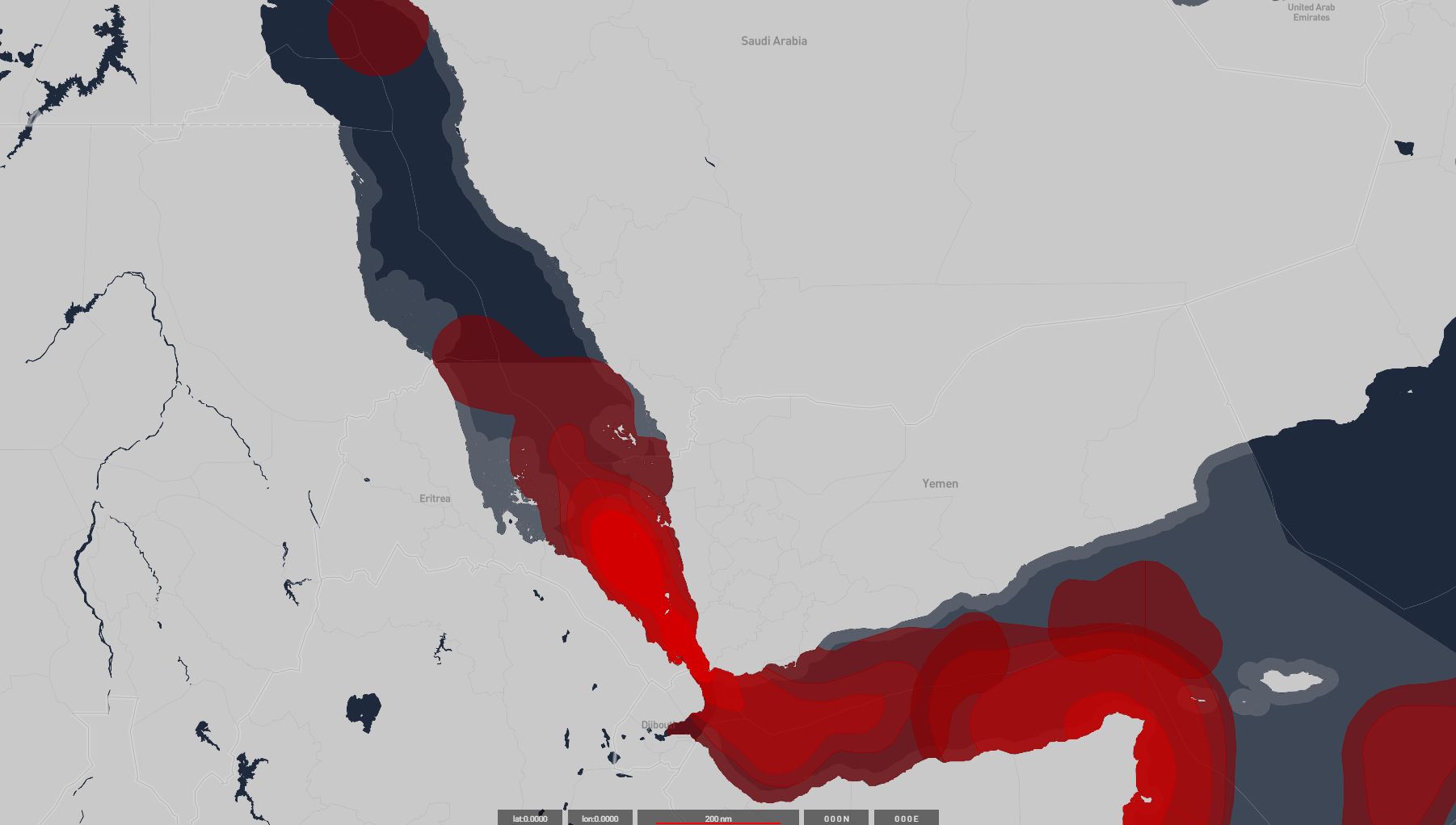
- Designated vessels/companies are assessed to be at risk of targeting when transiting the Red Sea and Gulf of Aden.
- Companies/vessels continuing to engage in the export of US oil are at risk of Houthis designation and subsequent risk of targeting in the Red Sea and Gulf of Aden.
B. SITUATION
On 30 September 2025, the Houthi-aligned Humanitarian Operations Coordination Center (HOCC) designated 13 entities, nine persons, and two vessels linked to facilitating US oil trade. This was conducted by exporting, re-exporting, transporting, loading, purchasing, and selling US crude oil directly or indirectly from US ports, including ship-to-ship transfers and trading through third parties. The Houthis issued a statement on prohibiting the export of US crude oil on 2 May with effect from 17 May. The decision was made prior to the unofficial US-Houthis ceasefire of 6 May 2025 and was pursuant of the regulation designating actors hostile to the Houthis. The HOCC announcement additionally highlighted that the designation on 30 September occurred in response to US sanctions against the Houthis issued by the US Office of Foreign Asset Control on 22 July and 11 September 2025. Companies ceased calling Houthi-controlled ports in Yemen following the July designations, reducing revenue available to the organisation. Ambrey is aware that companies compliant with US sanctions have been threatened but not targeted.
C. THREAT UPDATE
The declared Houthi target profile has expanded. It remains below the extent of the target profile established in 2024, though has taken on new elements. Previously, US owned vessels were targeted in response to US airstrikes. Now charterers may be at risk, whilst US owners in general are not exposed to a heightened degree of risk.
The HOCC outlined that actors designated as hostile to the Houthis would face “open confrontation according to the principle of reciprocity on a case by case basis.” The implementation of sanctions is part of a gradually expanding diplomatic and economic escalation between the US and Houthis. Yet, it is accompanied by an increased risk to designated shipping. Future Houthi attacks against shipping carry the potential to escalate the stand-off between the US and Houthis to a new active conflict with US airstrikes and Houthis attacks against US shipping in general.
Ambrey assesses vessels and companies to be at varying degrees of additional risk following the Houthis announcement. This is primarily driven by direct affiliations with Houthi designated companies. Lower increases of risk are associated with the general engagement in US oil trade.
Ambrey does not assess US shipping in general to be at increased risk, with Israel-affiliated shipping and Houthis designated shipping to be at risk of targeting in the region. Other groups of shipping are assessed to lie within a future target profile following possible further escalation. It is likely that further companies will be designated by the Houthis for engaging in the export of US oil.
Best case scenario: The Houthis act against designated companies/vessels in response to US sanctions enforcement. This would be a measured approach, indicating no generally increased risk to shipping engaged in US oil trade. This would likely lead to further escalation of sanctions, with limited attacks against affiliated vessels. However, Ambrey understands that US sanctions have already impeded Houthis trade, as companies have opted to call Aden instead of Houthi-controlled ports.
Realistic scenario: The Houthis target designated companies/vessels whenever in the Red Sea and Gulf of Aden. Shipping has previously been targeted in the Mediterranean Sea, Arabian Sea, and Indian Ocean, however, Houthi-capabilities are assessed to be significantly reduced outside the Yemeni EEZ. Renewed attacks against US interests would likely trigger a new US military response effectively ending the US-Houthis ceasefire. Further escalation to the point of targeting of all US-owned vessels would be a likely development in this scenario. Worst case scenario: The Houthis target any vessel or company associated with the designated companies as well as any company/vessel associated with trading US-owned oil cargo regardless of place of origin. This scenario could place virtually all crude oil tankers at risk of targeting by the Houthis with perhaps the sole exception of vessels engaged in sanctions evading activity.
D. SOLUTIONS
Shipping companies are advised to continue to conduct thorough asset screening assessments including cargo ownership and charter agreements. This information may not be available in the public domain, however, that does not guarantee threat actors are not aware.
These assessments ought to be conducted with the entire Houthi target profile in mind, i.e. Israeli affiliations, Israel trade affiliations, and US affiliations.
E. CONTACT INFORMATION
Ambrey: +44 (0)20 3503 0320 – intelligence@ambrey.com
AMBREY – For Every Seafarer, Every Vessel, Everywhere.
END OF DOCUMENT